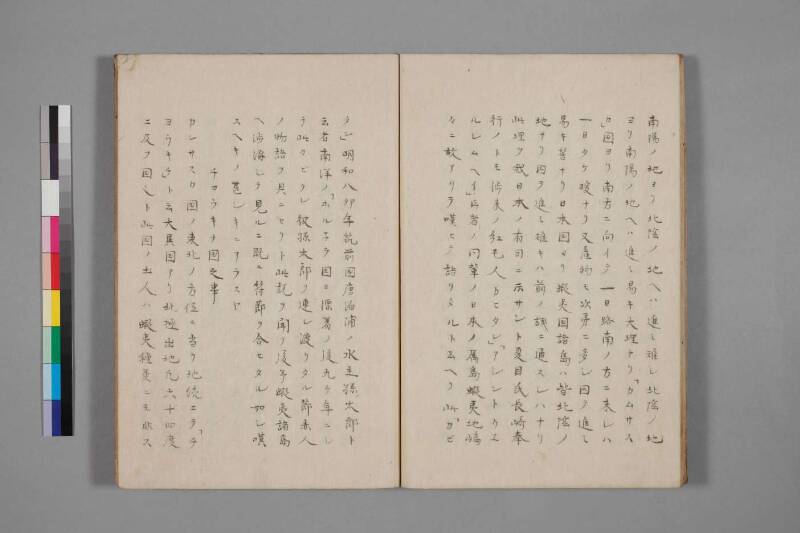
翻刻
【右丁】
南陽ノ地ヨリ北陰ノ地ヘハ進ミ難シ北陰ノ地
ヨリ南陽ノ地ヘハ進ミ易キ大理ナリ「カムサス
カ」国ヨリ南方ニ向イテ一日路南ノ方ニ来レハ
一日タケ暖ナリ又産物モ次第ニ多シ因テ進ミ
易キ筈ナリ日本国ヨリ蝦夷国諸島ハ皆北陰ノ
地ナリ因テ進ミ難キハ前ノ議ニ通スレハナリ
此理ヲ我日本ノ有司ニ示サント夏目氏長崎奉
行ノトモ渉来ノ紅毛人カヒタン」「アシントウヱ
ルレムヘイ」ト云者ノ同輩ノ日本ノ属島蝦夷地嶋
々ニ故アリテ嘆ヒテ語リタルト云ヘリ此「カビ
【左丁】
タン」明和八卯年筑前国唐泊浦ノ水主孫太郎ト
云者南陽ノ「ホルネラ国ニ漂着ノ後九ヶ年ニシ
テ此カビタン彼孫太郎ヲ連レ渡リタル節赤人
ノ物語ヲ具ニセリト此説ヲ聞テ後予蝦夷諸島
ヘ渉海シテ見ルニ既ニ符節ヲ合セタル如シ嘆
スヘキノ甚シキニアラスヤ
チヨウキチ国之事
カンサスカ国ノ東北ノ方位ニ当リ地続ニテ「チ
ヨウキチ」ト云大異国アリ北極出地凡六十四度
ニ及フ国也ト此国ノ土人ハ蝦夷種類ニモ非ス
現代語訳
【右丁】
南陽(温暖な南方)の地から北陰(寒冷な北方)の地へは進みにくく、北陰の地から南陽の地へは進みやすいというのが大きな道理である。「カムサスカ(カムチャッカ)」国より南方に向かって一日の行程南へ来れば、一日分だけ暖かくなり、また産物も次第に豊かになる。それゆえ進みやすいはずである。日本国から見て蝦夷国の諸島はすべて北陰の地である。それゆえ進みにくいのは、前述の議論に通じるからである。
この道理を我が日本の有司(担当役人)に示そうと、夏目氏〔が〕長崎奉行の供として来航したオランダ人のカピタン(商館長)「アシントウヱルレムヘイ」という者が、同輩とともに、日本の属島である蝦夷地の島々について、ある事情から嘆いて語ったと言われる。このカピ
【左丁】
タンは、明和八年(卯年)に筑前国唐泊浦の水主(船乗り)孫太郎という者が南陽の「ホルネラ」国に漂着し、その後九年を経て、このカピタンが彼の孫太郎を連れて渡航した際に、ロシア人についての話を詳しく語ったという。この説を聞いた後、私が蝦夷の諸島へ渡海して見るに、すでに符節を合わせたように(話と実情が)ぴたりと一致していた。嘆かわしいことの甚だしいものではないか。
チョウキチ国のこと
カムチャッカ国の東北の方位にあたり、陸続きに「チョウキチ」という大きな異国がある。北極出地(北緯)おおよそ六十四度に及ぶ国である。この国の土人(先住民)は蝦夷の種類でもなく、
英語訳
**[Right folio]**
It is a great natural principle that it is difficult to advance from a southern, sunny land (*nan'yō*) to a northern, shadowed land (*hokuhin*), whereas it is easy to advance from a northern, shadowed land to a southern, sunny land. If one travels southward from the land of Kamchatka, each day's journey southward brings one day's worth of greater warmth, and furthermore the natural products gradually become more abundant. Therefore, it stands to reason that such southward advance is easy. Ezo and its various islands, as seen from Japan, are all northern, shadowed lands. That it is difficult to advance into them thus follows from the preceding argument.
In order to convey this reasoning to the responsible officials (*yūshi*) of Japan, it is said that the Dutch *kapitein* (trading-post chief) named "Ashinto Wellem Hei," who came to Japan accompanying a certain Natsume as part of the retinue of the Nagasaki magistrate, lamented and spoke of the matter to his companions, telling of certain circumstances concerning the islands of Ezo, which are Japan's dependent territories. This Kapi-
**[Left folio]**
tein, when — in the eighth year of Meiwa (the Year of the Hare, 1771) — a sailor named Santarō from Karadomari-ura in Chikuzen Province drifted ashore in the southern land of "Horunera" (the Cape of Good Hope region / Horn?), and then nine years later this kapitein brought that same Santarō back across to Japan, he reportedly gave a detailed account of the affairs of the Russians. After hearing this account, when I myself crossed the sea to the various islands of Ezo and observed the situation, it was already as if the tally-sticks matched perfectly — the account and reality coincided exactly. Is this not cause for the most profound lamentation?
**On the Country of Chōkichi**
To the northeast of Kamchatka, connected by land, there is a great foreign country called "Chōkichi." It is said to be a country reaching to approximately sixty-four degrees of north polar altitude (north latitude). The native people of this country are neither of the Ezo people,