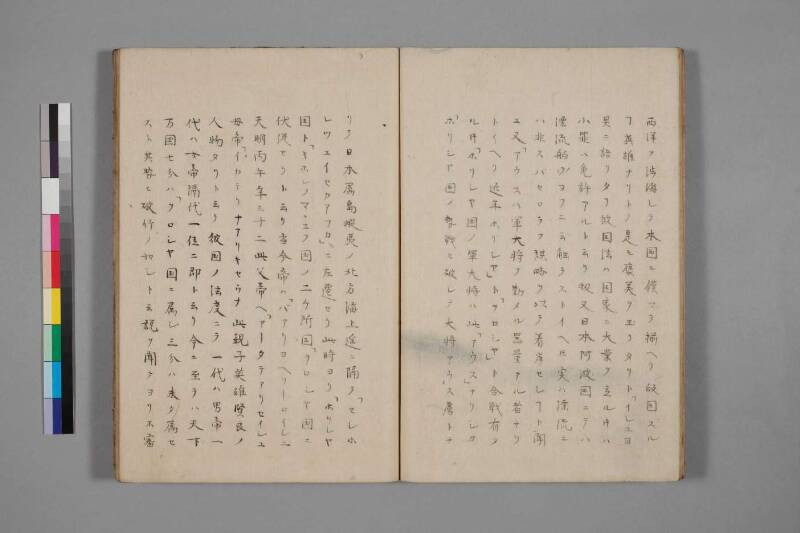
翻刻
【右丁】
西洋ヲ渉海シテ本国ニ僕マテ揃ヘテ帰国スル
ヿ英雄ナリトテ是モ褒美ヲ玉リタリト「イシユヨ
具ニ語リタリ彼国法ハ国家ニ大業ヲ立ルトキハ
小罪ハ免許アルト云リ扨又日本阿波国ニテハ
漂流舶ノヨフニ云触ラストイヘ𪜈実ハ漂流ニ
ハ非スバセロラフ謀略ヲ以テ着岸セシヿト聞
ユ又「アウスハ軍大将ヲ勤メル器量アル者ナリ
トイヘリ近年ホリシヤ」ト「ヲロシヤ」ト合戦有タ
ルトキ「ホリシヤ国ノ軍大将ハ此「アウス」ナリシカ
「ホリシヤ国ノ勢戦ヒ破レテ大将アウス虜トナ
【左丁】
リテ日本属島蝦夷ノ北方海上遥ニ隔テ「セレホ
レツユイセカアフカ」ニ左遷セリ此時ヨリ「ホリシヤ
国ト「キホンノマヽエフ国ノ二ヶ所国「ヲロシヤ国ニ
伏従セリト云リ当今帝ハ「バアリヨヘヲーロイシユ
天明丙午年三十二此父帝ヘ「アータテアリセイシユ
母帝「イカテリナアリキセウナ 此親子英雄賢良ノ
人物タリト云リ彼国ノ法度ニテ一代ハ男帝一
代ハ女帝隔代一位ニ即ト云リ今ニ至テハ天下
万国七分ハ「ヲロシヤ国ニ属シ三分ハ未タ属セ
スト其勢ヒ破竹ノ如シト云説ヲ聞テヨリ不審
現代語訳
【右丁】
(前頁より続き)西洋を渡海して、本国に(部下の)僕(しもべ)まで揃えて帰国したことは英雄の所業であるとして、これも褒美を賜ったと、「イシユヨ(イシヨ)」が詳しく語った。彼の国の法では、国家に大きな功業を立てたときは、小罪は免許(免除・許免)されるとのことである。
さて、また日本の阿波国においては、漂流船のように言い触らしていたとはいえ、実は漂流ではなく、「バセロラフ(ハセロフ)」が謀略をもって着岸したことと聞こえる(聞き及ぶ)。
また「アウス」は軍の大将を勤められるほどの器量ある者であると言う。近年、「ホリシヤ(ポーランド)」と「ヲロシヤ(ロシア)」との間で合戦があった時、「ホリシヤ国」の軍大将はこの「アウス」であったが、「ホリシヤ国」の軍勢は戦いに破れ、大将「アウス」は虜(捕虜)と
【左丁】
なって、日本属島・蝦夷の北方の海上はるかに隔てた「セレホレツユイ・セカアフカ(カムチャツカ近辺か)」に左遷された。この時より「ホリシヤ国」と「キホンノマヽエフ国(クリミア?)」の二か国が「ヲロシヤ国」に伏従したと言う。
当今の帝は「バアリヨヘヲーロイシユ(パーヴェル一世?)」にて、天明丙午年(天明六年、一七八六年)に三十二歳、その父帝は「アータテアリセイシユ(エカチェリーナ二世の夫、ピョートル三世か)」、母帝は「イカテリナアリキセウナ(エカチェリーナ)」であり、この親子は英雄賢良の人物であると言う。
彼の国の法度(法制度)にて、一代は男帝、一代は女帝と、隔代で一位(帝位)に即くと言う。
今に至っては、天下万国の七分(七割)は「ヲロシヤ国」に属し、三分(三割)はいまだ属していないと、その勢いは破竹の如しとの説を聞いてより、不審(疑念・不安)
(次頁へ続く)
英語訳
[Right folio]
(Continued from previous page) Having crossed the western seas and returned to his homeland with all of his servants in tow, he was hailed as a hero, and for this too he was duly rewarded — so "Ishiyo" recounted in detail. According to the laws of that country, when one has rendered great service to the state, minor offenses are pardoned and forgiven.
Now, in the Japanese province of Awa, the affair had been spread about as if involving a drifting (shipwrecked) vessel, yet in truth it was no case of drift: it is understood that "Baserórafu" (Khaselov) had put ashore there by stratagem and design.
It is also said that "Ausu" was a man of the caliber to serve as a military commander-in-chief. In recent years, when there was a war between "Horishiya" (Poland) and "Oroshiya" (Russia), the military commander of "Horishiya" was none other than this "Ausu." However, the forces of "Horishiya" were defeated in battle, and the commander "Ausu" was taken prisoner,
[Left folio]
and was banished in exile to "Serehoretstui-Sekaafuka" (likely in the vicinity of Kamchatka), far across the seas to the north of the islands of Ezo, which are dependencies of Japan. From this time on, it is said that two countries — "Horishiya" (Poland) and "Kihonnomama'efu" (Crimea?) — submitted to and came under the dominion of "Oroshiya" (Russia).
The reigning Emperor is "Baariyohewōroishiyu" (likely Paul I of Russia), who was thirty-two years of age in the year Tenmei Hinoe-Uma (1786). His father-Emperor was "Ātateariseishiyu" (possibly Peter III), and his mother-Emperor was "Ikaterina Arikisouna" (Catherine), and it is said that this parent and child were both heroic and wise figures.
According to the laws and customs of that country, one reign is by a male emperor and the next by a female emperor, alternating in succession to the throne with each generation.
Up to the present day, it is said that seven-tenths of all the nations of the world have come under the dominion of "Oroshiya" (Russia), while three-tenths have yet to submit — and its momentum is like that of splitting bamboo. From the time I heard this account, I felt deep unease and suspicion—
(Continued on next page)