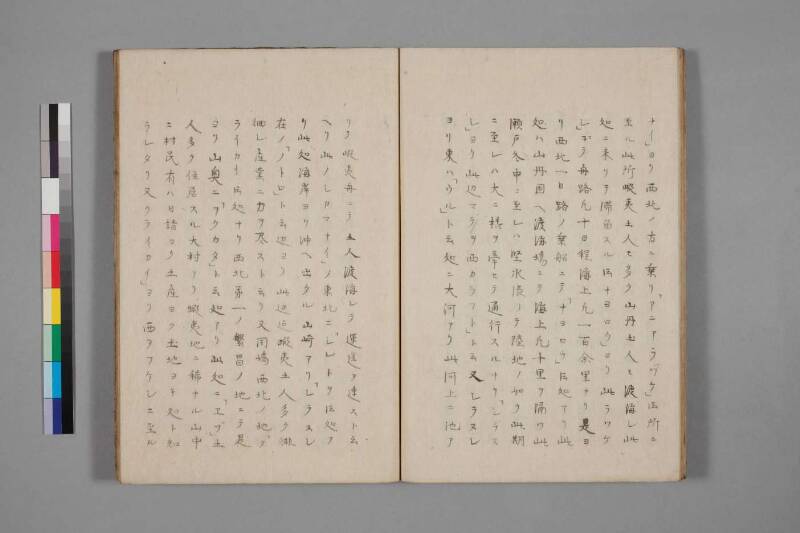
翻刻
【右丁】
ナイ」ヨリ西北ノ方ニ乗リ「アニアラツケ」ト云所ニ
至ル此所蝦夷土人モ多ク山丹土人モ渡海シ此
処ニ来リテ滞留スルト云ナヨロウ」ヨリ此ラツケ
シ」《見せ消ち:ニ|ニ》テ舟路凡十日程海上凡一百余里ナリ是ヨ
リ西北一日路ノ乗船ニテ「ナヨロウ」ト云処アリ此
処ハ山丹国ヘ渡海場ニテ海上凡十里ヲ隔ツ此
瀬戸冬中ニ至レハ堅氷張リテ陸地ノ如ク此期
ニ至レハ大ニ橇ヲ牽セテ通行スルナリ「シラヌ
シ」ヨリ此辺マテヲ西カラフト」ト云又シラヌシ
ヨリ東ハ「ウル」ト云処ニ大河アリ此河上ニ池ア
【左丁】
リテ蝦夷舟ニテ土人渡海シテ運送ヲ達スト云
ヘリ此ノシカマナイ」ノ東北ニ「シレトヲト云処ア
リ此処海岸ヨリ沖ヘ出タル山崎アリ「シラヌシ
在ノ「ノトロ」ト云辺ヨリ此辺迄蝦夷土人多ク徘
徊シ産業ニ力ヲ尽スト云リ又同嶋西北ノ地「タ
ライカイト云処ナリ西北第一ノ繁昌ノ地ニテ是
ヨリ山奥ニ「ヲクカタ」ト云処アリ此処ニ「エゾ」土
人多ク住居スル大村アリ蝦夷地ニ稀ナル山中
ニ村民有ハ日請ヨク土産ヨク土地ヨキ処ト知
ラレタリ又クライカイ」ヨリ西ヲフケシニ至ル
現代語訳
【右丁】
(前頁より続き)ナイ」より西北の方に乗り(進み)、「アニアラツケ」と言う所に至る。この所には蝦夷の土人(先住民)も多く、山丹の土人(大陸側の先住民)も渡海してこの処に来たりて滞留するとのことである。「ナヨロ」よりこの「ラツケシ」にて舟路およそ十日程、海上およそ百余里である。これより西北、一日路の乗船にて「ナヨロ」と言う処がある。この処は山丹国へ渡海する場所であり、海上およそ十里を隔てる。この瀬戸(海峡)は冬中(冬の間)に至れば堅氷(厚い氷)が張って陸地のごとくなり、この時期に至れば大いに橇を牽かせて通行するのである。「シラヌシ」よりこの辺りまでを「西カラフト」と言う。また「シラヌシ」より東は「ウル」と言う処に大きな川があり、この川上に池があ
【左丁】
りて、蝦夷の舟にて土人が渡海して(川を)運送に達すとのことである。この「シカマナイ」の東北に「シレトヲ」と言う処がある。この処は海岸より沖へ出た山崎(山の岬)がある。「シラヌシ」在の「ノトロ」と言う辺りよりこの辺りまで、蝦夷の土人が多く徘徊し(行き来し)、産業に力を尽くすとのことである。また同島西北の地「タライカイ」と言う処は、西北第一の繁昌(繁盛)の地であり、これより山奥に「ヲクカタ」と言う処がある。この処に「エゾ」の土人が多く住居する大きな村がある。蝦夷地には稀なる山中に村民があるのは、日照り(日当たり)が良く、土産(産物)が良く、土地の良い処として知られている。また「タライカイ」より西、「ヲフケシ」に至る。
(次頁へ続く)
英語訳
[Right folio]
(Continued from previous page) —nai," proceeding in a northwesterly direction, one arrives at a place called "Aniaratsuke." At this place, many Ezo natives dwell, and it is said that people from Sandan (inhabitants from the continental mainland) also cross the sea and come here to take up temporary residence. From "Nayoro" to this "Ratsukeshi," the journey by boat is approximately ten days, covering roughly one hundred ri or more by sea. From here, traveling one day's journey by boat to the northwest, there is a place called "Nayoro" [a different Nayoro]. This place is the crossing point to the land of Sandan, with approximately ten ri of open sea in between. During the winter months, thick ice forms across this strait, making it like solid land; when this season comes, people travel across it by driving large sleds. The area from "Shiranushi" to hereabouts is called "Western Karafuto." To the east of "Shiranushi," at a place called "Uru," there is a large river, and upstream of this river there is a lake,
[Left folio]
by which the natives cross by Ezo-style boat to carry out transport and trade. To the northeast of this "Shikama-nai," there is a place called "Shiretō." At this location, a mountain promontory juts out from the coastline into the sea. From the vicinity of "Notoro," in the district of "Shiranushi," to this area, many Ezo natives are said to travel about and devote themselves to their livelihoods. Furthermore, the place called "Taraikhai" in the western and northwestern part of the same island is the foremost thriving and prosperous location in the northwest. Beyond this, deeper into the mountains, there is a place called "Ōkukata." Here there is a large village where many Ezo natives reside. That there should be village inhabitants in the mountains—rare for Ezo territory—is known to be due to the excellent sunlight, good local produce, and favorable land. From this "Taraikhai," proceeding westward, one arrives at "Ōfukeshi."
(Continued on next page)