翻刻
【右丁】
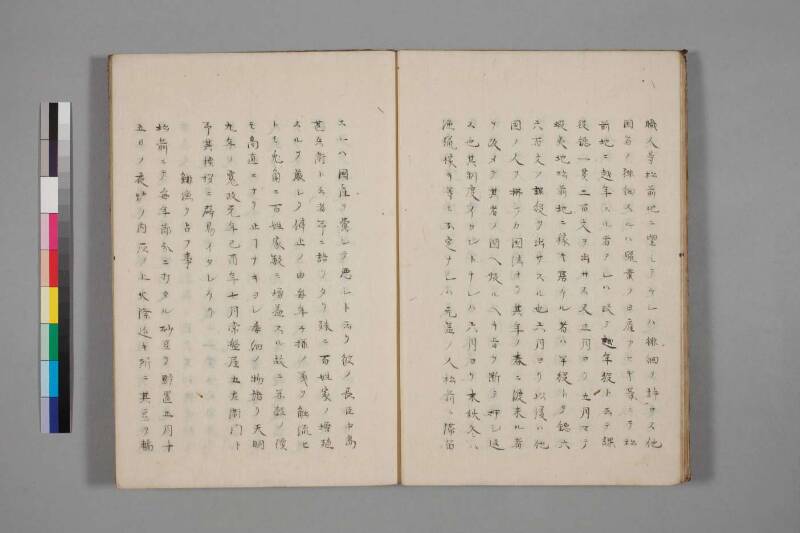
職人等松前地ニ望ミテケレハ徘徊ヲ許サス他
国者ノ徘徊スルハ猟業ノ日雇カセギ等ニテ松
前地ニ越年スル者アレハ改テ越年役ト云テ課
役鐚一貫二百文ヲ出サス又正月ヨリ五月マテ
蝦夷地松前地ニ稼キ居ケル者ハ半役トテ鐚六
六百文ノ課役ヲ出サスル也六月ヨリ以後ハ他
国ノ人ヲ払フカ国法ナリ其年ノ春ニ渡来ル者
ヲ改メテ其者ノ国ヘ帰ルヘキ旨ヲ断テ押シ返
ス也其制度イカントナレハ六月ヨリ末秋冬ハ
漁猟稼キ等モ不定ナレハ旡恙ノ人松前ニ滞留
【左丁】
スレハ国産ヲ費シテ悪シト云リ彼ノ長臣中島
甚兵衛ト云者予ニ語リタリ殊ニ百姓家ノ増殖
スルヲ厳シク停止ノ由毎年ケ様ノ義ヲ触流セ
トモ兎角ニ百姓家数モ増益スル故ニ米穀ノ価
モ高直ニナリ止ヿナキヨシ委細ノ物語リ天明
九年ノ寛政元年己酉年七月常盤屋五左衛門ト
予其挨拶ニ辟易イタシケリ
鯡漁ヲ占フ事
松前ニテ毎年節分ニ打タル砂豆ヲ貯置正月十
五日ノ夜炉ノ内灰ノ上火際近キ所ニ其豆ヲ輪
現代語訳
【右丁】
職人などが松前地に滞在を望んでいても徘徊を許さない。他国者が徘徊するのは、猟業の日雇い稼ぎなどのためであるが、松前地に越年する者があれば調べて、越年役と言って課役として鐚銭一貫二百文を納めさせる。また正月より五月まで蝦夷地・松前地で稼いでいる者は、半役として鐚銭六百文の課役を納めさせる。六月以降は他国の者を払い出すのが国法である。その年の春に渡来した者を調べて、その者の国へ帰るべき旨を言い渡して追い返す。その制度はいかなるものかというと、六月より晩秋・冬にかけては漁業・猟業による稼ぎなども不安定であるため、役に立たない者が松前に滞留すれば国産を費やして悪いと言われている。
【左丁】
そのことを、松前藩の重臣・中島甚兵衛という者が私に語った。特に百姓の家数が増えることを厳しく禁止している旨を、毎年このような通達を触れ回しているのに、どうにも百姓の家数が増え続けるために、米穀の価格も高騰して止まることがないとの詳しい話であった。天明九年(すなわち寛政元年)己酉年七月に、常盤屋五左衛門と私はその挨拶(やり取り)に辟易した。
鰊漁を占う事
松前では毎年節分に打った豆を取っておき、正月十五日の夜に炉の中の灰の上で、火際に近い所にその豆を輪の形に……
英語訳
[Right page]
…even craftsmen and artisans who wished to remain in Matsumae territory were not permitted to wander about freely. Other-province persons who did wander about did so for purposes such as day labor in hunting and fishing; however, those who remained through the New Year in Matsumae territory were investigated and made to pay a levy called the *etsunenyaku* (year-end duty), amounting to one *kan* and two hundred *mon* in *bita* copper coins. Furthermore, those who worked in Ezo territory and Matsumae territory from the New Year through the fifth month were made to pay a levy of six hundred *mon* in *bita* coins, known as a *han'yaku* (half-duty). It was the law of the domain (*kokuhō*) that persons from other provinces be expelled from the sixth month onward. Those who had crossed over in the spring of that year were examined, informed that they must return to their home provinces, and turned back. As for the reasoning behind this system: from the sixth month through late autumn and winter, earnings from fishing and hunting were unreliable, and it was said to be harmful to the domain's production (*kokusan*) for idle persons to linger in Matsumae.
[Left page]
This was explained to me by a man named Nakajima Jinbei, a senior retainer of the Matsumae domain. He told me in detail that the strict prohibition on the increase of farming households was proclaimed every year through such notices, yet despite this, the number of farming households continued to increase, causing the price of rice and grain to rise without cease. In the seventh month of Tenmei 9—that is, Kansei 1 (1789), the year of *tsuchinoto-tori*—Tokiwaya Gozaemon and I were quite wearied by that exchange.
On Divining the Herring Catch
In Matsumae, the soybeans that are scattered during the *setsubun* (bean-scattering) ceremony each year are kept in reserve, and on the night of the fifteenth day of the first month, they are arranged in a ring on the ash inside the hearth, near the fire…