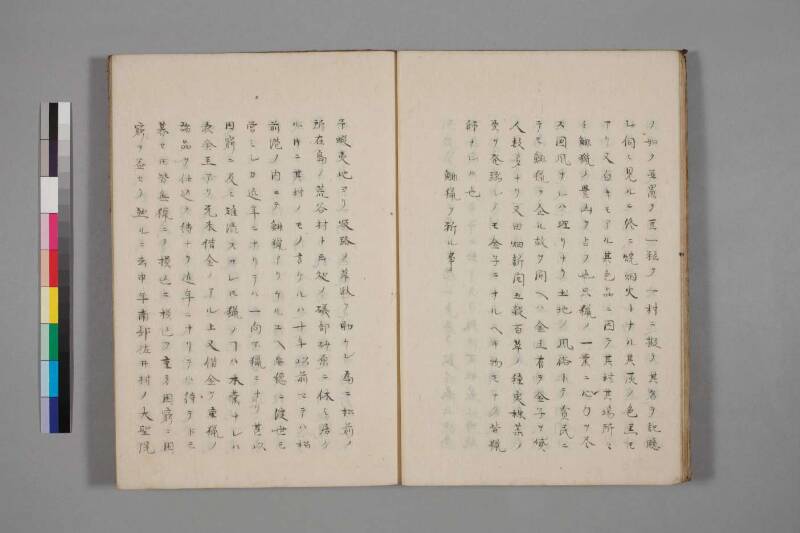
翻刻
【右丁】
ノ如ク並置テ豆一粒ヲ一村ニ擬テ其名ヲ記憶
シ伺ヒ見ルニ終ニ焼煙火トナル其灰ノ色黒モ
アリ又白キモアル其色品ニ因テ其村其場所々
々鯡猟ノ豊凶ヲ占フ也只猟ノ一業ニ心力ヲ尽
ス国風ナレハ理リナリ土地ノ風俗トテ貧民ニ
テモ鯡猟ヲ企ル故ヲ問ヘハ金主有テ金子ヲ貸
人数多ナリ又田畑新開五穀百草ノ種実株茶ノ
類ヲ発端シテモ金子ニナルヘキ物モナク皆猟
師ナレハ也
鯡猟ヲ祈ル事
【左丁】
予蝦夷地ヨリ帰路ノ草臥ヲ助ケン為ニ松前ノ
所在島ノ荒谷村ト云処ノ磯部砂原ニ休ミ居ケ
ルトキニ其村ノモノ言ケルハ十年以前マテハ松
前港ノ内ニテ鯡猟アリケルユヘ安穏ニ渡世モ
営ミシカ近年ニナリテハ一向不猟ニナリ甚以
困窮ニ及ヒ難渋スサレ𪜈猟ノヿハ本業ナレハ
表金主アリ元来借金ノアル上又借金ヲ重猟ノ
諸品ヲ仕込ヲ待ナリ近年ニナリテハ待テドモ
暮セ𪜈皆無猟ニテ損凶ニ損凶ヲ重ネ困窮ニ困
窮ヲ益セリ然ルニ去申年南部佐井村ノ大聖院
現代語訳
【右丁】
のように並べ置き、豆一粒を一村に見立てて、その名を記憶して様子を伺い見ると、やがて焼けて煙や火となる。その灰の色が黒いものもあり、また白いものもある。その色の様子によって、各村・各場所における鰊漁の豊凶を占うのである。ただ漁業一筋に心力を尽くすのがこの土地の風俗であるから、これも道理のことである。土地の風俗として、貧しい者でも鰊漁を企てる理由を尋ねてみると、資金を出す金主がいて金子を貸してくれるため、人数も多くなるのだという。また、田畑を新たに開墾して、五穀・百草の種や株茶の類を始めたとしても、金子になるようなものもなく、皆が漁師となるのである。
鰊漁を祈る事
【左丁】
私が蝦夷地からの帰路の疲れを癒そうとして、松前の所在・島の荒谷村という所の磯辺の砂原で休んでいたとき、その村の者が語るには、十年ほど前までは松前港の内で鰊漁があったために安穏に生計を営んでいたが、近年になってからはまったく不漁となり、はなはだ困窮に陥り難渋している。それでも漁業は本業であるため、表向きの金主があり、もともと借金があるうえにさらに借金を重ねて、漁に必要な諸道具・物品の仕入れを待っているとのことである。近年になってからは、待てど暮らせど皆まったく不漁で、損凶に損凶を重ね、困窮に困窮を積み重ねている。そのような折、先の申年に南部の佐井村の大聖院……
英語訳
[Right page]
…arranged in a ring as described, with each bean designated to represent one village, its name kept in mind. Watching closely, the beans eventually burn, producing smoke and flame. The resulting ash is black in some cases and white in others. Based on the color and condition of each bean's ash, the prosperity or failure (*hōkyō*) of the herring catch in each respective village and location is divined. Since it is the custom of this land to devote all one's heart and effort solely to fishing, such practices are entirely reasonable. As for why even the poorest people of this region attempt herring fishing—when asked, the answer is that there are financial backers (*kinshu*) who lend them the necessary funds, and so many people take part. Moreover, even if one were to open new fields and attempt to cultivate the five grains, various herbs, or seedling tea plants, none of these would produce anything of monetary value, and so everyone becomes a fisherman.
On Praying for the Herring Catch
[Left page]
When I was resting on the sandy shore along the coast of a place called Aratani Village on the island territory of Matsumae, seeking to recover from the fatigue of my return journey from Ezo territory, a person from that village told me the following: up until about ten years prior, herring fishing within the port of Matsumae had allowed people to make a comfortable living; but in recent years it had become entirely unproductive, and they had fallen into severe poverty and hardship. Even so, since fishing was their main livelihood, they had nominal financial backers (*kinshu*), and on top of existing debts they were piling up further debts, waiting to procure all the various goods and equipment needed for the fishing season. In recent years, however, no matter how long they waited, the catch was virtually nothing, and losses upon losses, hardship upon hardship, had accumulated. It was then that, in the recent *saru* year [Year of the Monkey], a monk from Daishō-in temple in Sai Village in Nambu…