翻刻
【右丁】
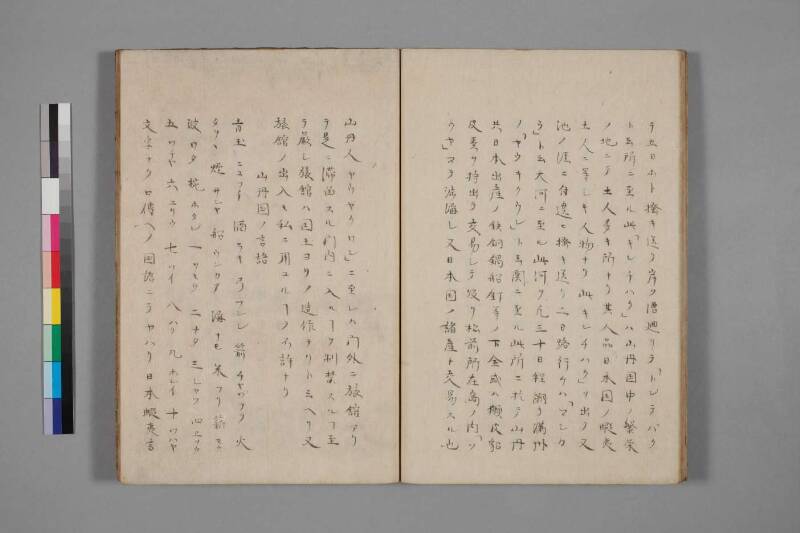
テ五日ホト掻キ送リ岸ヲ漕廻リテ「トンテバク
ト云所ニ至ル此「キンチハク」ハ山丹国中ノ繁栄
ノ地ニテ土人多キ所ナリ其人品日本国ノ蝦夷
土人ニ等シキ人物ナリ此キンチハク」ヲ出テ又
池ノ崖ニ付遶ヒ掻キ送リ二日路行ケハ「マンカ
ウ」ト云大河ニ至ル此河ヲ凡三十日程遡リ満州
ノ「ヤウキクウン」ト云関ニ至ル此所ニ於テ山丹
共日本出産ノ鉄銅鍋船釘等ノ下金或ハ獺皮貂
皮類ヲ持出テ交易シテ帰リ松前所在島ノ内「ソ
ウヤ」マテ渉海シ又日本国ノ諸産ト交易スル也
【左丁】
山丹人ヤウヤクワン」ニ至レハ門外ニ旅館アリ
テ是ニ滞留スル門内ニ入ルヿヲ制禁スルヿ至
テ厳シ旅館ハ国王ヨリノ造作ナリト云ヘリ又
旅館ノ出入モ私ニ用ユルヿヲ不許ナリ
山丹国ノ言語
青玉 ニユフイ 酒 ラキ 弓 フンシ 箭 チヤツフヲ 火
タヲヽ 煙 サンヤ 船 ウンカア 海 ナモ 米 フリ 薪 モウ
波 ワタ 椀 ホタレ 一 ヲモウ 二 ナタ 三 シヤツ 四エヲウ
五 ツチヤ 六 ユリウ 七 ツイ 八 ハリ 九 ホレイ 十 ツハヤ
文字ナク口伝ヘノ国語ニテヤハリ日本蝦夷言
現代語訳
【右丁】
(前ページより続き)池を小舟で五日ほど漕ぎ進み、岸を漕ぎ回って「トンテバク」という所に至る。この「キンチハク」は山丹国中でも繁栄した土地であり、土人の多い所である。その人々の様子は、日本国の蝦夷土人と等しい人物である。この「キンチハク」を出て、また池の崖に沿って漕ぎ進み、二日の道を行けば「マンカウ」という大河に至る。この川をおよそ三十日ほど遡ると、満州の「ヤウキクウン」という関所に至る。この場所において、山丹の者たちは日本産の鉄・銅・鍋・船釘などの金属類、あるいは獺(カワウソ)の皮・貂(テン)の皮類を持ち出して交易し、帰りには松前管轄下の島々のうち「ソウヤ」(宗谷)まで海を渡り、また日本国の諸産物と交易するのである。
【左丁】
山丹人が「ヤウキクウン」(養吉庫)に至ると、門の外に旅館があり、そこに滞留する。門の内に入ることは厳しく禁じられている。旅館は国王(清国皇帝)の造営によるものだという。また、旅館の出入りも、私的に自由に使うことは許されない。
山丹国の言語
青玉:ニユフイ 酒:ラキ 弓:フンシ 矢:チヤツフヲ 火:タヲヽ
煙:サンヤ 船:ウンカア 海:ナモ 米:フリ 薪:モウ
波:ワタ 椀:ホタレ 一:ヲモウ 二:ナタ 三:シヤツ 四:エヲウ
五:ツチヤ 六:ユリウ 七:ツイ 八:ハリ 九:ホレイ 十:ツハヤ
文字を持たず、口伝えの国語であり、やはり日本の蝦夷の言(次ページへ続く)
英語訳
**[Right folio]**
(Continued from previous page) ...rowing the lake by small boat for approximately five days, going around the shoreline, they arrive at a place called "Tontebaku." This "Kinchihaku" is a prosperous place in the land of Sandan, with a large native population. The people there are of the same character as the Ezo natives of Japan. Departing from "Kinchihaku" and again rowing along the lake's edge for a two-day journey, one arrives at a great river called "Mankau." Traveling upstream along this river for approximately thirty days, one reaches a checkpoint called "Yaukikuun" in Manchuria. At this place, the Sandan people bring out iron, copper, pots, ship nails, and other metal goods of Japanese manufacture, as well as otter skins and sable furs, for trade. On their return, they cross the sea to "Souya" (Soya, present-day Cape Sōya) among the islands under the jurisdiction of Matsumae, and trade there for various Japanese products.
**[Left folio]**
When the Sandan people arrive at "Yaukikuun" (Yangiku-un), there is an inn outside the gate where they lodge. Entry through the gate is strictly forbidden. The inn, it is said, was constructed by order of the King (the Qing Emperor). Furthermore, the use of the inn for private purposes is also not permitted.
**Vocabulary of the Sandan Language**
- Blue jade (青玉): *Niyufui* Sake/alcohol: *Raki* Bow: *Funshi* Arrow: *Chatsufuwo* Fire: *Taowo*
- Smoke: *San'ya* Boat: *Unkaa* Sea: *Namo* Rice: *Furi* Firewood: *Mou*
- Wave: *Wata* Bowl: *Hotare* One: *Omou* Two: *Nata* Three: *Shyatsu* Four: *Ewou*
- Five: *Tsuchiya* Six: *Yuriyu* Seven: *Tsui* Eight: *Hari* Nine: *Horei* Ten: *Tsuhaya*
The language is transmitted orally with no writing system, and is similar to the speech of the Ezo natives of Japan... (continues on next page)