翻刻
【右丁】
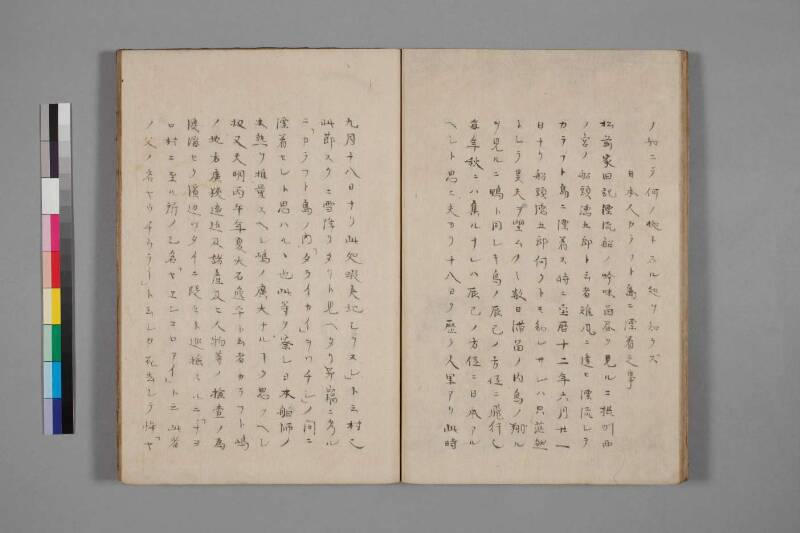
ノ如ニテ何ノ拠トスル処ヲ知ラズ
日本人カラフト島ニ漂着之事
松前家旧記漂着船ノ吟味留書ヲ見ルニ摂州西
ノ宮ノ船頭徳五郎ト云者難風ニ逢ヒ漂流シテ
カラフト島ニ漂着ス時ニ宝暦十二年六月廿一
日ナリ船頭徳五郎何クトモ知レサレハ只茫然
トシテ昊天ヲ望ムノミ数日滞留ノ内鳥ノ翔ル
ヲ見ルニ鴨ト同シキ鳥ノ辰巳ノ方位ニ飛行也
毎年秋ニハ集ルナレハ辰巳ノ方位ニ日本アル
ヘシト思ヒ夫ヨリ十八日ヲ歴ラ人里アリ此時
【左丁】
九月十八日ナリ此処蝦夷地シヲヌシ」ト云村也
此節スクニ雪降リタリト見ヘタリ予窃ニ考ル
ニ「カラフト島ノ内「タライカイ」ヲツチシ」ノ間ニ
漂着セシト思ハルヽ也此等ヲ察シ日本舶師ノ
未熟ヲ推量スヘシ嶋ノ広大ナルヿヲ思フヘシ
扨又天明丙午年夏大石逸平ト云者カラフト嶋
ノ地方広狭遠近及諸産及ヒ人物等ノ検査ノ為
渡海セリ浜辺ツタイニ段々ト巡検スルニ「ナヨ
ロ村ニ至ル所ノ乙名「ヤエンコロアイ」ト云此者
ノ父ノ名ヤウチウライ」ト云シカ死去シテ忰「ヤ
現代語訳
【右丁】
(前ページより続き)…の如くであり、何を拠り所とすべきかも分からない。
日本人がカラフト島に漂着した事
松前家の旧記(古い記録)および漂着船の吟味留書(調書)を見るに、摂州(摂津国)西宮の船頭、徳五郎という者が、難風(暴風)に遭い漂流して、カラフト島に漂着した。時に宝暦十二年六月二十一日のことである。船頭の徳五郎はどこにいるとも分からず、ただ茫然として大空を仰ぐのみであった。数日滞留する間に、鳥の飛ぶのを見れば、鴨と同じような鳥が辰巳(東南)の方角へ飛んでいる。毎年秋には(南へ)集まる習性があるから、辰巳の方角に日本があるはずだと思い、それより十八日を経て人里にたどり着いた。その時は
【左丁】
九月十八日であった。この場所は蝦夷地の「シヲヌシ」という村である。この頃すでに雪が降っていたと見られる。私がひそかに考えるに、カラフト島の内、「タライカ」と「イヲツチシ」の間に漂着したものと思われる。これらのことを察して、日本の船乗りの未熟さを推し量るべきであり、また島の広大なることを思うべきである。
さて、また天明丙午年(天明六年、一七八六年)の夏、大石逸平という者が、カラフト島の地方の広狭・遠近、および諸産物ならびに人物などの検査のために渡海した。浜辺伝いに順々と巡検するうち、「ナヨロ」村に至った。その土地の乙名(おとな/村の長)を「ヤエンコロアイ」という。この者の父の名を「ヤウチウライ」といったが、死去して、その倅(せがれ)「ヤ…(次ページへ続く)
英語訳
**[Right folio]**
(Continued from previous page) ...and is similar to that [of the Ezo], though what its basis may be remains unknown.
**On Japanese Castaways Washed Ashore on Karafuto Island**
Upon examining the old records of the Matsumae domain and the written registers of inquiries into castaway vessels, it is found that a ship captain named Tokugorō from Nishinomiya in Sesshū Province (present-day Hyogo Prefecture) encountered a violent storm, drifted at sea, and was washed ashore on Karafuto Island. This occurred on the twenty-first day of the sixth month of the twelfth year of Hōreki (1762). Captain Tokugorō, having no idea where he was, could only stand in bewilderment gazing up at the vast sky. During the several days he remained there, he observed the flight of birds and noticed that birds resembling wild ducks were flying in the direction of the *tatsumi* (southeast). Since birds gather southward every autumn, he reasoned that Japan must lie in the southeast direction. From that point, after eighteen days of travel, he reached a human settlement. By this time,
**[Left folio]**
it was the eighteenth day of the ninth month. This place was a village in Ezo territory called "Shiwonushi." By that time, it appears snow had already fallen. Upon quiet reflection, I believe he must have come ashore somewhere between "Taraika" and "Iwotchishi" on Karafuto Island. From these circumstances, one ought to appreciate the inexperience of Japanese navigators, and reflect upon how vast the island truly is.
Furthermore, in the summer of the year *Hinoe-Uma* of the Tenmei era (Tenmei 6, 1786), a man named Ōishi Itsupei crossed to Karafuto Island to survey the breadth and extent of its territories, its various natural products, and its inhabitants. Proceeding gradually along the coastline on his inspection tour, he arrived at the village of "Nayoro." The *otona* (village headman) of that place was called "Yaenkoroi." This man's father had been named "Yōchūrai," but having passed away, his son "Ya—..." (continues on next page)