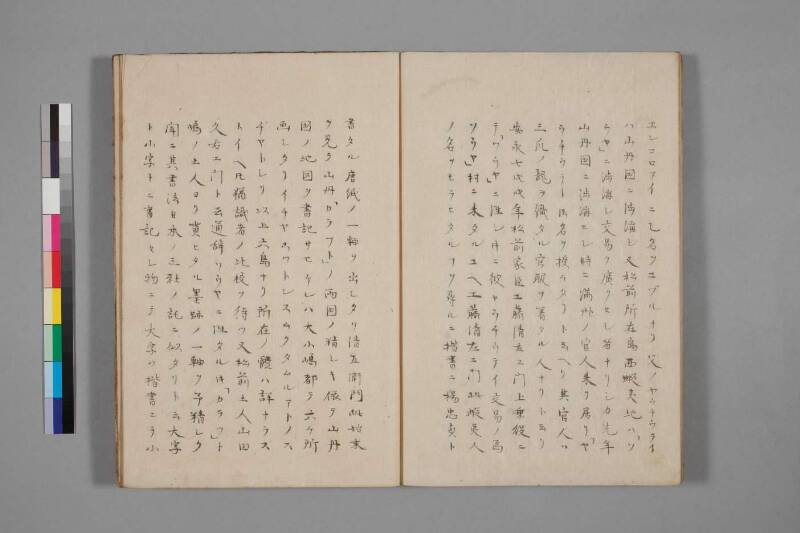
翻刻
【右丁】
エンコロアイニ乙名ヲユヅルナリ父ノヤウチウライ
ハ山丹国ニ渉海シ又松前所在島西蝦夷地ハ「ソ
ウヤ」ニ渉海シ交易ヲ広クセシ者ナリシカ先年
山丹国ニ渉海セシ時ニ満州ノ官人来リ居リ「ヤ
ウチウライト云名ヲ授ケタリト云ヘリ其官人ハ
三爪ノ龍ヲ織タル官服ヲ着タル人ナリト云リ
安永七戊戌年松前家臣工藤清左ェ門上乗役ニ
テ「ツウヤ」ニ往シトキニ彼ヤウチウテイ交易ノ為
ソウヤ」村ニ来タルユヘ工藤清左ェ門此蝦夷人
ノ名ヲモラヒタルヿヲ尋ルニ楷書ニ楊忠貞ト
【左丁】
書タル唐紙ノ一軸ヲ出シタリ清左衛門此始末
ヲ見テ山丹「カラフト」ノ両国ノ精シキ依テ山丹
国ノ地図ヲ書記サセケレハ大小嶋都テ六ヶ所
画シタリイチヤホツトンスムクタムルアトノス
チヤトシリ以上六島ナリ所在ノ体ハ詳ナラス
トイヘ𪜈猶識者ノ比校ヲ待ツ又松前土人山田
久右ェ門ト云通辞ソウヤニ往タルトキ「カラフ」ト
嶋ノ土人ヨリ貰ヒタル墨跡ノ一軸ヲ予精シク
聞ニ其書法日本ノ三社ノ託ニ似タリト云大字
ト小字トニ書記セシ物ニテ大字ハ楷書ニテ小
現代語訳
【右丁】
(前ページより続き)…エンコロアイが乙名(村の長)の職を受け継いだのである。父のヤウチウライは、山丹国(サンタン国)に渡海したことがあり、また松前の属する島の西、蝦夷地の「ソウヤ(宗谷)」にも渡海して、広く交易を行っていた人物であった。先年、山丹国に渡海した折に、満州の官人がやって来ており、「ヤウチウライ」という名を授けたと伝えられている。その官人は、三爪の龍を織り込んだ官服を着た人物であったという。
安永七年戊戌(一七七八年)、松前の家臣・工藤清左衛門が上乗役(監察・巡視の役職)として「ソウヤ(宗谷)」に赴いた折、かの「ヤウチウライ」が交易のために「ソウヤ」村にやって来ていた。そこで工藤清左衛門が、この蝦夷人(アイヌの人)が名前を授かった経緯について尋ねると、楷書で「楊忠貞」と
【左丁】
書かれた唐紙(中国の紙)の一軸を取り出した。清左衛門はこの一件の詳細を見て、(ヤウチウライが)山丹・カラフトの両地域に精通していることが分かったので、山丹国の地図を書き記させたところ、大小の島を合わせて都合六か所を描いた。すなわち、「イチヤ」「ホツトン」「スムク」「タムル」「アトノスチヤ」「トシリ」、以上六島である。それぞれの位置や様子については詳しくは分からないとはいえ、なお識者の比較・検討を待つものである。
また、松前の土人(土着の住民)で山田久右衛門という通辞(通訳者)が宗谷に赴いた折に、カラフト島の土人(現地民)からもらった墨跡の一軸について、私が詳しく聞き尋ねたところ、その書法は日本の三社の託宣(神託の文)に似ているとのことであった。大字と小字とで書き記されたものであり、大字は楷書で、小(字は…次ページへ続く)
英語訳
**[Right folio]**
(Continued from previous page) ...Enkoroai inherited the position of *otona* (village headman). His father, Yōchūrai, had previously crossed the sea to Santal (Sandan-koku / the Amur region) and had also traveled to "Sōya" (Soya/Cape Soya) in the western Ezo territory under Matsumae jurisdiction, where he had conducted extensive trade. It is said that on a previous occasion when he had crossed to the Sandan lands, a Manchu official had come to the area and bestowed upon him the name "Yōchūrai." This official was said to have been a person wearing an official robe embroidered with three-clawed dragons.
In the seventh year of An'ei, the year of *Tsuchinoe-Inu* (1778), a Matsumae retainer named Kudō Seizaemon, traveling in his capacity as *nori-yaku* (an inspector or superintendent aboard a vessel), went to "Sōya." At that time, the aforementioned Yōchūrai had come to the village of "Sōya" for the purposes of trade. Seizaemon inquired of this Ezo man about the circumstances in which he had received his name, whereupon the man produced a scroll of Chinese paper on which was written in regular script (*kaisho*) the name "Yō Chūtei" (楊忠貞).
**[Left folio]**
Upon examining this document, Seizaemon understood that Yōchūrai was well acquainted with both the Sandan lands and Karafuto. He therefore had Yōchūrai draw a map of the Sandan lands, and the man depicted a total of six islands, large and small: "Ichiya," "Hotton," "Sumuku," "Tamuru," "Ato-no-suchiya," and "Toshiri"—six islands in all. While the precise locations and details of these places remain unclear, one must await the comparative analysis of knowledgeable scholars.
Furthermore, regarding a scroll of brushwork received from a native of Karafuto Island by a man named Yamada Kyūemon, an interpreter (*tsūji*) of Matsumae origin, who had gone to Sōya—upon my detailed inquiry into the matter, it was said that the style of writing resembled that of the *sanja no takusen* (the Three Shrine Oracles) of Japan. It was a document written in both large and small characters; the large characters were in regular script (*kaisho*), and the small (characters...) *(continues on next page)*