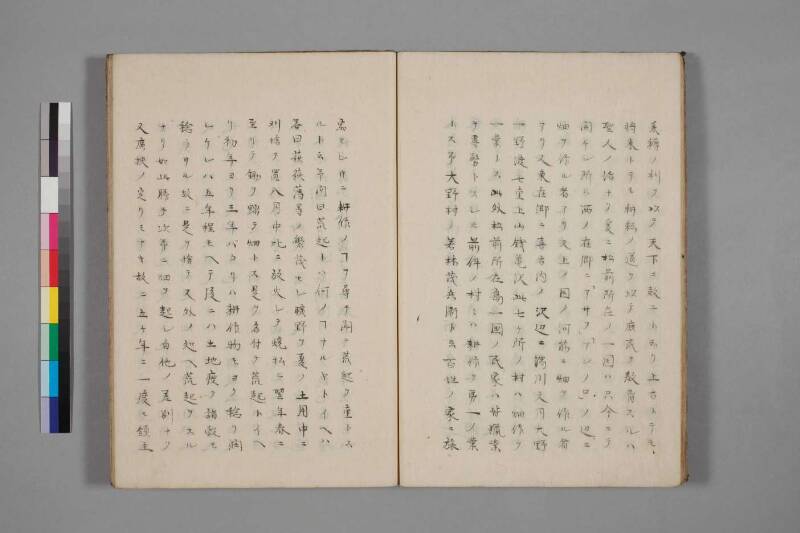
翻刻
【右丁】
耒耨ノ利ヲ以テ天下ニ教ユト云リ上古トテモ
将来トテモ耕耘ノ道ヲ以テ庶民ヲ教育スルハ
聖人ノ治ナリ爰ニ松前所在ノ一国ハ只今ニテ
開ケシ所ハ西ノ在郷ニ「アサフ」「アシノロ」ノ辺ニ
畑ヲ作ル者アリ又上ノ国ノ何筋ニ畑ヲ作ル者
アリ又東在郷ニ喜古内ノ沢辺ニ濁川文月大野
一野渡七重上山銭亀沢此七ヶ所ノ村ハ畑作ヲ
一業トス此外松前所在島一国ノ民家ハ皆猟業
ヲ専務トスレ𪜈前件ノ村々ハ耕作ヲ第一ノ業
トス予大野村ノ若林茂兵衛ト云百姓ノ家ニ旅
【左丁】
宿セシトキニ耕作ノヿヲ尋テ聞ニ荒起ヲ重トス
ルト云予問曰荒起トハ何ノヿナルヤトイヘハ
答曰萩荻薄等ノ繁茂セシ荒野ヲ夏ノ土用中ニ
刈捨テ置八月中比ニ放火シテ焼払ヒ翌年春ニ
至リテ鋤ヲ踏テ畑トス是ヲ名付テ荒起トイヘ
リ初年ヨリ三年バカリハ耕作物モヨク稔リ潤
シケレハ五年程モヘテ後ニハ土地痩テ諸穀モ
稔ラサル故ニ是ヲ捨テ又外ノ処ヘ荒起ヲスル
ナリ如此勝手次第ニ畑ヲ起シ自他ノ差別ナク
又広狭ノ定リモナキ故ニ五ヶ年ニ一度モ領主
現代語訳
【右丁】
耒耨(らいのう)の利をもって天下に教ゆると云う。上古においても将来においても、耕耘の道をもって庶民を教育するのは聖人の治世のあり方である。ここに松前所在の一国においては、ただいままでに開墾されている所は、西の在郷にて「アサフ」「アシノロ」の辺りに畑を作る者があり、また上ノ国の何筋かに畑を作る者があり、また東の在郷に、喜古内の沢辺に、濁川・文月・大野・一野渡・七重・上山・銭亀沢、この七か所の村は畑作を一つの生業とする。この他、松前所在の島一国の民家は皆、猟業を専らの務めとしているが、前件の村々は耕作を第一の業とする。私は大野村の若林茂兵衛という百姓の家に旅
【左丁】
宿した時に、耕作のことを尋ねて聞いたところ、「荒起こし」を重要とすると言う。私が「荒起こしとはいかなるものか」と問うと、答えて言うには、「萩・荻・薄(すすき)などの繁茂した荒野を夏の土用中に刈り捨てておき、八月中頃に放火して焼き払い、翌年の春になって鋤を踏んで畑とする。これを名付けて荒起こしと言う。初年より三年ばかりは耕作物もよく実り潤うが、五年ほどもたった後には土地が痩せて諸穀も実らなくなるので、これを捨てて、また別の場所へ荒起こしをするのである。」このように、各自の都合次第に畑を起こし、他人との区別もなく、また広さの定めもないので、五か年に一度も領主
英語訳
[Right page]
…that the benefits of the plow and hoe (*rainō*) were taught throughout the land. Whether in ancient times or in times to come, it is the mark of a sage ruler's governance to educate the common people through the way of farming and cultivation. Now, in the domain of Matsumae, the areas that have been opened to cultivation at present are: in the western countryside, around "Asafu" and "Ashinoro," there are those who make fields; in several areas of Kaminokuni, there are likewise those who make fields; and in the eastern countryside, along the riverside of Kikkonai, and in the villages of Nigorikawa, Fumizuki, Ōno, Ichinowatari, Nanae, Ueyama, and Zenigamesawa—these seven villages have taken field cultivation as one of their livelihoods. Beyond these, the households throughout the rest of the Matsumae island domain devote themselves exclusively to fishing; but the aforementioned villages take farming as their primary occupation. I lodged at the home of a peasant named Wakabayashi Mohei in Ōno village, and there I took the opportunity to
[Left page]
inquire about farming practices. He told me that *araokoshi* ("breaking new ground") was the most important method. When I asked what *araokoshi* was, he explained as follows: "The overgrown wasteland covered with *hagi* (bush clover), *ogi* (miscanthus reed), *susuki* (pampas grass), and the like is cut down and left during the hottest days of summer (*doyo*). Around mid-August, it is set alight and burned away. The following spring, one turns the soil with a plow and makes it into a field. This is what we call *araokoshi*. From the first year through about three years, the crops grow and ripen well, and it is productive; but after about five years, the soil becomes exhausted and the various grains no longer ripen. So one then abandons that field and carries out *araokoshi* in another location." In this way, fields are broken wherever one individually sees fit, with no distinction between one person's land and another's, and with no fixed limits on size. For this reason, not even once in five years does the domain lord…