翻刻
【右丁】
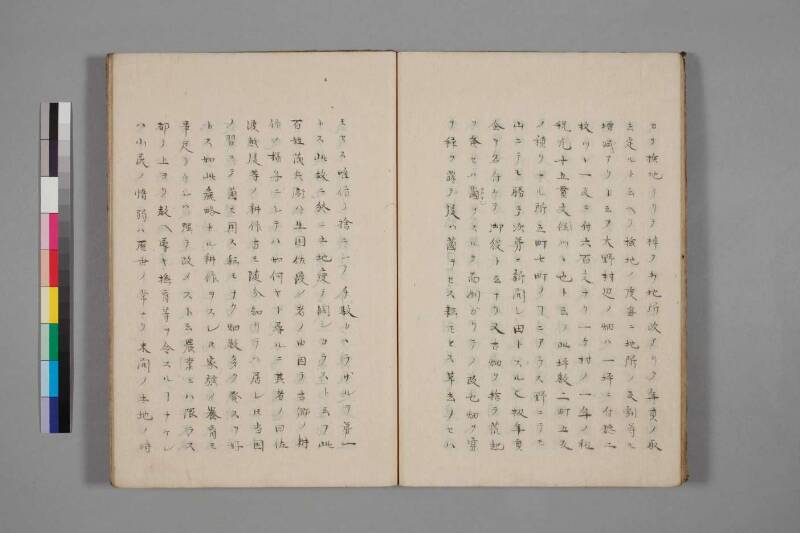
ヨリ検地アリテ棹ヲ打地所改アリテ年貢ノ取
去定ルト云ヘリ検地ノ度毎ニ地所ノ反割等モ
増減アリト云フ大野村辺ノ畑ハ一坪ニ付鐚二
枚ツヽ一反ニ付六百文ナリ一ヶ村ノ一年ノ租
税凡十五貫文位ツヽ也ト云フ此坪数二町五反
ノ積リナル所五町七町ノヿニアラス野ニテモ
山ニテモ勝手次第ニ新開シ田トスル也扨年貢
金ヲ名付ケテ御役ト云ナリ又古畑ヲ捨テ荒起
ヲ発セハ𦳊(コカヤシ)ヲスルヲ面倒ガリテノ改也畑ヲ穿
テ種ヲ蒔テ後ハ𦳊ヲセス耘モセス草去ノセハ
【左丁】
モセス唯作リ捨ニシテ手数カヽラザルヲ第一
トス此故ニ終ニ土地痩テ潤シカラスト云フ此
百姓茂兵衛ハ生国佐渡ノ者ノ由因テ古郷ノ耕
作ノ様子ニシテハ如何ヤト尋ルニ其者ノ曰佐
渡越後等ノ耕作方モ随分知リテハ居レ𪜈当国
ノ習ニテ𦳊モ用ス耘モナク畑数多ク発スヲ好
トス如此麁略ナル耕作ヲスレ𪜈家族ノ養育モ
事足リケレハ強テ改メスト云農業ニハ限ラス
都テ上ヨリ教ヘ導キ撫育等ヲ令スルヿナケレ
ハ小民ノ惰弱ハ歴世ノ常ナリ未開ノ土地ノ時
現代語訳
【右丁】
より検地があって棹を打ち、地所の改めがあって年貢の取り立て額が定まると言う。検地のたびごとに地所の反割なども増減があると言う。大野村辺りの畑は一坪につき鐚銭二枚ずつ、一反につき六百文である。一か村の一年の租税はおよそ十五貫文ほどずつであると言う。この坪数は二町五反の計算になるところ、五町・七町というわけではない。野であっても山であっても、思いのままに新開して畑とするのである。さて、年貢金を名付けて「御役」と言う。また、古い畑を捨てて荒起こしを始めるのは、肥やしをするのを面倒がってのことである。畑を耕して種を蒔いた後は、肥やしもせず、耘(くさぎ)もせず、草取りも
【左丁】
せず、ただ作りっぱなしにして、手間がかからないことを第一とする。このゆえに、ついには土地が痩せて潤わないと言う。この百姓・茂兵衛は生まれ故郷が佐渡の者とのことで、それゆえ、故郷の耕作の様子と比べてはどうかと尋ねると、その者が言うには、「佐渡・越後などの耕作の仕方もそれなりに知ってはいるが、この土地の習慣として、肥やしも使わず、耘もなく、畑を数多く起こすことをよしとする。このように粗略な耕作をしても、家族の養育には事足りるので、わざわざ改めようとはしない」と言う。農業に限らず、すべて上から教え導き、撫育などを命ずることがなければ、下の民の怠惰と気力のなさは、世々にわたる常のことである。未開の土地の時代には
英語訳
[Right page]
…conduct a land survey (*kenchi*), drive in the measuring rods (*sao*), carry out a cadastral review, and fix the amount of annual tribute (*nengu*) to be levied. With each land survey, the acreage allocations of the various parcels increase or decrease accordingly. In the vicinity of Ōno village, the rate is two *bita* coins per tsubo, which amounts to six hundred *mon* per tan. The annual tax for one village is said to amount to roughly fifteen *kanmon* in total. This tsubo count corresponds to a calculation of two *chō* and five *tan*—it is not a matter of five or seven *chō*. Whether on plain or in the mountains, new land is broken and turned into fields wherever one pleases. The annual tribute payment is called "*oyaku*" (literally, "the duty"). Furthermore, the reason why people abandon old fields and begin new *araokoshi* is simply that they dislike the trouble of applying fertilizer. After tilling the field and sowing seeds, they apply no fertilizer, do no weeding between rows, and do not remove the grass—
[Left page]
they simply abandon the crop to itself after planting, and consider it a virtue to spend as little labor as possible. This is why, in the end, the soil becomes exhausted and yields nothing. This peasant, Mohei, was originally from Sado Province. I therefore asked him how things compared to the farming methods of his home region, to which he replied: "I am well enough acquainted with the farming methods of Sado, Echigo, and the like, but in keeping with the customs of this land, people think it best to use no fertilizer, do no weeding, and simply open up as many new fields as possible. Even with farming this negligent and rough, it is enough to feed and raise one's family, so there is no particular motivation to change." This applies not only to agriculture—in all things, unless those above teach, guide, and issue orders for the nurturing and welfare of the people (*buiku*), the laziness and feebleness of the common folk is an invariable truth across all generations. In the age of uncleared land…