翻刻
【右丁】
勢ナルヘシ
新発田畑ノ事
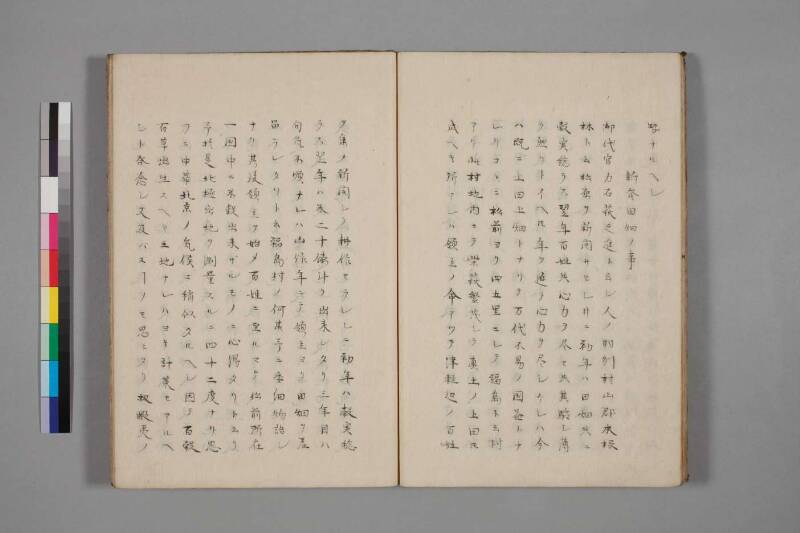
御代官力石萩之進ト云シ人ノ羽州村山郡本根
林ト云松原ヲ新開サセシトキニ初年ハ田畑共ニ
穀実稔ラス翌年百姓共心力ヲ尽セ共其験シ薄
ク然リトイヘ𪜈年ヲ追テ心力を尽シケレハ今
ハ既ニ上田上畑トナリテ万代不易ノ国益トナ
レリコヽニ松前ヨリ四五里ニシテ福島ト云村
アリ此村地内ニテ柴萩繁茂シテ真土ノ上田𪜈
成ヘキ所アレハ領主ノ命アツテ津軽辺ノ百姓
【左丁】
ヲ集メ新開シテ耕作セラレシニ初年ハ穀実稔
ラス翌年ハ米二十俵計リ出来シタリ三年目ハ
旬気不順ナレハ凶作年ニテ領主ヨリ田畑ヲ差
留ラレタリト云福島村ノ何某予ニ委細物語シ
ナリ其後領主ヲ始メ百姓ニ至ルマテ松前所在
一国中ニ米穀出来ザルモノニ心得タリト云リ
予於是北極出地ヲ測量スルニ四十二度ナリ思
フニ中華北京ノ気候ニ稍似タルヘシ因テ百穀
百草出生スヘキ土地ナレハヨキ計策モアルヘ
シト発念シ又及バヌヿヲモ思ヒタリ扨蝦夷ノ
現代語訳
【右丁】
(そのような)勢いであるべきであろう。
新発田畑のこと
御代官・力石萩之進という人が、羽州村山郡の本根林という松原を新開させた時に、初年は田畑ともに穀物が実らず、翌年も百姓たちが心力を尽くしたが、その効験は薄かった。しかしながら、年を追うごとに心力を尽くし続けたので、今はすでに上田・上畑となって、万代不易の国益となった。ここに、松前より四、五里にして福島という村がある。この村の地内にて柴萩が繁茂しており、真土にして上田ともなるべき所があったので、領主の命があって、津軽辺りの百姓を
【左丁】
集めて新開して耕作させたところ、初年は穀物が実らず、翌年は米が二十俵ほど出来た。三年目は旬気が不順であったため凶作の年となり、領主より田畑を差し止められたとのことである。福島村の某が私に委細を物語ったことである。その後、領主をはじめ、百姓に至るまで、松前一国中において米穀が出来ないものと心得ているとのことである。私はここにおいて北極出地を測量したところ、四十二度であった。思うに、中華(中国)の北京の気候にやや似ているであろう。したがって、百穀・百草が出生すべき土地であるから、よき計策もあるべしと発念し、また及ばぬことをも思ったりした。さて、蝦夷の
英語訳
[Right page]
…such would naturally be the prevailing tendency.
On the Matter of Newly Opened Fields
When the magistrate (*daikan*) known as Chikaraishi Haginoshin caused the pine grove called Motonenebayashi in Murayama District of Ushū [Dewa Province] to be newly opened for cultivation, in the first year neither the paddy fields nor the dry fields produced any grain. In the second year, the peasants applied all their effort and energy, yet the results were meager. Nevertheless, as they continued to pour all their energy into the work year after year, the land has now become the finest grade of paddy field (*jōden*) and dry field (*jōhata*), and has come to represent an enduring national benefit for all generations to come. Now, some four or five *ri* from Matsumae, there is a village called Fukushima. Within the lands of this village, brushwood and bush clover grow in abundance, and there are areas where the soil is genuine loam that could well become superior paddy fields. At the lord's command, peasants from the Tsugaru region were
[Left page]
gathered together and set to work opening and cultivating the new land. In the first year, the grain did not ripen. In the second year, approximately twenty bales of rice were produced. In the third year, however, the seasonal conditions were unfavorable, making it a year of poor harvest, and the lord ordered a suspension of the farming of those fields. This was related to me in detail by a certain person from Fukushima village. After that, it is said that the domain lord and the peasants alike came to believe that rice and grain simply could not be grown anywhere throughout the entire domain of Matsumae. I then measured the altitude of the celestial pole (*hokkyoku shutchi*, i.e., latitude) at this location and found it to be forty-two degrees. It occurred to me that this might be somewhat similar in climate to Beijing in China (*Chūka*). Given that this is therefore land upon which all manner of grains and plants ought to be able to grow, I conceived the idea that there must be good plans and strategies to be devised—and also found myself thinking of matters beyond my reach. And so, regarding the Ezo…