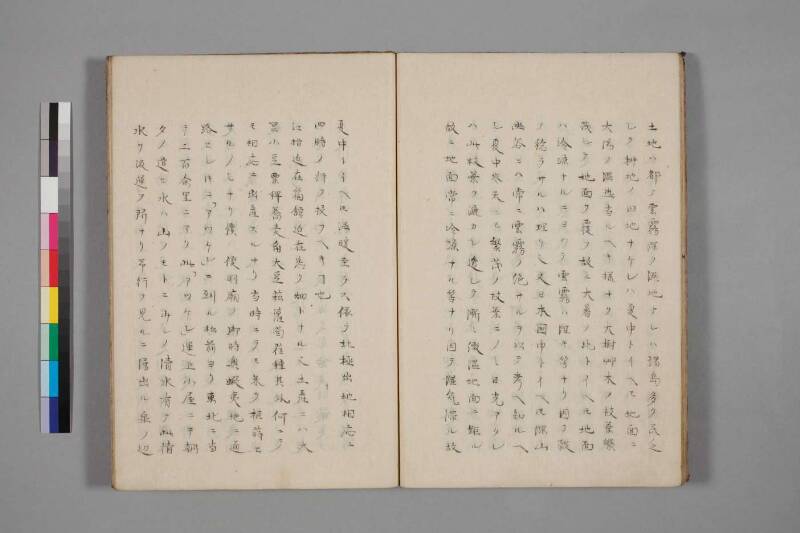
翻刻
【右丁】
土地ハ都ノ雲霧深ク湿地ナレハ諸島多ク民乏
シク耕地ノ田地ナケレハ夏中トイヘ𪜈地面ニ
大陽ノ湿熱当ルヘキ様ナク大樹草木ノ枝葉繁
茂シテ地面ヲ覆フ故ニ大暑ノ比トイヘ𪜈地面
ハ冷涼ナルニヨツテ雲霧ハ深キ筈ナリ因テ穀
ヲ稔ラサルハ理リ也又日本国中トイヘ𪜈深山
幽谷ニハ常ニ雲霧ノ絶サルヲ以テ考ヘ知ルヘ
シ夏中炎天ニモ繁茂ノ枝葉ニノミ日光アタレ
ハ此枝葉ヲ漉カシ透シテ漸々微温地面ニ距ル
故ニ地面常ニ冷涼ナル筈ナリ因テ湿気滞ル故
【左丁】
夏中トイヘ𪜈温暖至ラス依テ北極出地相応ニ
四時ノ行ヲ挍フヘキヿ也
江指近在箱館近在悉ク畑トナル也土産ニハ大
豆小豆粟稗蕎麦角大豆#1菘蘿蔔#2荏種其外何ニテ
モ相応ニ出産スルナリ当時ニテモ米ヲ植蒔セ
サルノミナリ僕 俊明廟ノ御時奥蝦夷地ニ通
路セシトキニ「アツケシ」ニ到ル松前ヨリ東北ニ当
テ二百余里ニアリ此「アツケシ」運上小屋ニテ朝
夕ノ遣ヒ水ハ山ノモトニ少シノ清水有テ此清
水ヲ汲運ノ所ナリ予行テ見ルニ湧出ル泉ノ辺
現代語訳
【右丁】
蝦夷の土地は、概して雲霧が深く湿地が多いため、耕地の田地がなく、夏の間といえども地面に太陽の湿熱が当たるような様子がなく、大樹・草木の枝葉が繁茂して地面を覆っているため、大暑のころといえども地面は冷涼である。これによって雲霧が深いのは当然のことである。したがって穀物が実らないのは道理というものだ。また、日本国中といえども、深山幽谷には常に雲霧が絶えないことをもって、この理は考え知るべきことである。夏の間の炎天においても、繁茂した枝葉にのみ日光が当たるため、この枝葉を漉し通して、ようやくわずかな微温が地面に達するのみである。それゆえに地面は常に冷涼であるはずである。したがって湿気が滞るため、
【左丁】
夏の間といえども温暖が至らない。よって、北極出地(緯度)に相応じて、四時の運行を較べ検討すべきことである。
江指(えさし)の近在、箱館の近在はことごとく畑となっている。土産(産物)には、大豆・小豆・粟・稗・蕎麦・角大豆(いんげん豆)・菘(かぶ)・蘿蔔(だいこん)・荏種(えごまの種)、その他何にても相応に産出するものである。当時においても、米を植え蒔かないだけのことである。私は、俊明廟(田沼意次公)の御時に奥蝦夷地に通路した際に、「アッケシ」に到った。松前より東北に当たって二百余里にある。この「アッケシ」の運上小屋にて、朝夕の使い水は山の麓にわずかばかりの清水があって、この清水を汲み運ぶ所であった。私が行って見るに、湧き出る泉の辺りに
英語訳
[Right page]
The lands of Ezo are, throughout, shrouded in deep cloud and mist, and are largely wetlands. There being no cultivated paddy fields, even in the midst of summer the moist heat of the sun has no way of reaching the ground directly. The branches and leaves of great trees and vegetation grow in such profusion as to cover the ground entirely, and therefore, even at the height of midsummer, the ground remains cool. That the mist and cloud are thick is naturally to be expected as a result of this. It stands to reason, therefore, that grain does not ripen. Moreover, this can be understood by considering that even within Japan proper, cloud and mist never cease in deep mountains and remote valleys. Even under the blazing summer sky, sunlight strikes only the dense canopy of branches and leaves, and only a faint warmth, filtered and diffused through this foliage, gradually reaches the ground. It is only natural, therefore, that the ground should always remain cool. And because moisture accumulates and stagnates,
[Left page]
even during the summer months, true warmth never arrives. Accordingly, one ought to compare and assess the progression of the four seasons in a manner befitting the latitude (*hokkyoku shutchi*).
The areas surrounding Esashi and the areas surrounding Hakodate have become entirely dry fields (*hatake*). Among local products, soybeans, adzuki beans, millet, barnyard millet, buckwheat, kidney beans (*kaku daizu*), turnips (*kabu*), daikon radishes, perilla seeds (*egoma no tane*), and various other things are produced in reasonable quantities. Even at the present time, it is simply that rice has not been planted or sown—nothing more. I, during the time of the Shunmei Byō [the late Senior Councilor Tanuma Okitsugu], when I traveled through the inner Ezo lands, arrived at "Akkeshi." It lies to the northeast of Matsumae, at a distance of more than two hundred *ri*. At the trading post (*un'jō goya*) of this "Akkeshi," the water used morning and evening was drawn from a small spring at the foot of a mountain, which had to be carried there by hand. When I went to inspect it, at the edge of the welling spring…