翻刻
【右丁】
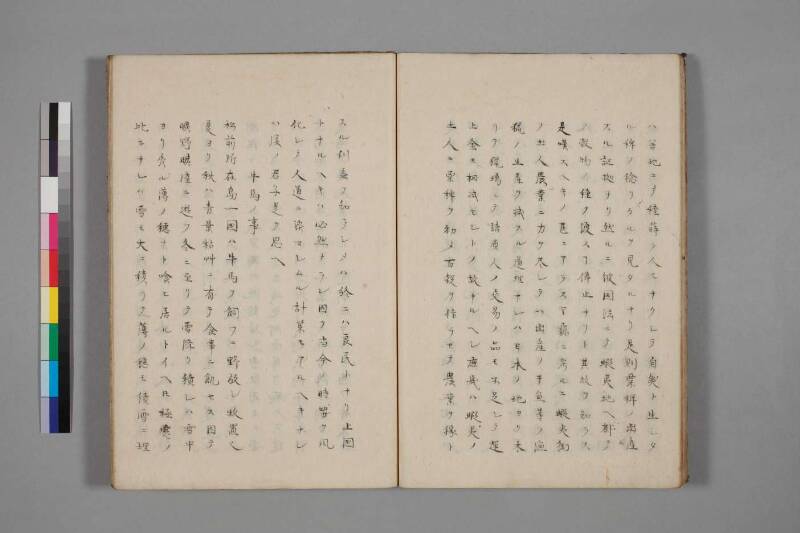
ハ谷地ニテ種蒔ク人モナクシテ自然ト生シタ
ル稗ノ稔リタルヲ見タルナリ是則粟稗ノ出産
スル証拠ナリ然ルニ彼国法ニテ蝦夷地ヘ都テ
ノ穀物ノ種ヲ渡スヿ停止ナリト其故ヲ知ラス
是嘆スヘキノ甚ニアラスヤ窃ニ考ルニ蝦夷街
ノ土人農業ニ力ヲ尽シテハ出産ノ干魚等ノ漁
猟ノ生産ヲ減スル道理ナレハ日本ノ地ヨリ来
リテ猟場ニテ請負人ノ交易ノ品モ不足シテ運
上金モ相減セシトノ故ナルヘシ庶幾ハ蝦夷ノ
土人ニ粟稗ヲ初メ百穀ヲ作ラセテ農業ヲ稼ト
【左丁】
スル利益ヲ知ラシメハ終ニハ良民トナリ上国
トナルヘキハ必然ナラン因テ当今ノ時勢ヲ風
化シテ人道ニ染マシムル計策モアルヘキナレ
ハ後ノ君子是ヲ思ヘ
牛馬ノ事
松前所在島一国ハ牛馬ヲ飼フニ野放シ牧置也
夏ヨリ秋ハ青葉枯草ニ有テ食事ニ飢セス因テ
曠野曠陸ニ遊フ冬ニ至リテ雪降リ積レハ雪中
ヨリ秀ル#1薄ノ穂ナト喰ヒ居ルトイヘ𪜈極寒ノ
比ニナレハ雪モ大ニ積リテ薄ノ穂モ積雪ニ埋
現代語訳
【右丁】
(その泉の)辺りは谷地(やちだ)であって、種を蒔く人もいないのに、自然に生えた稗が実っているのを見たのである。これはすなわち、粟や稗が(蝦夷地でも)産出できるという証拠である。しかるに、かの国(松前藩)の法によって、蝦夷地へ一切の穀物の種を渡すことは禁止されているという。その理由が理解できない。これは嘆くべきことのはなはだしいものではないか。ひそかに考えるに、蝦夷の土人が農業に力を尽くしてしまえば、産出される干魚などの漁猟による生産が減るという道理であり、日本本土から来て猟場において請負人が交易する品物も不足し、運上金も減少するであろう、というのがその理由であろう。願わくは、蝦夷の土人に粟・稗をはじめ百穀を作らせて、農業を稼業と
【左丁】
することの利益を知らしめるならば、終いには良民となり、上国(文明の進んだ国)となるべきことは必然であろう。したがって、今の時勢に応じて教化し、人の道に染まらしめる計策もあるべきであるから、後の君子はこのことをよく考えるがよい。
牛馬のこと
松前所在の島一国では、牛馬を飼うのに野放しにして牧に置いておく。夏から秋にかけては青葉や枯草があって食事に飢えることなく、広々とした野原や陸地で遊んでいる。冬になって雪が降り積もれば、雪の中から突き出ている薄(すすき)の穂などを食べているといえども、極寒の頃になると、雪も大いに積もって薄の穂も積雪に埋
英語訳
[Right page]
The area around the spring was a marshy valley (*yachi*), and although no one had sown seeds there, I observed barnyard millet that had grown naturally and ripened. This is proof positive that millet and other such grains can be produced in Ezo. And yet, under the laws of that domain [the Matsumae domain], it is prohibited to bring any grain seeds whatsoever into Ezo lands. I cannot understand the reason for this. Is this not something to be lamented in the extreme? Reflecting on it privately, I surmise that the reasoning must be as follows: if the native people (*dojin*) of Ezo were to devote their energies to agriculture, the production of dried fish and other goods from hunting and fishing would naturally decrease; consequently, the goods available for the contractors (*ukeoi'nin*) who come from mainland Japan to trade at the hunting grounds would fall short, and the *un'jōkin* (license fees) collected would also decline. It is therefore my earnest hope that the native people of Ezo be made to cultivate millet, barnyard millet, and all manner of grains, and be taught of the benefits of taking up agriculture as their livelihood,
[Left page]
so that they might ultimately become good subjects (*ryōmin*) and their land become a civilized nation (*jōkoku*). This is surely inevitable. Therefore, there must be ways to bring about their moral transformation in accordance with the spirit of the present age and to imbue them with the ways of humanity. Let future gentlemen of virtue (*kunshi*) give this careful thought.
On Cattle and Horses
In the single domain of the island of Matsumae, cattle and horses are kept by being set free to roam on open pastureland. From summer through autumn, with green leaves and dried grasses available, they do not go hungry, and they roam freely across the open fields and plains. When winter comes and snow falls and accumulates, they subsist on the ears of *susuki* (Japanese pampas grass) that protrude above the snow; but when the most bitter cold arrives, the snow piles up deeply and even the ears of pampas grass become buried beneath the drifts…