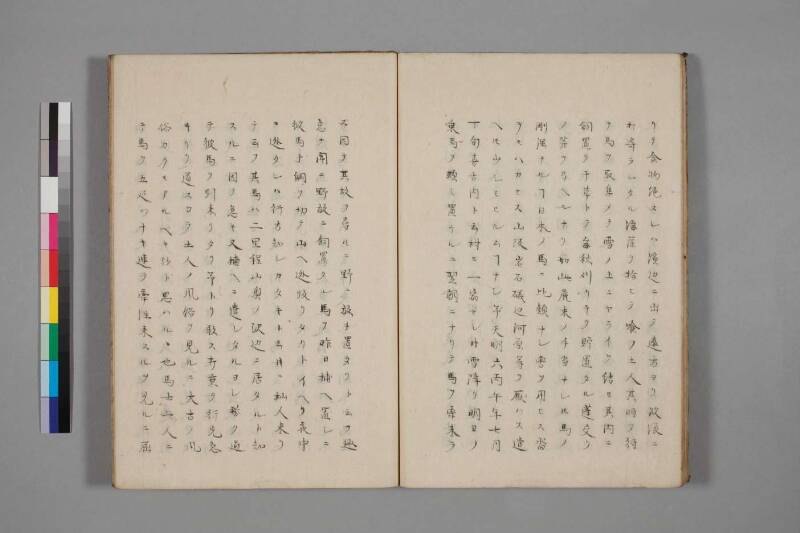
翻刻
【右丁】
リテ食物絶ヌレハ浜辺ニ出テ遠方ヨリ波浪ニ
打寄ラレタル海藻ヲ拾ヒテ喰フ土人其時ヲ待
テ馬ヲ取集メテ雪ノ上ニヤライヲ結ヒ其内ニ
飼置テ干草トテ毎秋刈リ干テ貯置タル蓬交リ
ノ茅ヲ与ヘルナリ如此麁末ノ手当ナレ𪜈馬ノ
剛強ナルヿ日本ノ馬ニ比類ナシ轡ヲ用ヒス沓
ヲモハカセス山阪岩石磯辺河原等ヲ厭ハス遣
ヘ𪜈少シモヒルムヿナシ予天明六丙午年七月
下旬喜古内ト云村ニ一宿セシトキ雪降リ明日ノ
乗馬ヲ頼シ置ケルニ翌朝ニナリテ馬ヲ牽来ラ
【左丁】
ス因テ其故ヲ尋ルニ野ニ放チ置タリト云フ趣
意ヲ聞ニ野放ニ飼置タル馬ヲ昨日捕ヘ置シニ
彼馬手綱ヲ切テ山ヘ逃帰リタリトイヘリ夜中
ニ逃タレハ行方知レカタキト云トキニ杣人来リ
テ云フ其馬ハ二里程山奥ノ沢辺ニ居タルト知
スルニ因テ急キ又捕ヘニ遣シタルヨシ暫ク過
テ彼馬ヲ引来リタリ予トリ敢ス打乗テ行先急
キケリ道スカラ土人ノ風俗ヲ見ルニ大古ノ風
俗カクモアルヘキ歟ト思ハルヽ也馬士一人ニ
テ馬ヲ五疋ツナキ連テ牽往来スルヲ見ルニ屈
現代語訳
【右丁】
れて食べ物が絶えると、(牛馬は)浜辺に出て、遠方から波浪に打ち寄せられた海藻を拾って食べる。土人はその時機を待って馬を取り集め、雪の上にやらい(囲い)を結んで、その中に飼い置き、干し草として毎秋刈り取って干して貯えておいた蓬(よもぎ)まじりの茅(かや)を与えるのである。このように粗末な手当てではあるが、馬の強健なることは日本(本土)の馬に比類がない。轡(くつわ)を用いず、蹄鉄(くつ)もはかせず、山坂・岩石・磯辺・河原などをいとわず使っても、少しもひるむことがない。私は天明六丙午年(1786年)七月下旬、喜古内(きこない)という村に一泊した時、雪が降り、翌日の乗馬を頼んでおいたところ、翌朝になって馬を引いて来
【左丁】
なかった。そこでその理由を尋ねると、野に放し置いていたという。事情を聞けば、野放しで飼い置いた馬を前日捕まえておいたのに、その馬が手綱を切って山へ逃げ帰ってしまったという。夜中に逃げたので行方が知れないと言っていたところ、杣人(そまびと)が来て言うには、その馬は二里ほど山奥の沢の辺りにいるとのことだった。それを聞いて、急いでまた捕まえに遣わしたとのことだった。しばらくして、かの馬を引いて来た。私はとりあえず打ち乗って急いで行き先へと向かった。道すがら土人の風俗を見るに、大昔の風俗というものはこのようなものであったであろうかと思われるのであった。馬士(まご)一人が馬を五匹つなぎ連ねて牽いて往来するのを見るに、屈
英語訳
[Right page]
…and when the food supply is thus cut off, the animals make their way to the shoreline and pick up and eat the seaweed that has been washed ashore by the waves from a distance. The native people (*dojin*) wait for this moment to gather the horses together, build a *yarai* (a simple enclosure made of bundled brushwood) on top of the snow, stable the animals within it, and feed them a mixture of mugwort (*yomogi*) and sedge grass (*kaya*) that has been cut, dried, and stored away each autumn as hay. Crude as this care may be, the horses' robustness and hardiness is without equal compared to horses on mainland Japan. No bit is used, no horseshoes are fitted, and yet they can be driven across mountain slopes, rocky terrain, rocky shores, and riverbeds without the slightest sign of faltering. In the latter part of the seventh month of the sixth year of Tenmei, the *hinoe-uma* year (1786), when I lodged for a night in a village called Kikonai, snow had fallen, and I had arranged in advance for a horse to ride the following day. However, when morning came, no horse was brought to me.
[Left page]
When I inquired as to the reason, I was told that the horse had been left out in the fields. Upon hearing the full account, it appeared that although the horse—which had been kept free-ranging—had been caught and secured the previous day, it had chewed through its reins and escaped back into the mountains. Since it had escaped in the middle of the night, they said they had no idea of its whereabouts. Just then, a woodcutter (*somabito*) arrived and said that the horse was to be found near a swampy valley (*sawa*) about two *ri* deep in the mountains. Upon hearing this, they quickly dispatched someone to catch it again. After some time had passed, the horse was brought back. Without delay, I mounted up and hastened on toward my destination. As I traveled along the road observing the customs of the native people, I could not help but think: "Could this be what the customs of ancient times were like?" Watching a single horse-handler (*mago*) leading five horses tied together in a string, I was struck with a sense of…