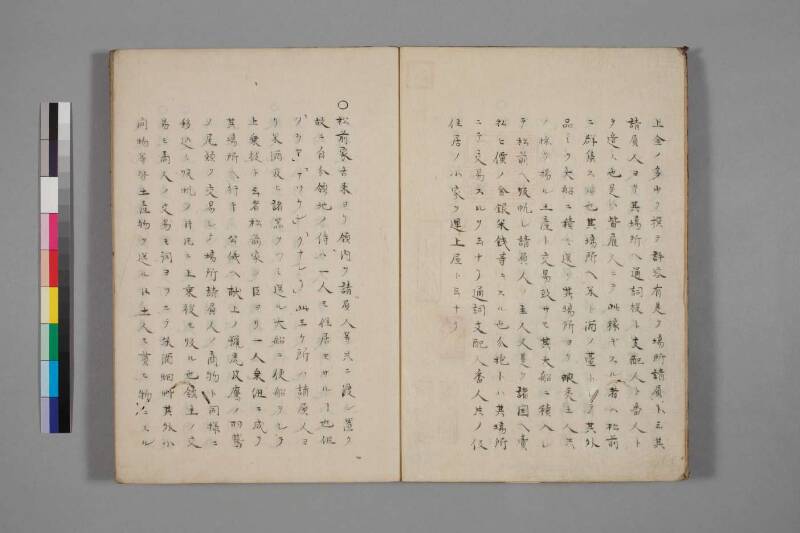
翻刻
【右丁】
上金ノ多少ヲ撰テ許容有是ヲ場所請負ト云其
請負人ヨリ其場所ヘ通詞役ト支配人ト番人ト
ヲ遣ス也是ハ皆雇人ニテ此稼ギスル者ハ松前
ニ群集スル也其場所ヘ米ト酒ノ台トシテ其外
品々ヲ大船ニ積ミ送リ其場所ヨリ蝦夷土人共
ノ採リ揚ル土産ト交易致サセ其大船ニ積入レ
テ松前ヘ帰帆シ請負人ノ主人又是ヲ諸国ヘ売
払ヒ価ノ金銀米銭等ニスル也介抱トハ其場所
ニテ交易スルヲ云ナリ通詞支配人番人共ノ仮
住居ノ小家ヲ運上屋ト云ナリ
【左丁】
○松前家古来ヨリ領内ヲ請負人等共ニ渡シ置ク
故ニ自分領地ノ侍ハ一人モ住居セサルコト也但
「ソウヤ」「アツケシ」「クナシリ」此三ケ所ハ請負人ヨ
リ米酒及ヒ諸器ヲツミ送ル大船ニ便船ヲシテ
上乗役ト云者松前家ノ臣ヨリ一人乗組ニ成テ
其場所ヘ行キ 公儀ヘ献上ノ猟虎皮鷹ノ羽鷲
ノ尾類ヲ交易シテ場所諸負人ノ商物ト同様ニ
移込ミ帰帆ノトキトモニ上乗役モ帰ル也領主ノ交
易モ商人ノ交易モ同ヨフニテ米酒烟草其外小
間物等皆土産物ヲ送ルト云土人モ貰ヒ物ニスル
現代語訳
【右丁】
運上金の多少を選んで許可する。これを場所請負という。その請負人からその場所へ通訳役と支配人と番人を派遣する。これらは皆雇用人であり、この稼業をする者は松前に群集している。その場所へ米と酒の代金として、その他の品々を大船に積んで送り、その場所から蝦夷土人たちが採取した土産物と交易させ、その大船に積み入れて松前へ帰航し、請負人の主人がまたこれを諸国へ売り払い、代価を金銀米銭等にするのである。介抱とはその場所で交易することを言う。通訳・支配人・番人たちの仮住居の小屋を運上屋という。
【左丁】
○松前家は古来より領内を請負人等に渡しておくため、自分の領地に侍は一人も住居していないことである。ただし「宗谷」「厚岸」「国後」この三ヶ所は、請負人が米酒および諸器を積み送る大船に便船として、上乗役という者を松前家の臣より一人乗組にして、その場所へ行き、公儀へ献上する猟虎皮・鷹の羽・鷲の尾などを交易して、場所請負人の商物と同様に積み込み、帰航の時ともに上乗役も帰る。領主の交易も商人の交易も同様で、米酒煙草その他小間物等、皆土産物を送るといい、土人も貰い物にする。
英語訳
[Right page]
Permission is granted based on the amount of tribute money (운상금). This is called "basho ukeoi" (territory contracting). The contractor sends interpreters, supervisors, and guards to that territory. These are all hired employees, and those who engage in this business gather in Matsumae. Rice and sake, along with various other goods, are loaded onto large ships and sent to the territory, where they are traded for local products collected by the Ainu people. These are then loaded onto the ships for return to Matsumae, where the contractor's master sells them to various provinces, converting them into gold, silver, rice, and coins. "Kaiho" (care/protection) refers to conducting trade at these locations. The small houses that serve as temporary residences for interpreters, supervisors, and guards are called "unjoya" (tribute houses).
[Left page]
○The Matsumae family has traditionally entrusted the territory to contractors, so not a single samurai resides in their own domain. However, for the three locations of "Soya," "Akkeshi," and "Kunashiri," a supervisor called "uwanori-yaku" from among the Matsumae family's retainers boards the large ships as a passenger vessel when contractors send rice, sake, and various implements. This person goes to these locations to trade for tiger pelts, hawk feathers, eagle tails, and other items to be presented to the shogunate, loading them alongside the contractors' commercial goods. When the ships return, the supervisor also returns. Both the lord's trade and the merchants' trade operate similarly, with rice, sake, tobacco, and other sundry goods all being sent as local products, which the indigenous people also receive as gifts.