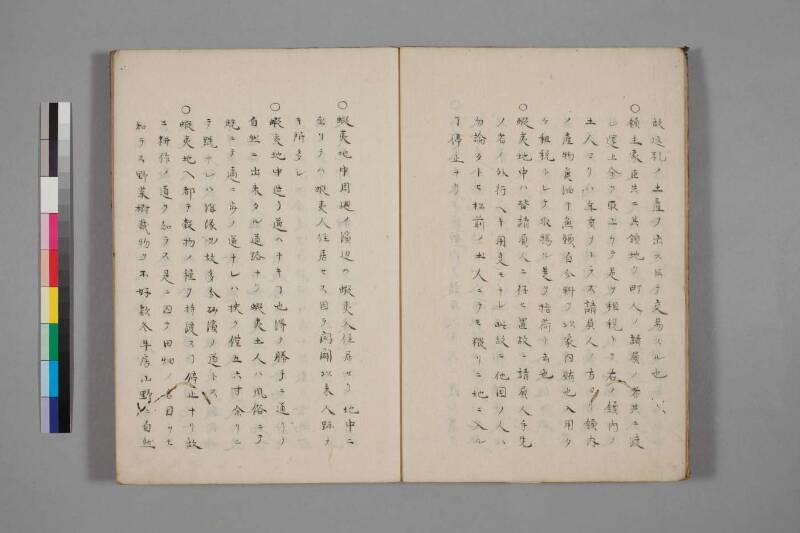
翻刻
【右丁】
故返礼ノ土産ヲ出スト云テ交易スル也
〇領主家臣共ニ其領地ヲ町人ノ請負ノ者共ニ渡
シ運上金ヲ取上ケテ是ヲ租税トテ右ノ領内ノ
土人ヨリハ年貢ヲトラズ請負人ノ方ヨリ領内
ノ産物魚油干魚類自分料ヲ以家内賄也入用タ
ケ租税トシテ取揚ル是ヲ指荷ト云也
〇蝦夷地中ハ皆請負人ニ任セ置故ニ請負人手先
ノ者ノ外行ヘキ用事モナシ此故ニ他国ノ人ハ
勿論タトヒ松前ノ土人ニテモ猥リニ地ニ入ル
ヿ停止ナリ
【左丁】
〇蝦夷地中周廻ノ浜辺ハ蝦夷人住居セリ地中ニ
至リテハ蝦夷人住居セス因テ開闢以来人跡ナ
キ所多シ
〇蝦夷地中造リ道ハナキヿ也得テ勝手ニ通リテ
自然ニ出来タル道路ナリ蝦夷土人ハ風俗ニテ
跣ニテ適ニ歩ノ道ナレハ狭ク僅五六寸余リニ
テ跣ナレハ海縁ノ【ヲノ?】故多分砂浜ノ道トス
〇蝦夷地ヘ都テ穀物ノ種ヲ持渡スヿ停止ナリ故
ニ耕作ノ道ヲ知ラス是ニ因テ田畑ノ名目ヲモ
知ラス野菜樹裁物ヲ不好欵冬牛房山野ニ自然
現代語訳
【右丁】
故に返礼の土産を出すといって交易するのである。
〇領主・家臣ともにその領地を町人である請負人たちに渡し、運上金を取り上げてこれを租税とし、領内の土人からは年貢を取らず、請負人の側から領内の産物である魚油・干魚類を自分の取り分として家内の賄いに充て、必要な分だけを租税として取り上げる。これを指荷(さしに)という。
〇蝦夷地の中は皆請負人に任せておくため、請負人の手先の者以外に行くべき用事もない。このため、他国の人はもちろんのこと、たとえ松前の住民であっても、みだりに地に入ることは禁止されている。
【左丁】
〇蝦夷地の周囲の浜辺には蝦夷人が住居している。地の中(内陸部)に至っては蝦夷人は住居せず、よって開闢(かいびゃく)以来、人の足跡がない所が多い。
〇蝦夷地の中には造られた道はない。自然に通り歩くうちに自然にできた道路である。蝦夷土人は風俗として裸足で適当に歩く道であるため、狭く、わずか五、六寸あまりで、裸足であるため海縁の【岸?】のため、多くは砂浜の道としている。
〇蝦夷地へは一切穀物の種を持ち渡すことは禁止されている。故に耕作の道を知らず、これにより田畑の名前をも知らない。野菜・樹木の栽培物を好まず、款冬(ふき)・牛蒡(ごぼう)は山野に自然に(生えており)……
英語訳
[Right page]
...and so they conduct trade by saying they are offering gifts in return.
○Both the lord and his retainers hand over their territory to merchant contractors, collecting tribute money (unjōkin) as taxation. Rather than levying annual tribute (nengu) from the indigenous people within the domain, the contractors take fish oil, dried fish, and other local products as their own share for household provisions, and only the amount required is collected as taxation. This is called "sashini" (designated cargo/allocation).
○Since the interior of Ezo is entirely left to the contractors, there is no reason for anyone other than the contractors' subordinates to go there. For this reason, not only people from other provinces but even residents of Matsumae are prohibited from entering the territory without proper authorization.
[Left page]
○The Ainu people live along the coastal shores surrounding Ezo. They do not inhabit the interior, and consequently there are many places that have had no human presence since the beginning of time.
○There are no constructed roads in Ezo. The paths that exist are those that have formed naturally through repeated passage. Since it is the custom of the Ainu to walk barefoot along these narrow paths, they are only about five or six sun (approximately 15–18 cm) wide. As the people are barefoot, and given the nature of the coastal shores [possibly: "along the water's edge"], most paths follow the sandy beaches.
○It is prohibited to bring any seeds of grain into Ezo. Therefore, the people have no knowledge of cultivation, and consequently do not even know the terms for rice paddies or fields. They do not favor cultivated vegetables or planted trees; butterbur (fuki) and burdock (gobō) grow wild naturally in the mountains and fields...