翻刻
【右丁】
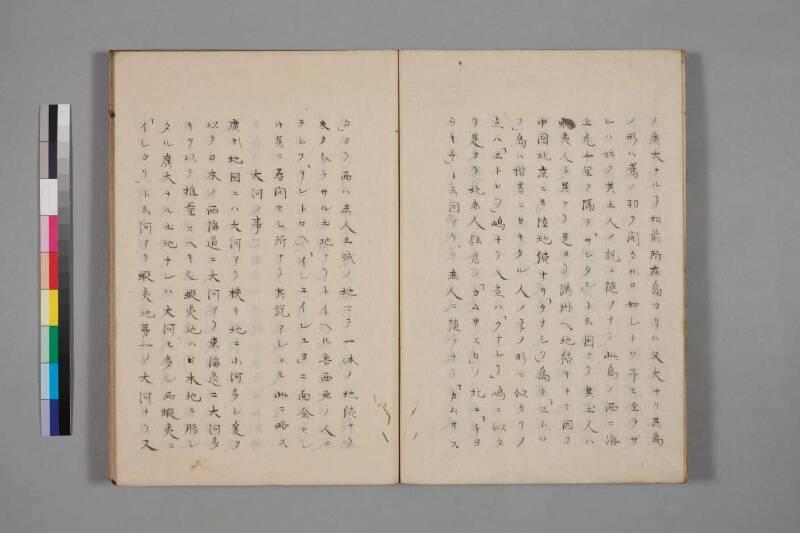
ノ広大ナルヿ松前所在島ヨリハ又大ナリ其島
ノ形ハ鳶ノ羽ヲ開タルカ如シトソ予モ至ラザ
レハ姑ク其土人ノ説ニ随フナリ此島ノ西ニ海
上凡十里ヲ隔テ「サンタン」ト云国アリ其土人ハ
蝦夷人ト異ナリ是ヨリ満洲ヘ地続キナリ因テ
中国北京ニモ陸地続ナリ「クナシリ」島ト「エトロ
フ」島ハ楷書ニカキタル人ノ字ノ形ニ似タリ⼃
点ハ「エトロフ」嶋ナリ乀点ハ「クナシリ」嶋ニ似タ
リ是ヨリ北赤人住居ノ「カムサスカ」ノ北ニ「チヨ
ウキチ」ト云国アリテ赤人ニ随フナリ「カムサス
【左丁】
カ」ヨリ西ハ赤人王城ノ地マテ一体ノ地続ナリ
未タ分ラサル土地ナリトイヘ𪜈魯西亜ノ人ニ
テシソ「ヲントロヘ」「イシユイレユヨ」ニ面会セシ
トキ具ニ尋問セシ所ナリ其説アレトモ此ニ略ス
大河ノ事
広キ地国ニハ大河アリ狭キ地ニ小河多シ爰ヲ
以テ日本ノ西海道ニ大河アリ東海道ニ大河多
キヲ以テ推量スヘキ也蝦夷地ハ日本地ニ勝レ
タル広大ナル土地ナレハ大河モ多シ西蝦夷ニ
「イシカリ」ト云河アリ蝦夷地第一ノ大河ナリ又
現代語訳
【右丁】
この島の広大さは、松前所在の島(北海道)よりもさらに大きい。その島の形は、鳶が翼を広げたようであると言う。私自身はそこへ行ったことがないので、さしあたり土地の人々(アイヌ)の説に従うこととする。この島の西、海上およそ十里を隔てて「サンタン」という国がある。その土地の人々は蝦夷人とは異なる。ここから満洲へは陸地続きであり、したがって中国の北京にも陸続きである。「クナシリ」島と「エトロフ」島は、楷書で書いた「人」という字の形に似ている。「丿」の点は「エトロフ」島であり、「乀」の点は「クナシリ」島に似ている。これより北には赤人(ロシア人)が住む「カムサスカ」があり、その北に「チョウキチ」という国があって、赤人に従っている。「カムサス
【左丁】
カ」より西は赤人の王城の地まで一帯の陸続きである。いまだよくわからない土地ではあるが、ロシア人の「ヲントロヘ」と「イシユイレユヨ」に面会したときに、詳しく尋ね問いただしたところである。その説明はあるが、ここでは省略する。
大河のこと
広い土地の国には大きな川があり、狭い土地には小さな川が多い。これをもって、日本の西海道に大河があり、東海道に大河が多いことで推量すべきである。蝦夷地は日本の土地にも勝る広大な土地であるから、大河も多い。西蝦夷に「イシカリ」という川があり、蝦夷地第一の大河である。また
英語訳
【Right Folio】
The vastness of this island (Karafuto/Sakhalin) is even greater than that of the island where Matsumae is situated (Hokkaido). The shape of the island is said to resemble a kite (bird) spreading its wings. Since I myself have not been there, I shall for the time being follow the account of the indigenous people. To the west of this island, separated by approximately ten ri of open sea, there is a country called "Santan." Its people are different from the Ezo people. From there, the land continues to Manchuria without break, and thus it is also connected overland to Beijing in China. The islands of "Kunashiri" and "Etorofu" resemble the shape of the character 人 (hito/person) written in standard script (kaisho). The "丿" stroke corresponds to "Etorofu" Island, and the "乀" stroke resembles "Kunashiri" Island. Further to the north lies "Kamusasuka" (Kamchatka), where the Red People (Russians) reside, and to its north there is a country called "Chōkichi," which is subject to the Red People. "Kamusas-
【Left Folio】
-ka" and westward from there, the land continues unbroken all the way to the domain of the Red People's royal seat. Although it is still not fully understood, this is information I obtained through detailed inquiry when I met with the Russians "Wontorohe" and "Ishiyuireyuyo." Their accounts do exist, but I shall omit them here.
On the Great Rivers
Large countries with vast lands have great rivers, while narrow lands tend to have many small rivers. We may infer this from the fact that Japan's Saikaidō (Western Circuit) has great rivers, and the Tōkaidō (Eastern Circuit) likewise has many great rivers. The Ezo lands are an even more expansive territory than Japan proper, and so they too have many great rivers. In Western Ezo there is a river called "Ishikari," which is the greatest river in all of Ezo. And furthermore —