翻刻
【右丁】
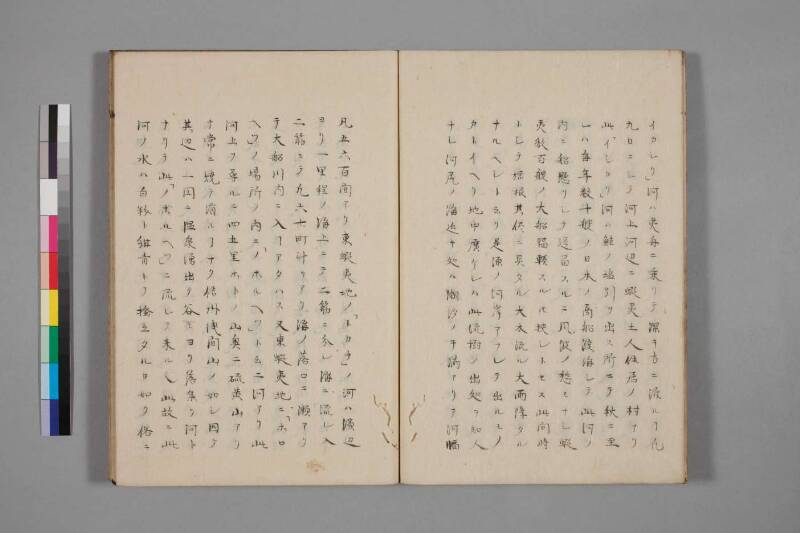
イカシリ」河ハ夷舟ニ乗リテ深キ方ニ泝ルヿ凡
九日ニシテ河上河辺ニ蝦夷土人住居の村アリ
此「イシカリ」河ハ鮭ノ塩引ヲ出ス所ニテ秋ニ至
レハ毎年数十艘ノ日本ノ商船渡海シテ此河ノ
内ニ船懸リシテ逗留スルニ風波ノ愁モナシ蝦
夷数百艘ノ大船輻輳スル𪜈狭シトセス此間時
トシテ標根其侭ニ具タル大木流ル大雨降タル
ナルヘシト云リ是源ノ河岸アフレテ出ルモノ
カトイヘリ地中広ケレハ此流樹ノ出処ヲ知人
ナシ河尻ノ海近キ処ハ潮汐ノ干満アリテ河幅
【左丁】
凡五六百間アリ東蝦夷地ノ「トカチ」ノ河ハ浜辺
ヨリ一里程ノ海上ニテ二筋ニ分レ海ニ流レ入
二筋ニテ凡六七町計リアリ海ノ落口ニ瀬アリ
テ大船川内ニ入ヿアタハス又東蝦夷地ニ「ホロ
ヘツ」ノ場所ノ内ニ「ノホルヘツ」ト云二河アリ此
河上ヲ尋ルニ四五里ホトノ山奥ニ硫黄山アリ
テ常ニ焼テ消ルヿナク信州浅間山ノ如因テ
其辺ハ一円ニ温泉湧出テ谷々ヨリ落集リ河ト
ナリテ此「ノボルヘツ」ニ流レテ来ル也此故ニ此
河ノ水ハ白粉ト紺青トヲ掻立タルカ如ク俗ニ
現代語訳
【右丁】
「イシカリ」川は、夷舟(アイヌの舟)に乗って深い方へ遡ること、およそ九日で川上の川辺にアイヌの土人が住む村がある。この「イシカリ」川は鮭の塩引きを産出する場所であって、秋になると毎年数十艘の日本の商船が海を渡り、この川の中に船を停泊させて逗留するが、風波の心配もない。蝦夷の数百艘の大船が集まっても狭いとすることなく(十分な広さがある)。この間、時として根ごと倒れた大木がそのまま流れてくることがある。大雨が降ったためであろうと言う。これは源の川岸があふれて流れ出るものかとも言われている。地中(流域)が広いため、この流木の出処を知る者はいない。川尻の海に近いところは潮の干満があって、川幅は
【左丁】
およそ五、六百間(約900~1100メートル)ある。東蝦夷地の「トカチ」の川は、浜辺より一里ほどの沖合で二筋に分かれて海へ流れ込んでいる。二筋合わせておよそ六、七町ほどの幅がある。海への落ち口に瀬(浅瀬)があるため、大船は川の中へ入ることができない。また東蝦夷地の「ホロヘツ」の場所の内に「ノホルヘツ」という二つの川がある。この川上を尋ねると、四、五里ほどの山奥に硫黄山があり、常に燃えて消えることがなく、信州の浅間山のようである。そのためその辺りは一面に温泉が湧き出て、谷々より落ち集まって川となり、この「ノボルヘツ」に流れてくる。このゆえに、この川の水は白粉と紺青とを掻き立てたようであり、俗に
英語訳
【Right Folio】
Traveling up the "Ishikari" River by Ainu boat, heading into its deeper reaches, one arrives after approximately nine days at a village of Ainu indigenous people along the upper riverbank. This "Ishikari" River is a place that produces salted salmon, and every autumn dozens of Japanese merchant vessels cross the sea and moor their ships within this river to stay for a period, free from worry about wind and waves. Even hundreds of large Ainu vessels crowding together do not make it feel cramped — the river is that wide. During this time, large trees that have fallen with their roots still attached sometimes come floating down the river. This is said to be due to heavy rainfall. It is also suggested that these come from floodwaters overflowing the banks at the river's source. Because the river's watershed is so vast, no one knows where exactly these driftwood trees originate. Near the river mouth, close to the sea, there are tidal fluctuations, and the width of the river is
【Left Folio】
approximately five to six hundred ken (roughly 900 to 1,100 meters). The "Tokachi" River in Eastern Ezo splits into two channels about one ri offshore from the beach and flows into the sea. The two channels together span approximately six to seven chō in width. Because there are shallows at the mouth where it meets the sea, large vessels are unable to enter the river. Also, within the territory of "Horohetsu" in Eastern Ezo, there are two rivers called "Noboruhetsu." Upon exploring upstream, one finds a sulfur mountain deep in the hills, some four to five ri away, which burns constantly without ever going out, much like Mt. Asama in Shinshū. Consequently, the entire surrounding area is filled with hot springs that well up, gathering as they flow down from the various valleys to form a river, which then flows into this "Noboruhetsu." For this reason, the water of this river resembles white powder and indigo blue stirred together, and it is commonly called —