翻刻
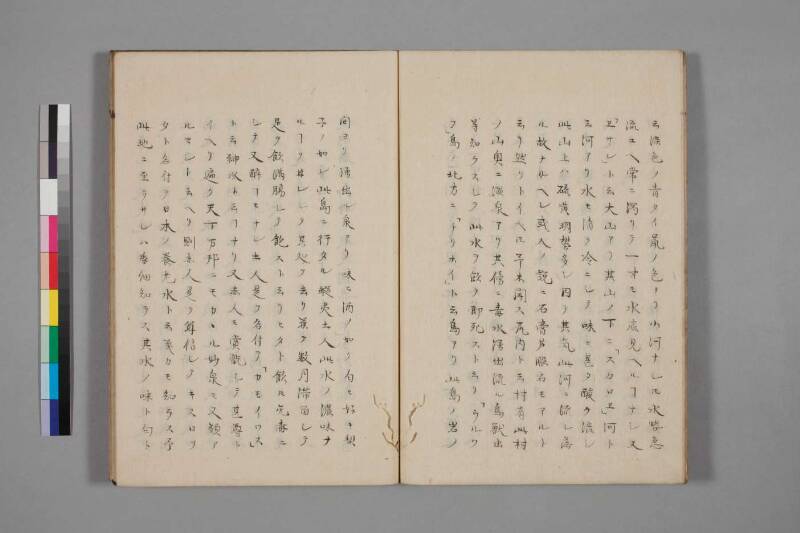
【右丁】
云染色ノ青タイ鼠ノ色ナリ小河ナレ𪜈水勢急
流ユヘ常ニ濁リテ一寸モ水底見ヘルヿナシ又
「エサン」ト云大山アリ其山ノ下ニ「スカロエ」河ト
云河アリ水モ清ク冷ニシテ味ヒ甚タ酸ク渋シ
此山上ハ硫黄明礬多シ因テ其気此河ニ流レ落
ル故ナルヘシ或人ノ説ニ石膏芦眼石モアルト
云リ然リトイヘ𪜈予未聞ス尻内ト云村有此村
ノ山奥ニ温泉アリ其傍ニ毒水湧出流ル鳥獣虫
等知ラスシテ此水ヲ飲テ即死スト云リ「ウルツ
フ」島ノ北方ニ「チリホイ」ト云島アリ此島ノ岩ノ
【左丁】
間ヨリ湧出ル泉アリ味ヒ酒ノ如ク匂ヒ好キ梨
子ノ如シ此島ニ行タル蝦夷土人此水ノ濃味ナ
ルヿヲ甘ンシテ其処ヲ去リ兼テ数月滞留シテ
是ヲ飲満腹シテ飽スト云リヒタト飲𪜈旡毒ニ
シテ又酔ヿモナシ土人是ヲ名付テ「カモイワス」
ト云神水ト云ヿナリ又赤人モ賞翫シテ甚尊ト
イヘリ遍ク天下万邦ニモカヽル妙泉モ又類ア
ルマシト云ヘリ則赤人是ヲ尊信シテキスロヲ
タト名付テ日本ノ養老水ト云義カモ知ラス予
此地ニ至ラサレハ委細知ラス其水ノ味ト匂ト
現代語訳
【右丁】
(俗に)染色の青鼠色(青みがかった灰色)と言われる色である。小さな川ではあるが水勢が急流であるため、常に濁っていて、一寸も川底が見えることがない。また「エサン」という大きな山があり、その山のふもとに「スカロエ」川という川がある。水は清く冷たく、味はとても酸っぱく渋い。この山の上には硫黄・明礬が多いため、その気(成分)がこの川に流れ落ちているためであろう。ある人の説によれば、石膏・蘆眼石(ルーメン石)もあるという。しかしながら、私はまだ(それを)確認していない。尻内という村があり、この村の山奥に温泉がある。その傍らに毒水が湧き出て流れており、鳥・獣・虫などが知らずにこの水を飲んで即死するという。「ウルツフ」島の北方に「チリホイ」という島があり、この島の岩の
【左丁】
間より湧き出る泉がある。味は酒のようで、香りは良い梨のようである。この島に来たアイヌの土人は、この水の濃厚な味わいを喜んで、その場を去り難く、数ヶ月もそこに滞在して、これを飲んで満腹になっても飽きることがないという。たっぷり飲んでも毒もなく、また酔うこともない。土人はこれを名付けて「カモイワス」と言い、神水(カムイの水)という意味である。また(ロシア人の)赤人もこれを賞賛して、非常に尊いものだと言っている。広く天下万邦にも、このような妙なる泉にも同類があるかもしれないと言っている。すなわち赤人はこれを尊び信じて「キスロヲタ」と名付けており、日本の養老水という意味かもしれない。私はこの地に至っていないので詳しくは知らない。その水の味と匂いと
英語訳
【Right Folio】
— what is commonly called the color of "染色の青鼠" (a dyed blue-gray color). Although it is a small river, the current is swift, so it is always turbid, and one cannot see even an inch of the riverbed. There is also a great mountain called "Esan," and at its foot there is a river called the "Sukaroe" River. Its water is clear and cold, and its taste is extremely sour and astringent. There is an abundance of sulfur and alum on the upper reaches of this mountain, and it is likely that these elements flow down and dissolve into this river. According to one person's account, gypsum and alunite are also found there — though I have not yet confirmed this myself. There is a village called Jirinae (Shirinai), and deep in the mountains behind this village there is a hot spring. Beside it, poisonous water wells up and flows, and it is said that birds, beasts, and insects that unknowingly drink this water die instantly. To the north of "Urutsufu" Island there is an island called "Chirihoi," and from between the rocks of this island
【Left Folio】
a spring wells forth. Its taste is like sake, and its fragrance resembles that of a fine pear. Ainu people who have traveled to this island are said to be so delighted by the rich, flavorful taste of this water that they find it difficult to leave, staying for months at a time, drinking their fill yet never growing tired of it. Even drinking it in abundance causes no harm and produces no intoxication. The indigenous people call it "Kamoi-wasu," meaning "divine water" (the water of the Kamui). The "Akabito" (Russians) also praise it highly and regard it as most sacred. It is said that throughout the world among all nations, there may be other springs of such wondrous character. Indeed, the Russians hold it in great reverence and have named it "Kisurota," which may correspond in meaning to Japan's "Yōrō-mizu" (the life-prolonging waters of Yōrō). As I have not yet visited this place myself, I do not know the details. As for the taste and smell of this water —