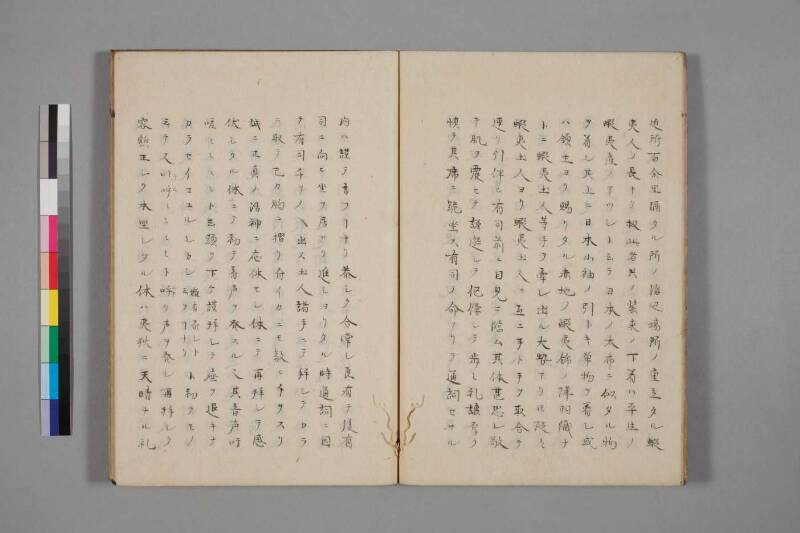
翻刻
【右丁】
近所百余里隔タル所ノ海辺場所ノ重立タル蝦
夷人ノ長ナリ扨此者共ノ装束ノ下着ハ平生ノ
蝦夷産ノアツシト云テ日本ノ太布ニ似タル物
ヲ着シ其上ニ日本小袖ノ引トキ単物ヲ着シ或
ハ領主ヨリ賜リタル赤地ノ蝦夷錦ノ陣羽織ナ
トニ蝦夷土人等手ヲ牽レ出ル大勢アリ𪜈段々
蝦夷土人ヨリ蝦夷土人ニ互ニ手ト手ヲ取合テ
連リ引伴ヒ有司前ニ目見ニ臨ム其体甚恐レ敬
テ肌ヲ震ヒテ謙遜シテ傴僂シテ歩ミ礼譲厚ク
慎テ其席ニ跪座ス有司ノ命アリテ通詞セサル
【左丁】
内ハ謹テ言フヿナリ恭シク合掌シ良有テ後有
司ニ向ヒ座ヲ居サリ進ミヨリタル時通詞ニ因
テ有司チヲノヘ出ス土人諸手ニテ拝シテカラ
ニ取テ己カ胸ニ摺リ付イカニモ敬ヒ手ヲスリ
誠ニ正直ノ活神ニ応体セシ体ニテ再拝シテ感
状シタル体ニテ初テ音声ヲ発スル也其音声吁
嗟々々々々ト云頭ヲ下ケ謹拝シテ座ヲ退キナ
カラセイコユルシカシ《割書:難有忝シト|云フヿナリ》ト初テモノ
云テ又《振り仮名:吁呼|ウム》々々々々ト呼(ウナ)リ声ヲ発シ再拝シテ
容貌正シク本座シタル体ハ夷狄ニ天晴ナル礼
現代語訳
【右丁】
(クナシリ島)近辺の百余里隔たった海辺の場所における重立った蝦夷人(アイヌ人)の長たちである。さて、これらの者たちの装束について、下着は日常のアイヌ産の「アットゥシ」と呼ばれる、日本の太布に似た織物を着ており、その上に日本の小袖の引き解き単衣を羽織り、あるいは領主から賜った赤地の蝦夷錦の陣羽織などを着ていた。アイヌの土人たちは互いに手を引き合って大勢が連なり出てきた。さらに次々とアイヌの土人同士が手と手を取り合い、列を連ねて引き連れ合いながら、役人の前へ謁見に臨んだ。その様子は、甚だ恐れ敬い、肌を震わせ、謙遜してうつむき加減に歩み、礼儀を重んじて慎みながら、その席に跪いて座った。役人の命があって、通詞(通訳)が(指示を)伝えるまでは、
【左丁】
謹んで何も言わない。恭しく合掌して、しばらくの後、役人に向かって座をずれて進み寄ったとき、通詞を介して役人が(褒美の品を)差し出した。土人たちは両手で拝礼して受け取り、それを自分の胸に擦りつけ、いかにも敬い、手をすり合わせ、まことに正直な生き神に感応するような様子で再拝し、感激した体で初めて声を発した。その声は「ウア、ア、ア、ア、ア」と言いながら頭を下げて謹んで拝礼し、座を退きながら「セイコ ユルシカシ(割書:ありがたく、恐れ多いと言うことである)」と初めて言葉を発した。そしてまた「ウム、ウム、ウム、ウム、ウム」と唸り声を発して再拝し、容貌を正しくして本来の座に戻った様子は、夷狄にして天晴れなる礼
英語訳
【Right Folio】
These were the chiefs of prominent Ainu communities along the coastline, located at distances of over a hundred ri from the vicinity of (Kunashiri Island). Now, regarding the attire of these individuals: as undergarments they wore the everyday Ainu cloth called "attush," a material resembling Japanese coarse cloth (futofu); over this they wore a loosely draped single-layer Japanese kosode garment, or in some cases a sleeveless coat (jinbaori) of "Ezo brocade" on a red ground, bestowed upon them by the domain lord. The Ainu people came out in great numbers, leading one another by the hand. Then, in succession, the Ainu took each other's hands, forming a procession and guiding one another as they came forward to present themselves before the official. Their manner was one of extreme awe and reverence: their skin trembled, they walked with humble, stooped posture, deeply mindful of propriety, and they knelt and seated themselves carefully at their designated places. Until the official gave his command and the interpreter conveyed it,
【Left Folio】
they remained silent, out of deference. They pressed their palms together reverently and, after a moment, shifted forward in their seats toward the official. When the official, through the interpreter, presented (gifts), the indigenous people received them with both hands in a gesture of worship, rubbed them against their own chests, and with an attitude of the deepest reverence, rubbing their hands together, as if responding to a living deity of genuine virtue, they prostrated themselves again in a second bow, visibly moved with gratitude, and only then gave voice for the first time. That voice was "Ua, a, a, a, a," uttered while bowing the head in respectful obeisance; and as they withdrew from their seats, they said "Seiko yurishikashi" (marginal note: meaning "how grateful, how humbling is this"), speaking words for the first time. Then again they let out a groaning sound of "Um, um, um, um, um," performed a second bow, composed their countenances, and returned to their original seats — a display of ceremony that was, for a people considered barbarians, a remarkably splendid example of ritual