翻刻
【右丁】
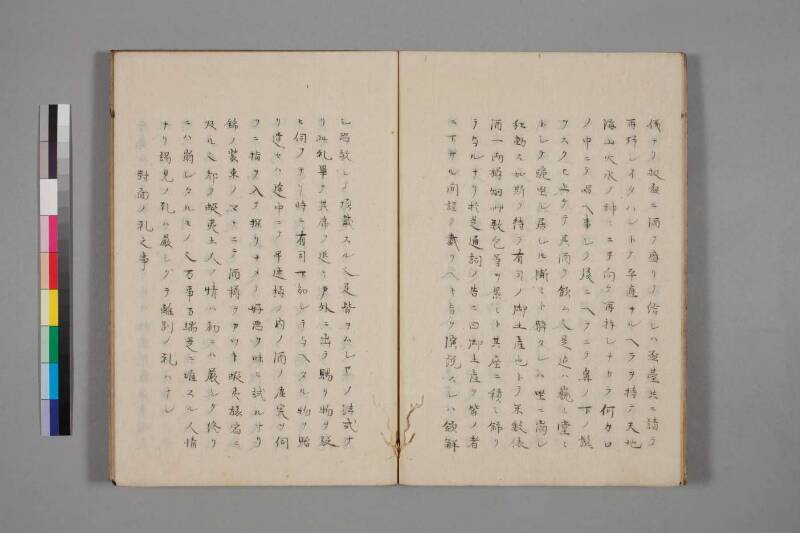
儀ナリ扨盃ニ酒ヲ盛リテ給レハ盃台共ニ請テ
再拝シイタハシトテ平直ナルヘラヲ持テ天地
海山火水ノ神々ニ手向ケ再拝シナカラ何カ口
ノ中ニテ唱ヘ事シテ後ニヘラニテ鼻ノ下ノ髭
ヲスクヒ上ケテ其酒ヲ飲ム也是迄ハ巍々堂々
トシテ跪座シ屈レ𪜈漸々ト酔タレハ座ニ崩レ
狂動ス如斯ヲ待テ有司ノ御土産也トテ米数俵
酒一両樽煙草数包等ヲ累々ト其座ニ積ミ飾リ
テ与ルナリ於是通詞ノ告ニ曰御土産ヲ皆ノ者
ニ下サル間謹テ戴クヘキ旨ヲ演説スレハ領解
【左丁】
シ恐敬シテ頂戴スル也是皆ヲムシヤノ法式ナ
リ此礼畢テ其席ヲ退キ戸外ニ出テ賜リ物ヲ疑
ヒ伺フナリ時ニ有司下知シテ与ヘタル物ヲ贈
リ遣セハ途中ニテ平速樽ノ内ノ酒ノ虚実ヲ伺
フニ指ヲ入テ探リナメテ好悪ヲ味ヒ試ルナリ
錦ノ装束ノマヽニテ酒樽ヲカツキ蝦夷旅宿ニ
帰ル也都テ蝦夷土人ノ情ハ初ニハ厳シク終リ
ニハ崩シタルモノ也万事万端是ニ准スル人情
ナリ謁見ノ礼ハ厳シクテ離別ノ礼ハナシ
対面ノ礼之事
現代語訳
【右丁】
儀(ぎ)であった。さて、盃に酒を盛って与えると、盃を台ごと受け取り、再拝して、「いたはし」とて平たく真っ直ぐな箆(へら)を持ち、天・地・海・山・火・水の神々に手向けて再拝しながら、何ごとか口の中で唱え、祈り事をした後、その箆で鼻の下の髭をすくい上げて、その酒を飲む。ここまでは威風堂々として跪いて座り、かがんでいたが、しだいに酔いが回ると、座が乱れて騒ぎ動き出す。このようになるのを見計らって、役人が「お土産である」として、米数俵、酒一・二樽、煙草数包などを次々とその座に積み並べて与えるのである。ここで通詞が告げていわく、「お土産を皆の者にくださるので、謹んで頂戴すべき旨」を演説すると、(蝦夷人たちは)
【左丁】
その意を領解して、恐れ敬いながら頂戴するのである。これらはすべてオムシャの法式(作法)である。この礼が終わると、その席を退いて戸外に出て、賜り物を疑い様子をうかがうのである。そのとき役人が下知して与えた物を贈り届けると、途中にてさっそく樽の中の酒の有無(虚実)をうかがうにあたり、指を入れて探り、なめて、よしあしを味わい試みるのである。錦の装束のままで酒樽を担いで、アイヌの旅宿へ帰るのである。おおよそアイヌの土人の性情は、最初は厳格で終わりには崩れるものである。万事万端これに準ずる人情なのである。謁見の礼は厳格であるが、別れの礼はないのである。
対面の礼の事
英語訳
【Right Folio】
— propriety of the finest order. Now, when sake was poured into a cup and offered to them, they received it together with the cup-stand, and after prostrating themselves in a second bow, they took up a flat, straight wooden spatula called *ikayop* (a *hera*), saying "itahashi" (an expression of reverence), and with it offered libations to the deities of heaven, earth, sea, mountain, fire, and water. While bowing again in a second prostration, they murmured something under their breath in the manner of a prayer or ritual incantation; and only afterward did they use the spatula to lift up the mustache below the nose and drink the sake. Up until this point, they had maintained a solemn and stately demeanor, kneeling in their seats with bowed posture; but as the intoxication gradually set in, their composure dissolved and they became animated and boisterous. Waiting for exactly this moment, the official presented what he called "souvenirs": several bales of rice, one or two barrels of sake, several packets of tobacco, and the like, piled up and arranged in impressive fashion before them as gifts. At this point the interpreter announced to the assembled people that "the official is graciously bestowing these gifts upon all of you, and you should receive them with due reverence," whereupon (the Ainu people)
【Left Folio】
grasped the meaning and received the gifts with awe and reverence. All of this constitutes the prescribed form and procedure of the *Omunsha* ceremony. When this ritual concluded, they withdrew from their seats, stepped outside, and there examined the gifts with a mixture of curiosity and suspicion. When the official then ordered the gifts to be sent over to them, they immediately, on the way back, tested the sake barrels to verify the contents — inserting a finger, drawing it out, licking it, and tasting it to judge whether the quality was good or poor. Still dressed in their brocade finery, they shouldered the sake barrels and returned to the Ainu lodgings. In general, the character and temperament of the Ainu indigenous people is such that they begin formally and end in dissolution. In all things and in every regard, their human nature follows this pattern. The ceremony of audience is conducted with great formality, but there is no corresponding ceremony of farewell.
On the Ceremony of Audience (*Taimen no rei*)