翻刻
【右丁】
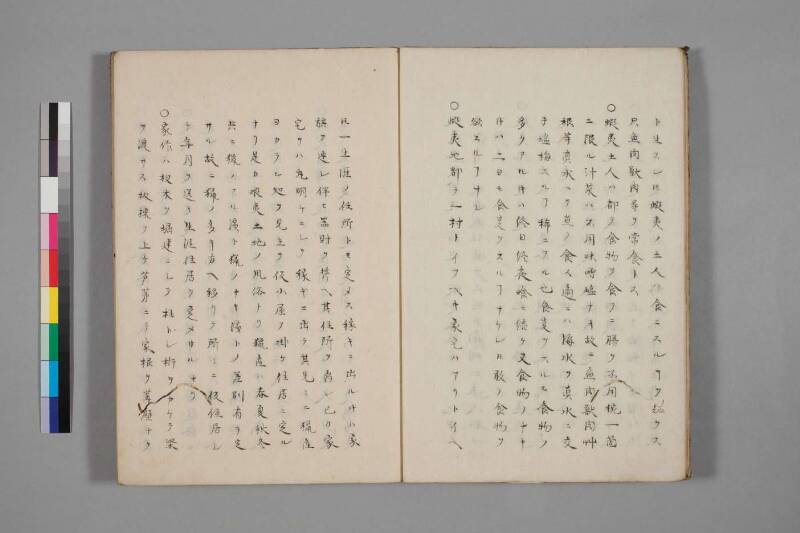
ト生スレ𪜈蝦夷ノ土人ハ食ニスルヿヲ知ラス
只魚肉獣肉等ヲ常食トス
〇 蝦夷土人ハ都テ食物ヲ食フニ膳ヲ不用椀一箇
ニ限ル汁菜ハ不用味噌塩ナキ故ニ魚肉獣肉草
根等真水ニテ煮テ食ス適ニハ海水ヲ真水ニ交
テ塩梅スルヿ稀ニアル也食事ヲスルモ食物ノ
多クアルトキハ終日終夜喰ヒ続ケ又食物ノナキ
トキハ二日モ食事ヲスルヿナケレ𪜈敢テ食物ヲ
欲スルヿナシ
〇 蝦夷地都テ一村トイフヘキ家宅ハアリトイヘ
【左丁】
𪜈一生涯ノ住所トモ定メス稼キニ出ルトキハ家
族ヲ連レ伴ヒ器財ヲ携ヘ其住所ヲ離レ己カ家
宅ヲハ丸明ケニシテ稼ギニ出テ其先々ニ猟産
ヨカラン処ヲ見立テ仮小屋ヲ掛ケ住居ニ定ル
ナリ是カ蝦夷土地ノ風俗ナリ猟産ハ春夏秋冬
共ニ猟ノアル浜ト猟ノナキ浜トノ差別有テ定
サル故ニ猟ノ多キ方ヘ移リテ所々ニ仮住居シ
テ年月ヲ送リ生涯住居ヲ定メサルナリ
〇 家作ハ杈木ヲ掘建ニシテ柱トシ桁ヲカケテ梁
ヲ渡サス扨棟ヲ上ケ芦茅ニテ家根ヲ葺壁ナク
現代語訳
【右丁】
(款冬・牛蒡は山野に)自然に生えているが、蝦夷の土人はそれを食べることを知らない。ただ魚肉・獣肉などを常食としている。
〇 蝦夷土人は食物を食べるにあたって、すべて膳を用いず、椀一個のみに限る。汁や菜は用いない。味噌・塩がないため、魚肉・獣肉・草根などを真水で煮て食べる。まれに海水を真水に混ぜて塩加減をすることがある。食事をするにも、食物が多くあるときは一日中・一晩中食べ続け、また食物がないときは二日も食事をすることがなくても、あえて食物を欲しがることがない。
〇 蝦夷地には一村と呼ぶべき家屋はあるといえども、
【左丁】
一生涯の住所とも定めず、稼ぎに出るときは家族を連れ伴い、器財を携えて、その住所を離れ、自分の家屋は空のままにして稼ぎに出て、行く先々で猟の産物に恵まれた場所を見つけて仮小屋を掛けて住まいと定める。これが蝦夷の土地の風俗である。猟の産物は春夏秋冬ともに、猟のある浜と猟のない浜との差別(違い)があって定まらないため、猟の多い方へ移って各地に仮住まいをして年月を送り、生涯住まいを定めることがないのである。
〇 家の作りは、股木(またぎ)を掘り建てにして柱とし、桁をかけて梁を渡さず、棟を上げて、葦・茅にて屋根を葺き、壁はなく……
英語訳
[Right page]
...(butterbur and burdock) grow wild naturally, but the Ainu people do not know how to eat them. They subsist solely on fish and game as their staple diet.
○ When eating, the Ainu use no dining tray (zen) whatsoever, limiting themselves to a single bowl. They use neither soup nor side dishes. Since they have no miso or salt, they boil fish, game, plant roots, and the like in fresh water and eat them. Occasionally, they mix seawater with fresh water to season their food. When it comes to mealtimes, when food is plentiful they eat continuously throughout the day and night; and when food is scarce, they may go two days without eating, yet they do not particularly crave food.
○ Although there are dwellings in Ezo that might be called villages,
[Left page]
...they are never established as permanent residences for life. When setting out to work, the people take their families along, carry their belongings, leave their homes vacant, and go out to make their living. They scout out locations wherever hunting and gathering are favorable, set up temporary shelters, and make those their dwellings. This is the custom of the Ezo lands. Since hunting grounds vary by season — with some shores yielding good catches and others not, regardless of spring, summer, autumn, or winter — they move to wherever hunting is most abundant, live temporarily in various places, pass their days and months in this way, and never settle in a permanent home for their entire lives.
○ As for the construction of their homes: forked wooden posts (matagī) are set into the ground to serve as pillars; horizontal beams (keta) are laid across these, but no crossbeams (hari) are used. A ridgepole is raised, the roof is thatched with reeds and miscanthus grass, and there are no walls...