翻刻
【右丁】
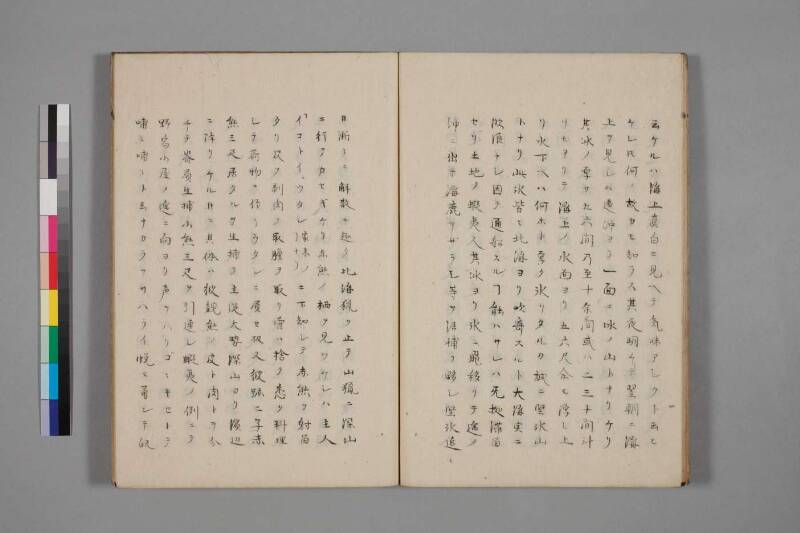
云ケルハ海上真白ニ見ヘテ気味アシクト云ヒ
ケレ𪜈何ノ故カモ知ラス其夜明ケテ翌朝ニ海
上ヲ見レハ遠沖ヨリ一面ニ氷ノ山トナリケリ
其氷ノ厚サ五六間乃至十余間或ハ二三十間計
リモアリテ海上ノ水面ヨリ五六尺余モ浮レ上
リ水下ヘハ何ホト厚ク氷リタルカ誠ニ堅氷山
トナリ此氷皆々北海ヨリ吹寄スルト大海実ニ
波浪ナシ因テ通船スルヿ能ハサレハ旡拠滞留
セリ土地ノ蝦夷人其氷ヨリ氷ニ飛移リテ遥ノ
沖ニ出テ海鹿アザラシ等ヲ活捕リ夥シ堅氷追
【左丁】
日漸々ニ解散ニ趣ク比海猟ヲ止テ山猟ニ深山
ニ行テカセギケリ赤熊ノ栖ヲ見ツケシハ主人
「イコトイ、ウタレ《割書:家来ノ|ヿナリ》ニ下知シテ赤熊ヲ射留
タリ皮ヲ剥肉ヲ取胆ヲ取リ骨ハ捨テ悉ク料理
シテ荷物ニ作リウタレニ負セ扨又彼跡ニ子赤
熊三疋居タルヲ生捕テ主従大勢深山ヨリ浜辺
ニ降リケルトキニ其体ハ彼親熊ノ皮ト肉トヲ分
チテ背負生捕小熊三疋ヲ引連レ蝦夷ノ例ニテ
野宿小屋ノ遥ニ向ヨリ声ヲハリゴヽキセトテ
哺々哺々ト云ナカラアサワライ悦ヒ勇ンテ帰
現代語訳
【右丁】
(水主の蝦夷人共が)言うには、「海上が真っ白に見えて気味が悪い」と言ったが、何の故かも知らず、その夜が明けて翌朝に海上を見ると、遠い沖合から一面に氷の山となっていた。その氷の厚さは五、六間(けん)ないし十余間、あるいは二、三十間ほどもあって、海上の水面より五、六尺余りも浮き上がっており、水面下にはどれほど厚く氷っているのか、まことに堅固な氷の山となっていた。この氷はすべて北海から吹き寄せられたものであり、大海には実に波浪がなかった。よって船を通じることができなかったため、やむを得ず滞留した。土地の蝦夷人(たち)は、その氷から氷へと飛び移って、はるか沖へ出て、海鹿(あざらし)などを生け捕りにして多く獲た。堅氷は日を追うごとに
【左丁】
次第に解けて散るようになるころ、海猟(かいりょう)をやめて山猟に転じ、深山に入って稼いだ。赤熊(ひぐま)の棲み処を見つけたのは主人「イコトイ」で、ウタレ(※家来のことである)に下知して赤熊を射留めた。皮を剥ぎ、肉を取り、胆(きも)を取り、骨は捨てて、すべて料理して荷物にまとめ、ウタレに負わせた。さて、またその跡に子の赤熊三匹がいたのを生け捕りにして、主従大勢で深山から浜辺に降りてきた時の様子は、かの親熊の皮と肉とを分けて背負い、生け捕りにした小熊三匹を引き連れ、蝦夷の習わしとして、野宿小屋のはるか向こうの方から声を張り上げ、「ごうごう」とばかりに「ほうほうほう」と言いながら、朗らかに笑い喜び勇んで帰って
英語訳
【Right Folio】
(The Ainu sailors) said: "The sea looks completely white—it feels eerie and foreboding." Without yet knowing the reason why, when the night passed and they looked out upon the sea the following morning, the distant offshore waters had become an endless mountain range of ice. The thickness of the ice was five or six *ken* [approximately 9–11 meters], or even ten-odd *ken*, and in some places perhaps twenty or thirty *ken*, floating five or six *shaku* [approximately 1.5–1.8 meters] above the surface of the sea. One could not know how deeply the ice extended below the waterline—it had truly become a mountain of solid ice. This ice had all been driven in by the winds from the northern sea (*hokkai*), and there were truly no waves upon the great ocean. As it was therefore impossible to pass through by boat, they were obliged to remain and wait. The local Ainu people leapt from floe to floe of ice, venturing far out into the open sea, and caught great numbers of seals (*azarashi*) and sea lions (*ashika*) alive. Day by day, the solid ice gradually
【Left Folio】
began to break up and scatter; around that time, they ceased sea hunting and shifted to mountain hunting, going deep into the mountains to make their living. It was the headman "Ikotoi" who discovered the den of a brown bear (*higuma*), and he ordered his attendants, *utare* (※meaning "retainers" or "followers"), to shoot and bring down the bear. They skinned it, took the flesh, extracted the gallbladder (*kimo*), discarded the bones, prepared everything into provisions, and loaded it onto the *utare* to carry. Furthermore, three bear cubs found at the same spot were captured alive, and the party—master, retainers, and all—descended from the deep mountains to the shore. Their appearance was as follows: they divided the skin and flesh of the parent bear among themselves to carry on their backs, led along the three live captured bear cubs, and—in keeping with Ainu custom—while still far off in the distance from the overnight shelter, raised their voices and called out loudly, shouting "hō hō hō!" all the while laughing cheerfully, rejoicing and returning in high spirits...