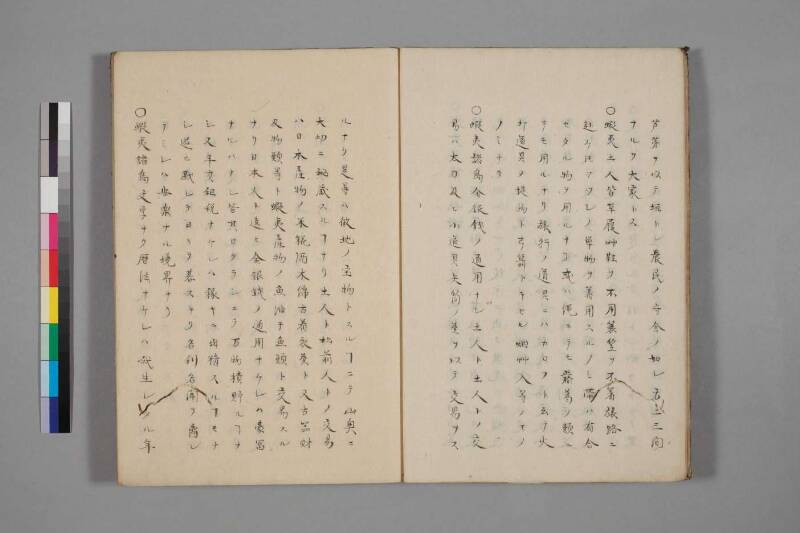
翻刻
【右丁】
芦茅ヲ以テ垣トシ農民ノ守舎ノ如シ方二三間
ナルヲ大家トス
〇 蝦夷土人皆草履草鞋ヲ不用蓑笠ヲ不着旅路ニ
趣ケ𪜈アツシノ単物ヲ着用スルノミ帯ハ有合
セタル物ヲ用ルナリ或ハ縄ニテモ藤葛ノ類ニ
テモ用ルナリ旅行ノ道具ニハカロフト云テ火
打道具ノ提物ト弓箭トキセル煙草入等ノモノ
ノミナリ
〇 蝦夷諸島金銀銭ノ通用ナシ土人ト土人トノ交
易ハ太刀及ヒ小道具矢筒ノ類ヲ以テ交易ヲス
【左丁】
ルナリ是等ハ彼地ノ宝物トスルヿニテ山奥ニ
大切ニ秘蔵スルヿナリ土人ト松前人トノ交易
ハ日本産物ノ米糀酒木綿古着衣類ト又古器財
刃物類等ト蝦夷産物ノ魚油干魚類ト交易スル
ナリ日本人ト違ヒ金銀銭ノ通用ナケレハ豪富
ナルハナシ皆其日クラシニテ万物積貯ルヿナ
シ又年貢租税ナケレハ稼キニ出精スルヿモナ
シ遊ヒ戯レテ日々ヲ暮スナリ名利名聞ヲ離レ
テミレハ安楽ナル境界ナリ
〇 蝦夷諸島文字ナク暦法ナケレハ我生シタル年
現代語訳
【右丁】
葦・茅をもって垣とし、農民の番小屋のようなものである。四方が二〜三間(約3.6〜5.4メートル)あるものを大きな家とする。
〇 蝦夷の土人は皆、草履・草鞋を用いず、蓑・笠を着けない。旅に出るときも、アットゥシの単衣(ひとえ)を着用するのみである。帯は手近にある物を用いる。縄であっても、藤・葛の類であっても用いる。旅の道具としては、「カロフト」と呼ぶ、火打ち道具の提げ物と、弓矢・煙管・煙草入れなどのものだけである。
〇 蝦夷諸島では金・銀・銭の通用はない。土人と土人との交易は、太刀および小道具・矢筒の類をもって行われる。
【左丁】
これらは彼の地の宝物とされるものであって、山奥に大切に秘蔵されるものである。土人と松前人との交易は、日本の産物である米・糀(こうじ)・酒・木綿・古着・衣類、また古い器財・刃物類などと、蝦夷の産物である魚油・干魚類とを交易するのである。日本人と違って金・銀・銭の通用がないため、豊かな富者というものはなく、皆その日暮らしであって、何物も積み蓄えることがない。また年貢・租税がないため、稼ぎに精を出すこともない。遊び戯れて日々を暮らすのである。名誉・名声(名利・名聞)を離れてみれば、安楽な境涯である。
〇 蝦夷諸島には文字がなく、暦法もないため、自分が生まれた年の……
英語訳
[Right page]
Reed and miscanthus grass are used as fencing, making them resemble the watch-huts of farmers. A dwelling of two to three ken (approximately 3.6 to 5.4 meters) on each side is considered a large house.
○ The Ainu people universally do not use sandals (zōri) or straw sandals (waraji), nor do they wear straw raincoats (mino) or sedge hats (kasa). Even when traveling, they wear nothing more than a single-layered garment of attush cloth. For a belt, they use whatever is at hand — rope, wisteria vine, or kudzu creeper will do. As for travel equipment, they carry only what is called a "karofuto" — a hanging pouch containing fire-starting tools — along with a bow and arrows, a pipe, and a tobacco pouch.
○ Throughout the islands of Ezo, gold, silver, and coinage are not in circulation. Trade between the indigenous people is conducted using swords (tachi), small tools, quivers, and the like.
[Left page]
These items are regarded as treasures in that land and are carefully kept hidden deep in the mountains. Trade between the indigenous people and the people of Matsumae involves exchanging Japanese goods — such as rice, rice koji (malt), sake, cotton cloth, used clothing, and apparel, as well as old household implements and bladed tools — for Ezo products such as fish oil and dried fish. Unlike the Japanese, since gold, silver, and coinage are not in circulation among them, there are no wealthy people; everyone lives hand to mouth and accumulates no possessions whatsoever. Moreover, since there are no land taxes or levies, they feel no compulsion to work diligently. They spend their days in play and amusement. Viewed from the perspective of being free from the pursuit of fame and profit, it is an existence of ease and contentment.
○ The islands of Ezo have no writing system and no calendar; therefore, the year of one's birth...