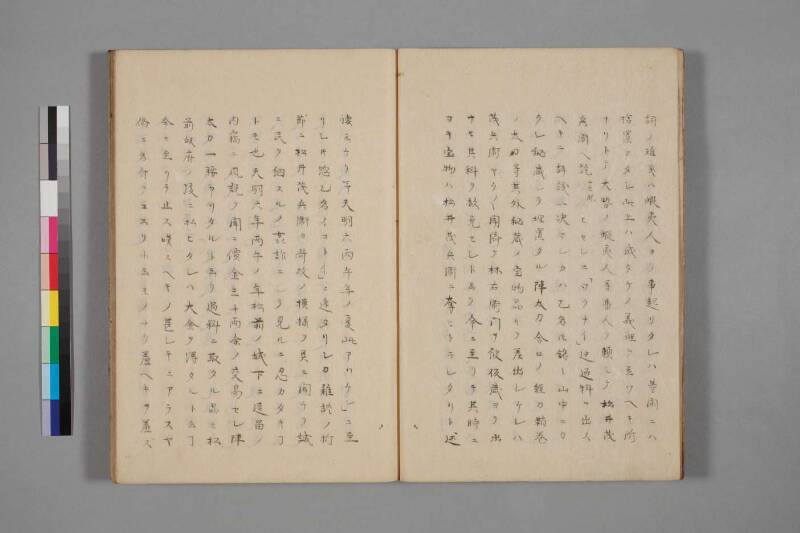
翻刻
【右丁】
詞ノ難義ハ蝦夷人ヨリ事起リタレハ等閑ニハ
捨置カタシ此上ハ成タケノ義理ヲ立ツヘキ所
ナリトテ大勢ノ蝦夷人等番人ヲ頼ミテ松井茂
兵衛ヘ詫《割書:二字脱|》 ヒセシニ「ツクナイ」迚過料ヲ出ス
ヘキニ評議一決セシカハ乙名𪜈銘々山中ニカ
クシ秘蔵シテ埋置タル陣太刀合口ノ短刀鞘巻
ノ太刀等其外秘蔵ノ宝物品々ヲ差出シケレハ
茂兵衛ヤウ〳〵聞済テ林右衛門ヲ彼仮蔵ヨリ出
サセ其科ヲ赦免セシト云リ今ニ至リテ其時ニ
ヨキ宝物ハ松井茂兵衛ニ奪ヒトラレタリト述
【左丁】
懐云ケリ予天明六丙午年ノ夏此アツケシ」ニ至
リシトキ惣乙名イコトイ」ニ逢タリシカ雑談ノ折
節ニ松井茂兵衛カ苛政ノ模様ヲ具ニ聞ケリ誠
ニ民ヲ細スルノ姦詐ニシテ見ルニ忍カタキヿ
トモ也天明六年丙午ノ年松前ノ城下ニ逗留ノ
内窃ニ風説ヲ聞ニ価金三十両余ノ交易セシ陣
太刀一腰アリタルト云リ過料ニ取リタル品々松
前帰府ノ後ニ払ヒタレハ大金ヲ得タルト云ヿ
今ニ至リテ止ス嘆スヘキノ甚シキニアラスヤ
俗ニ名付テユスリト云モノナリ羞ヘキヲ羞ズ
現代語訳
【右丁】
通詞の難儀はアイヌの人々から事が起きたのだから、おろそかにして捨て置くことはできない。この上は、できる限り義理を立てるべきところであると、大勢のアイヌたちは番人を頼みにして松井茂兵衛へ詫び(二字脱落)をしたところ、「ツクナイ」として過料を出すべきであるという結論に評議が一決した。そこで乙名たちはそれぞれが山中に隠し秘蔵して埋め置いた陣太刀・合口の短刀・鞘巻の太刀などをはじめ、その他の秘蔵の宝物の数々を差し出したところ、茂兵衛はようやく聞き済ませて林右衛門をあの仮蔵から出させ、その罪を赦免したと言う。今に至っても、あの時の良い宝物は松井茂兵衛に奪い取られたと述べ、
【左丁】
恨みを言っていた。私が天明六丙午年(1786年)の夏、このアッケシに至ったとき、惣乙名イコトイに会ったが、雑談の折に松井茂兵衛の苛政の様子を詳しく聞いた。誠に民を苦しめる姦詐(かんさ)であって、見るに忍びないことどもである。天明六丙午年、松前の城下に逗留している間に、ひそかに風説を聞くに、価(あたい)金三十両余りの交易をした陣太刀一腰があったと言う。過料として取り上げた品々は、松前帰府の後に払い下げたため、大金を得たということが、今に至っても止まない。嘆かわしいことの甚だしいものではないか。俗に名付けてゆすりと言うものである。恥ずべきことを恥じない(恥知らずの)振る舞いである。
英語訳
[Right folio]
Since the interpreter's difficulties had arisen from matters originating with the Ainu people, they could not simply leave the matter unaddressed. Concluding that they must uphold their sense of duty as best they could, the large number of Ainu people appealed to the hunting ground guards and entreated Matsui Mobyōe [two characters missing in original]. The deliberation reached a unanimous conclusion that they should offer "tsukunai" — that is, a punitive payment — as restitution. Accordingly, each of the elders brought forth the ceremonial swords (jin-tachi), short swords with cross-guards (aikuchi), scabbard-wrapped swords (sayamaki no tachi), and various other treasured objects that they had each individually hidden and buried in secret places in the mountains. Upon receiving these, Mobyōe finally relented, had Hayashi Uemon released from the temporary storehouse, and pardoned him of his offenses — or so it is said. Even now, the Ainu lament that the fine treasures they had at that time were seized and taken away by Matsui Mobyōe.
[Left folio]
They spoke with bitterness and resentment. When I visited this place of Akkeshi in the summer of the sixth year of Tenmei, the year of Hinoe-Uma (1786), I met with the chief elder Ikotoi, and in the course of casual conversation, I heard in detail about the nature of Matsui Mobyōe's harsh governance. It was truly a fraudulent abuse of power that oppressed the people, and there were things that were difficult to witness. During my stay in the castle town of Matsumae in that same sixth year of Tenmei, I quietly heard rumors that among the confiscated items there had been a ceremonial sword (jin-tachi) that had been traded for a value of over thirty ryō in gold. It is said that the items taken as punitive payments were sold off after Matsumae's return to the domain headquarters, yielding a large sum of money — a matter of which people still speak to this day. Is this not an extreme and lamentable state of affairs? In common parlance, this is what is called extortion (yusuri). It is the conduct of one who feels no shame for what ought to be shameful.