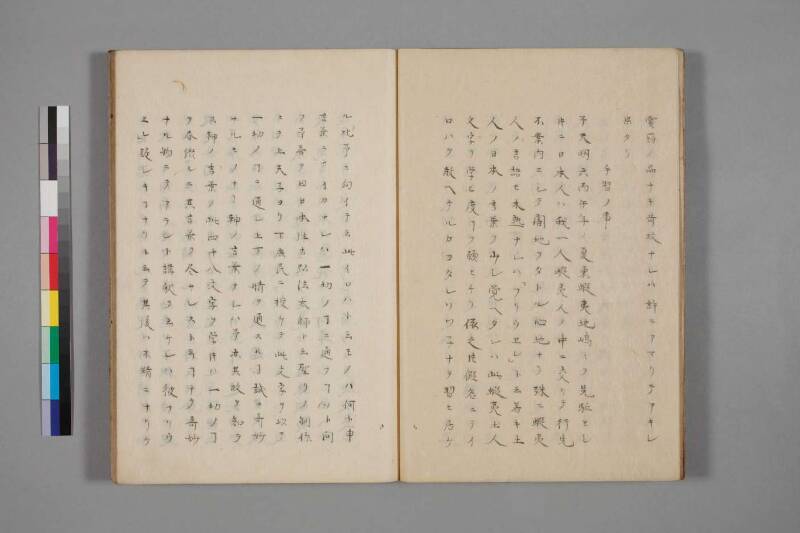
翻刻
【右丁】
賞罰ノ品ナキ苛政ナレハ許ニアマリテアキレ
果タリ
手習ノ事
予天明六丙午年ノ夏東蝦夷地嶋ヲ先駆セシ
トキニ日本人ハ我一人蝦夷人ノ中ニ交リテ行先
不案内ニシテ闇地ヲタトル心地ナリ殊ニ蝦夷
人ノ言語モ未熟ナレハ「フリウエン」ト云若キ土
人ノ日本ノ言葉ヲ少シ覚ヘタレハ此蝦夷土人
文字ヲ学ヒ度ヿヲ願ヒケリ依之片仮名ニテイ
ロハヲ教ヘケルカヨタレソツネナヲ習ヒ居ケ
【左丁】
ル比予ニ向イテ云此イロハト云モノハ何ト申
言葉ニテイカナレハ一切ノヿニ通フヿソト問
フ予答テ曰日本往古弘法太師ト云聖リノ制作
ニテ上天子ヨリ下庶民ニ授ケテ此文字ヲ以テ
一切ノヿニ通シ上下ノ情ヲ通スルヿ誠ニ奇妙
ナルモノナリ神ノ言葉ナレハ予亦其故ヲ知ラ
ス神ノ言葉ノ此四十八文字ヲ学トキハ一切ノヿ
ヲ書綴ルニ其言葉ヲ尽サレスト云ヿナク奇妙
ナル物ニテアラント講釈ヲ云ケレハ彼フリウ
エン」疑シキヿナリト云テ其後ハ不精ニナリケ
現代語訳
【右丁】
賞罰の区別もない苛政であるから、許しがたく、あきれ果てたものである。
手習いのこと
私が天明六丙午年(1786年)の夏、東蝦夷地の島を先駆けして巡ったとき、日本人は私一人だけでアイヌの人々の中に交じって行き、行く先も不案内で、暗闇の中を手探りで進むような心地であった。とりわけアイヌの言葉もまだ未熟であったところ、「フリウエン」という若い土地の者が日本の言葉を少し覚えていたため、このアイヌの土地の者が文字を学びたいと願ってきた。そこで片仮名でいろはを教えたところ、「よたれそつねな」まで習い終えた頃、
【左丁】
私に向かってこう言った。「このいろはというものは、どういう言葉であって、なぜあらゆることに通じるのか」と問うてきた。私は答えて言うには、「日本の大昔に弘法大師という聖人の制作であって、上は天子から下は庶民に至るまで授けられ、この文字をもってあらゆることに通じ、上下の情(心情)を通わせるものであり、誠に奇妙(不思議)なるものである。神の言葉であるから、私もまたその由来・理由を詳しくは知らない。神の言葉であるこの四十八文字を学べば、あらゆることを書き綴るにあたって、その言葉を尽くせないということはなく、実に奇妙(不思議)なるものではないか」と講釈を述べたところ、かのフリウエンは「怪しいことだ」と言って、その後は不精(おっくう)になってしまい、
英語訳
[Right folio]
It was a form of harsh governance that made no distinction between reward and punishment, and so it was beyond tolerance — one could only be utterly astonished.
On the Matter of Learning to Write
When I traveled ahead as a pioneer through the islands of the eastern Ezo lands in the summer of the sixth year of Tenmei, the year of Hinoe-Uma (1786), I was the sole Japanese person among the Ainu people, unfamiliar with the roads ahead, and felt as though I were groping through darkness. In particular, my command of the Ainu language was still immature. A young native man called "Furiuen" had learned a little of the Japanese language, and he expressed a wish to learn Japanese writing. I therefore taught him the iroha syllabary in katakana, and by the time he had progressed through "yo, ta, re, so, tsu, ne, na,"
[Left folio]
he turned to me and asked: "What sort of words are these called 'iroha,' and how is it that they can convey all things?" I answered and said: "In Japan's ancient past, this was devised by a holy man called Kōbō Daishi, and it was bestowed upon all people, from the Emperor above to the commoners below. Through these characters, one can express all things and communicate the feelings and intentions of both the high and the low — it is truly a wondrous thing. As these are the words of the gods, I myself do not fully know the reason behind them. Yet when one learns these forty-eight characters, which are the words of the gods, there is nothing that cannot be written and set down in words — it is truly a wondrous thing, is it not?" When I offered this explanation, the said Furiuen replied, "That seems dubious," and thereafter grew idle and reluctant in his studies,