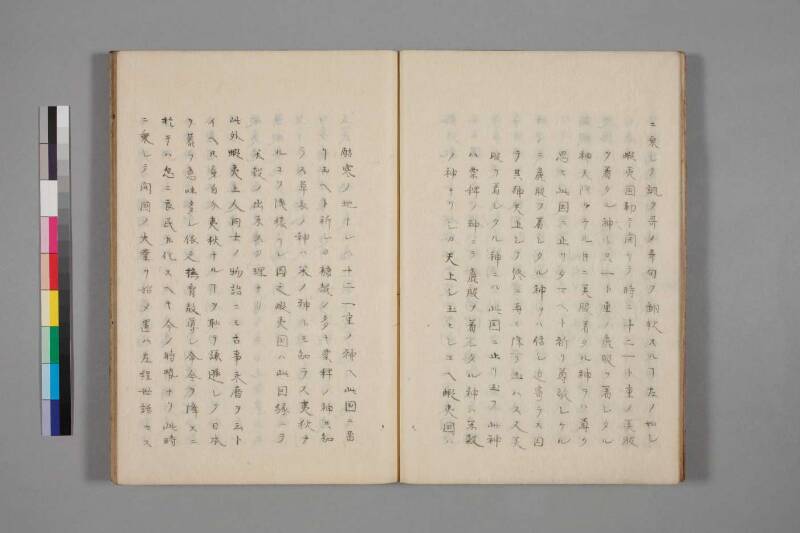
翻刻
【右丁】
ニ乗シテ諷フ歌ノ章句ヲ翻釈スルヿ左ノ如シ
蝦夷国初テ開ケテ時ニ十二一ト重ノ美服
ヲ着タル神ト只一ト重ノ麁服ヲ着シタル
神天降リケルトキニ美服着タル神ヲハ尊ク
思ヒ此国ニ止リタマヘト祈リ尊敬シケル
ニ麁服ヲ着シタル神ヲハ信シ近寄ラス因
テ其神天上シテ終ニ再ヒ降リ玉ハス又美
服ヲ着シタル神ニハ此国ニ止リ玉フ此神
ハ粟稗ノ神ニテ麁服ヲ着シタル神ハ米穀
ノ神ナリシカ天上シ玉ヒシユヘ蝦夷国ハ
【左丁】
酷寒ノ地ナレハ十二一重ノ神ヘ此国ニ留
リ玉ヘト祈シカ糠穀ノ多キ粟稗ノ神共知
ラス単衣ノ神ハ米ノ神トモ知ラス夷狄ナ
ルコソ浅猿ケレ因也蝦夷国ハ此因縁ニテ
米穀ノ出来ヌソ理ナリ
此外蝦夷土人同士ノ物語ニモ古事来暦ヲ云ト
イヘ𪜈身自分夷狄ナルヿヲ恥テ謙遜シテ日本
ヲ慕フ意味多シ依也撫育教導シ命令ヲ降スニ
於テハ忽ニ良民𪜈化スヘキ今ノ時勢ナリ此時
ニ乗シテ開国ノ大業ヲ始メ置ハ左程世話セス
現代語訳
【右丁】
その(拍子に)乗じて謡う歌の章句を翻訳すると、次の通りである。
蝦夷の国が初めて開けた時に、十二ひとえの美しい衣服を着た神と、ただ一重の粗末な衣服を着た神とが、天から降りてきた。(人々は)美しい衣服を着た神を尊いと思い、「この国にとどまってください」と祈り、尊敬した。ところが粗末な衣服を着た神は信じられず、近づけられなかった。そのためその神は天に上り、ついに再び降りてはくださらなかった。また美しい衣服を着た神はこの国にとどまられた。この神は粟・稗の神であり、粗末な衣服を着た神は米穀の神であったが、天に上られてしまったがゆえに、蝦夷の国は
【左丁】
酷寒の地であるから、十二ひとえの神へ「この国にとどまってください」と祈ったが、(その神は)糠(=粟稗)の多い神であるとも知らず、(また)一重衣の神が米の神であるとも知らなかった。夷狄であることこそが(このような)浅はかさの由来である。蝦夷の国がこのような因縁によって米穀のできないのも、道理なのである。
このほか、蝦夷の土人同士の物語にも、古来の来歴を語るとはいえ、自分自身が夷狄であることを恥じて謙遜し、日本(の文化・習俗)を慕う意味合いが多い。だからこそ、(彼らを)撫育・教導し、(幕府の)命令を下すならば、たちまちのうちに良民へと化することができる、今がまさにその時勢である。この時機に乗じて開国の大業を始めておけば、それほど(後に)苦労せず(ともすむであろう)……
英語訳
[Right folio]
The verses of the songs sung to that rhythm, translated, are as follows:
When the land of Ezo first came into being, a god wearing twelve-layered beautiful robes and a god wearing only a single layer of coarse clothing descended from the heavens. The people thought the god in beautiful robes to be exalted and prayed, "Please remain in this land," venerating that god with reverence. However, the god wearing coarse clothing was not trusted and was not approached. As a result, that god ascended to the heavens and in the end never descended again. Meanwhile, the god wearing beautiful robes remained in this land. This god was the deity of millet and barnyard millet, while the god in coarse clothing had been the deity of rice and grain — but because that god had ascended to the heavens, the land of Ezo
[Left folio]
being a land of bitter cold, the people prayed to the twelve-layered god, "Please remain in this land," not knowing that that god was associated with chaff-grain (i.e., millet and barnyard millet), and not knowing either that the god in the single-layered robe was the deity of rice. That this is the shallowness befitting barbarians is the very reason. That the land of Ezo, owing to this fate and circumstance, cannot produce rice — this is only to be expected.
Beyond this, even in the stories that the native people of Ezo tell among themselves — though they speak of ancient histories and origins — there is much meaning in the way they feel shame at being barbarians, humble themselves, and yearn toward Japan. For this very reason, if one were to nurture and instruct them and issue commands (from the shogunate), they would in no time be transformed into good subjects — such is the state of affairs at this very moment. If one were to seize this opportunity and initiate the great enterprise of opening this land, thereafter one would not need to trouble oneself greatly…