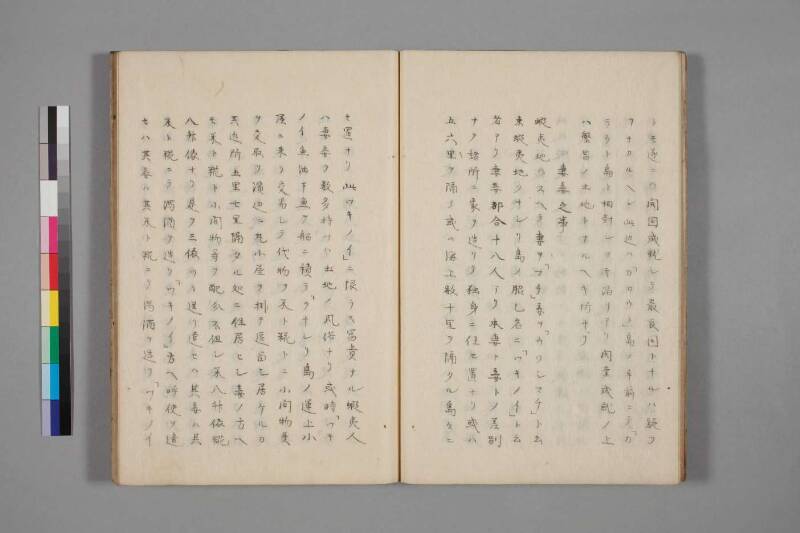
翻刻
【右丁】
トモ遂ニハ開国成就シテ最良国トナルハ疑フ
ヿナカルヘシ此辺ハ「カロウト」島ノ手前ニテ「カ
ラウト島ト相対シヨキ泊リアリ開業成就ノ上
ハ繁昌ノ土地トナルヘキ所ナリ
妻妾之事
蝦夷地ハスヘテ妻ヲ「マチ」妾ヲ「ウワシマチ」ト云
東蝦夷地クナシリ島ノ脇乙名ニ「ツキノイ」ト云
者アリ妻妾都合十八人アリ本妻ト妾トノ差別
ナク諸所ニ家ヲ造リテ独身ニ住セ置ナリ或ハ
五六里ヲ隔テ或ハ海上数十里ヲ隔タル島々ニ
【左丁】
モ置ナリ此ツキノイ」ニ限ラス富貴ナル蝦夷人
ハ妻妾ヲ数多持ツハ土地ノ風俗ナリ或時「ツキ
ノイ魚油干魚ヲ船ニ積テ「クナシリ島ノ運上小
屋ニ来リ交易シテ代物ヲ米ト糀トニ小間物類
ヲ交取リ浜辺ニ丸小屋ヲ掛テ逗留シ居ケルカ
其近所五里七里隔タル処ニ住居セシ妾ノ方ヘ
モ米ト糀ト小間物等ヲ配分ス但シ米八升俵糀
八升俵ナリ是ヲ三俵ツヽ送リ遣セハ其妾ハ其
米ト糀ニテ濁酒ヲ造リ「ツキノイ」方ヘ呼使ヲ遣
セハ其妾ハ其米ト糀ニテ濁酒ヲ造リ「ツキノイ
現代語訳
【右丁】
(そうすれば)ついには開国が成就して最良の国となることは疑いないであろう。この辺りは「カロウト」島の手前であり、「カラウト」島と向かい合って良い停泊地がある。開業が成就した暁には、繁盛の地となるべき場所である。
妻妾のこと
蝦夷地では、妻を「マチ」、妾を「ウワシマチ」と呼ぶ。東蝦夷地・クナシリ島の脇乙名に「ツキノイ」という者がいる。妻妾合わせて十八人おり、本妻と妾との区別なく、各所に家を造らせて、それぞれ単独に住まわせている。あるいは五・六里を隔て、あるいは海上数十里を隔てた島々に
【左丁】
も置いている。この「ツキノイ」に限らず、富貴な蝦夷人が妻妾を数多く持つのは、その土地の風俗である。ある時、「ツキノイ」が魚油・干魚を船に積んで、クナシリ島の運上小屋に来て交易し、代物を米と糀(こうじ)と小間物類と取り替え、浜辺に丸小屋を掛けて逗留していたところ、その近所の五里・七里隔たった所に住んでいた妾の方へも、米と糀と小間物などを配り分けた。ただし米は八升俵、糀も八升俵である。これを三俵ずつ送り遣わすと、その妾はその米と糀で濁り酒を造り、「ツキノイ」の方へ使いの者を遣わした。(以下、左丁末尾は重複のため続きは次頁に続く)
英語訳
[Right folio]
…ultimately the opening of the land would be accomplished and it would become an excellent country — of this there should be no doubt. This area lies just before the island of "Karōto," and facing "Karōto" island there is a good anchorage. Once the enterprise is completed, it should become a place of great prosperity.
On the Matter of Wives and Concubines
In the land of Ezo, a wife is called "machi" and a concubine is called "uwashimachi." Among the assistant elders (waki otona) of Kunashiri Island in the eastern Ezo region, there is a man called "Tsukinoi." He has a total of eighteen wives and concubines, and without distinction between principal wife and concubines, he has built houses for them in various places where each lives alone. Some are separated by five or six ri, and others are placed on islands separated by dozens of ri across the sea.
[Left folio]
He keeps them in these places as well. Not only this "Tsukinoi," but it is the local custom for wealthy and high-ranking Ezo men to keep many wives and concubines. On one occasion, "Tsukinoi" loaded fish oil and dried fish onto a boat, came to the trading post (unjō goya) on Kunashiri Island to trade, exchanged his goods for rice, malted rice (kōji), and sundry items, set up a round hut on the beach, and was staying there when he distributed rice, malted rice, and sundry goods to the concubines living five or seven ri away in the vicinity. The rice allotment was one bale of eight shō, and likewise the malted rice was one bale of eight shō. When three bales of each were sent, each concubine would brew cloudy sake (nigorizake) from that rice and malted rice, and would send a messenger to "Tsukinoi"… (The passage at the end of the left folio is a duplicate; the text continues on the following page.)