翻刻
【右丁】
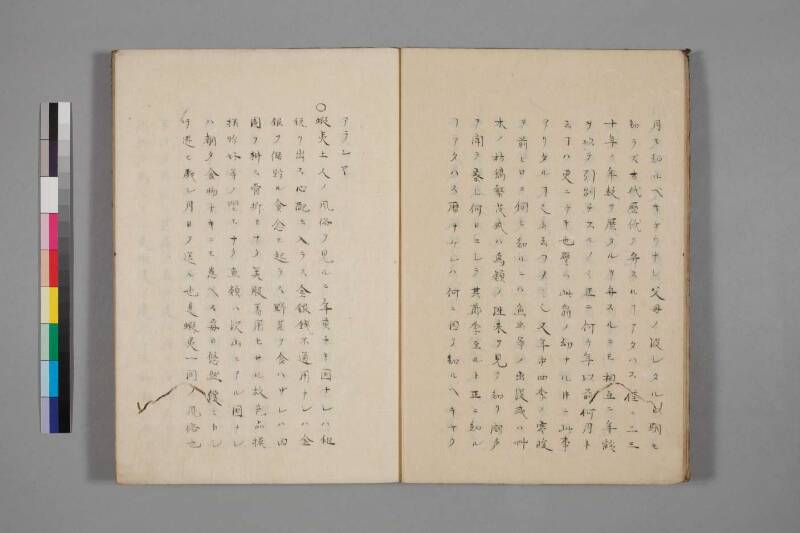
月モ知ルベキヤウナシ父母ノ没シタル日期モ
知ラズ古代歴代ヲ弁スルヿアタハス僅ニ二三
十年ノ年数ヲ歴タルヲ弁スルニモ相互ニ年齢
ヲ以テ引別チスルノミ正ニ何ヶ年以前何月ト
云ヿハ更ニナキ也譬ハ此翁ノ幼ナルトキニ此事
アリタルヿ也ト云フノミ也又年中四季ノ寒暖
ヲ前ヒロニ伺ヒ知ルニハ魚虫等ノ出没或ハ草
木ノ枯稿繁茂或ハ鳥類ノ往来ヲ見テ知リ潮声
ヲ聞テ察シ何日ニシテ其節季至ルト正ニ知ル
ヿアタハス暦ナケレハ何ニ因テ知ルヘキヤウ
【左丁】
アランヤ
〇 蝦夷土人ノ風俗ヲ見ルニ年貢ナキ国ナレハ租
税ヲ出ス心配モ入ラス金銀銭不通用ナレハ金
銀ヲ儲貯ル貪念モ起ラス野菜ヲ食ハザレハ田
園ヲ耕ス骨折モナク美服着用セサル故色品模
様恰好等ノ望モナク魚類ハ沢山ニアル国ナレ
ハ朝夕食物ナキニモ患ヘス毎日悠然緩々トシ
テ遊ヒ戯レ月日ヲ送ル也是蝦夷一同ノ風俗也
現代語訳
【右丁】
……月も知るすべがない。父母が亡くなった日付も知らず、古代・歴代の出来事を弁別することもできない。わずかに二〜三十年の年数を経たことを弁別するにも、互いの年齢をもって区別するのみである。正確に何年前の何月とは、まったく言えない。例えば、「この老人が幼いころにこの出来事があった」と言うのみである。また、年中の四季の寒暖をあらかじめ予測して知るには、魚・虫などの出没、あるいは草木の枯れ・繁茂、あるいは鳥類の行き来を見て知り、潮の音を聞いて察するのであって、何日にしてその季節が来るかを正確に知ることはできない。暦がなければ、何によって知ることができようか。
【左丁】
(知ることが)あろうか(いや、あるまい)。
〇 蝦夷の土人の風俗を見るに、年貢のない国であるため租税を納める心配も要らず、金銀銭の流通がないため金銀を儲け貯める貪欲な念も起こらず、野菜を食べないため田畑を耕す骨折りもなく、美しい服を着用しないため衣服の色・品・模様・形の良し悪しへの望みもなく、魚類は豊富にある国であるため朝夕に食べ物のないことを心配せず、毎日悠然とゆったりと遊び戯れて月日を送るのである。これが蝦夷一同の風俗である。
英語訳
[Right page]
...or the month can be known at all. They do not know the date on which their parents died, and they are unable to distinguish events of ancient or successive generations. Even to discern a span of merely twenty or thirty years, they can only differentiate by comparing one another's ages. To state precisely what month of what year something occurred is entirely beyond them. They can only say, for example, "This event happened when this old man was a child." Furthermore, to anticipate and know in advance the cold and warmth of the four seasons throughout the year, they observe the appearances and disappearances of fish and insects, the withering and flourishing of plants and trees, and the comings and goings of birds; they listen to the sound of the tides and draw inferences from these. They cannot know precisely on what day a particular season will arrive. Without a calendar, how could they possibly know?
[Left page]
Could there be any way? (There could not.)
○ Observing the customs of the Ainu people of Ezo: since theirs is a land with no land tax, they need not worry about paying levies; since gold, silver, and coin currency do not circulate, no greedy desire to earn and accumulate gold and silver arises in them; since they do not eat vegetables, they are spared the toil of tilling fields and gardens; since they do not wear fine clothing, they have no aspirations regarding the color, quality, pattern, or appearance of garments; and since fish are plentiful in their land, they have no anxiety about lacking food morning or evening. Each day they pass their time in an unhurried, leisurely manner, playing and amusing themselves. Such is the universal custom of all the Ezo people.