翻刻
【右丁】
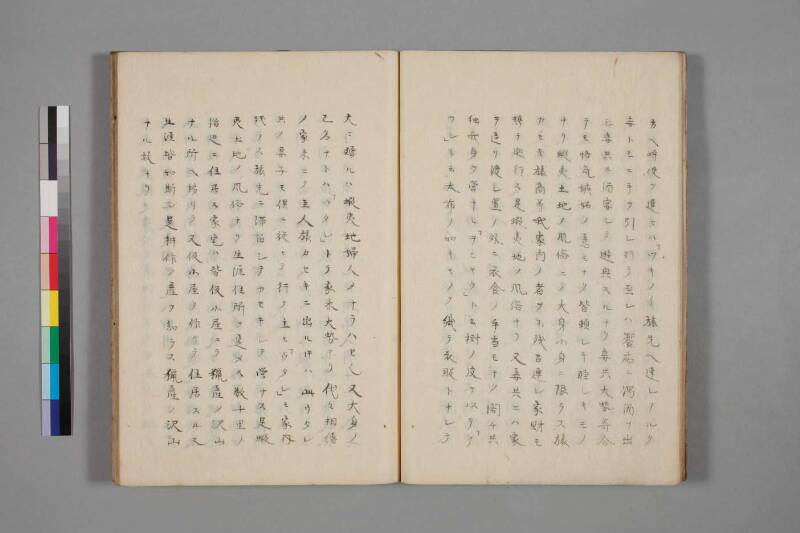
方ヘ呼使ヲ遣セハ「ツキノイ旅先ヘ連レアルク
妾トモニ手ヲ引レ行テ至レハ饗応ニ濁酒ヲ出
シ妾共ニ酒宴シテ遊興スルナリ妾共大勢寄合
テモ恪気嫉妬ノ意モナク皆頼シキ睦シキモノ
ナリ蝦夷土地ノ風俗ニテ大身小身ニ限ラス旅
カセキ旅商等我家内ノ者ヲ不残召連レ家財モ
携テ巡行ス是蝦夷地ノ風俗ナリ又妾共ニハ家
ヲ造リ渡シ置ノ外ニ衣食ノ手当モナク閣ケ共
独我身ヲ営ナミ「ヲヒャウ」ト云樹ノ皮ヲ以テ「ア
ツシ」ト云太布ノ如キモノヲ織テ衣服トナシテ
【左丁】
大ニ贈ルハ蝦夷地婦人ノナラハセ也又大身ノ
乙名ナトハ「ウタシ」トテ家来大勢アリ代々相伝
ノ家来ニテ主人旅カセキニ出ルトキハ此ウタシ
共ノ妻子モ倶ニ従ヒテ行テ主モ「ウタシ」モ家内
残ラス旅先ニ滞留シテカセキシテ営ナス是蝦
夷土地ノ風俗ナリ生涯住所ヲ定メス数十里ノ
海辺ニ住居ス家宅ハ皆仮小屋ニテ猟産ノ沢山
ナル所ヘ移リテ又仮小屋ヲ作リテ住居スル也
生涯皆如斯シ是耕作ノ産ヲ知ラス猟産ノ沢山
ナル故ナリ
現代語訳
【右丁】
「ツキノイ」の方へ呼びの使いを遣わすと、「ツキノイ」は旅先へ連れて歩いている妾たちに手を引かれて連れて行かれ、(その妾の家に)着くと、もてなしとして濁り酒が出され、妾たちと酒宴を催して遊び興じるのである。妾たちが大勢集まっても、嫉妬やひがみの気持ちもなく、皆、互いに頼もしく睦まじい間柄である。蝦夷の土地の風俗として、身分の高い者も低い者も問わず、旅稼ぎ・旅商いなどをするとき、家内の者を残らず連れ、家財も携えて巡り歩く。これが蝦夷地の風俗である。また、妾たちには家を造り与えておく以外には、衣食の手当てもなく放っておかれるが、(妾たちは)各自で身を立て、「ヲヒャウ」という樹の皮をもって「アツシ」という太布のようなものを織り、衣服として
【左丁】
(夫のもとへ)多く贈るのが、蝦夷地の婦人の習わしである。また、身分の高い乙名などには「ウタシ」といって、家来が大勢おり、代々受け継がれてきた家来たちで、主人が旅稼ぎに出るときは、この「ウタシ」たちの妻子も共に従って行き、主人も「ウタシ」も、家内残らず旅先に滞在して稼ぎ営む。これが蝦夷の土地の風俗である。生涯、住む所を定めず、数十里の海辺に住み暮らす。家屋はすべて仮小屋であり、猟や漁の産物が豊かな所へ移り、また仮小屋を作って住み暮らす。生涯、皆このようにして過ごす。これは耕作による生産を知らず、猟・漁の産物が豊かであるためである。
英語訳
[Right folio]
When a messenger is sent to summon "Tsukinoi," he is led by the hand by the concubines he has brought along on his travels and taken to the concubine's dwelling. Upon arrival, cloudy sake (nigorizake) is brought out as a welcome, and he holds a drinking banquet with the concubines and makes merry. Even when the concubines gather in large numbers, there is no jealousy or resentment among them whatsoever; they are all mutually reliable and on friendly terms with one another. It is the custom of the Ezo lands that, regardless of whether one is of high or low station, when setting out on travels for work or trade, one brings along all members of one's household without exception and travels about with one's belongings in tow. This is the custom of the Ezo lands. Furthermore, the concubines are provided with a house to live in, but beyond that receive no provision for food or clothing and are left to fend for themselves; each woman sustains herself independently by weaving the bark of a tree called "ohyō" into a cloth-like material called "attush" — resembling a heavy woven fabric — to make clothing,
[Left folio]
which they then send in quantity as gifts to their husband. This is the custom of the women of the Ezo lands. Moreover, high-ranking elders (otona) have a large number of retainers called "utashi," who are hereditary servants passed down through generations. When the master sets out on a working journey, the wives and children of these "utashi" also accompany him, and both master and "utashi" — the entire household without exception — remain at the destination and engage in their livelihoods there. This is the custom of the Ezo lands. Throughout their lives, they do not settle in any fixed abode, but dwell along stretches of coastline spanning dozens of ri. Their dwellings are all temporary huts, and when they move to a place where hunting and fishing yields are abundant, they build yet another temporary hut and live there. Their entire lives are spent in this manner. This is because they do not know the produce of agriculture, and hunting and fishing yields are plentiful.