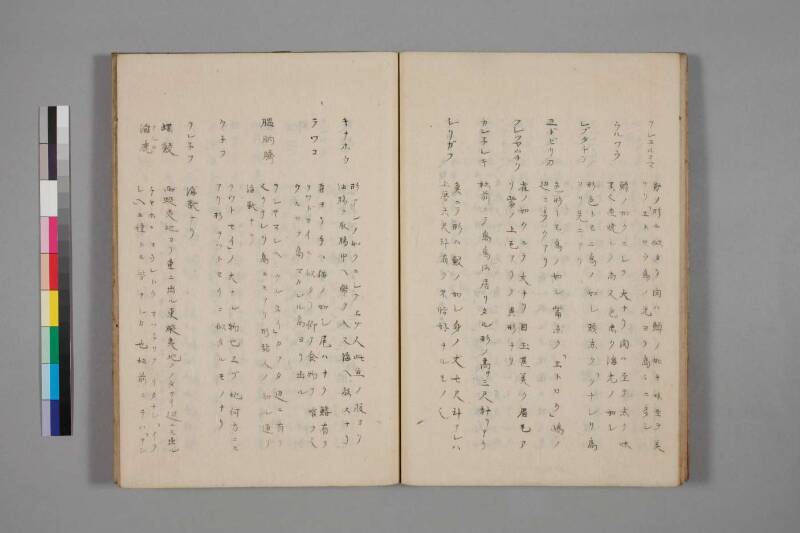
翻刻
【右丁】
ヲシユルコマ 《割書:魲ノ形ニ似タリ肉ハ鱒ノ如キ味至テ美|ナリ「エトロウ島ノ先ヨリ島々ニ多シ》
ウルツウ 《割書:鱒ノ如クニシテ大ナリ肉ハ至テ赤ク味|美也煮焼シテ尚又赤ク海老ノ如シ》
レブタチリ 《割書:形色トモニ鳥ノ如シ頭赤ク「クナシリ島|ヨリ先ニアリ》
エドビリカ 《割書:色形トモ鳥ノ如シ觜赤ク「エトロウ」嶋ノ|辺ニ多クアリ》
フレツヤムチリ《割書:雀ノ如クニテ大ナリ目玉甚美ク眉毛ア|リ觜ノ上毛アリテ異形ナリ》
カンネレキ 《割書:松前ニテ島鳥ト云居リタル形ノ高サ三尺計リアリ|》
シリガフ 《割書:魚ニテ形ハ鮫ノ如シ身ノ丈七尺計アレハ|上唇六尺計有テ不恰好ナルモノ也》
【左丁】
キナホウ 《割書:形アシノ如クニテエゾ人人此魚ノ腹ヨリ|油腸ヲ取腸中ヘ幣ヲ入又海ヘ放スナリ》
ラツコ 《割書:首ヨリ手ハ猫ノ如シ尾ハナク鰭有テ|ヲツトセイニ似タリ仰テ食物ヲ喰フ也》
《割書:ウルツフ島マカンル島ヨリ出ル|》
膃肭臍 《割書:ヲシヤマンヘ クンヌイ」カフタ辺ニ有リ|又クナシリ島ニモアリ形諸人ノ知ル通リ》
《割書:海獣ナリ|》
ウネフ 《割書:ヲツトセイ」ノ大ナル物也エゾ地何方ニモ|アリ形ヲツトセイニ似タルモノナリ》
ヲンネフ 海獣ナリ
蝶鮫 《割書:西蝦夷地ヨリ重ニ出ル東蝦夷地ノノタヲイ辺ニモ出ル|》
海鹿(アシカ) 《割書:チヤホヽ コウレトウ マツネソフ イタナシ「イク|シヘ」五種トモ皆アシカ也松前ニテハ「アシ》
現代語訳
## 産物のこと(続き)
**ヲシユルコマ**(アイヌ語)
魲(にべ)の形に似ている。肉は鱒のような味で、非常に美味である。エトロウ(択捉)島より先の島々に多い。
**ウルツウ**(アイヌ語)
鱒のようで、大きい。肉は非常に赤く、味が美味である。煮たり焼いたりしても、なお赤く、海老のようである。
**レブタチリ**(アイヌ語)
形も色も鳥のようである。頭が赤い。クナシリ(国後)島よりも先(北方)にある。
**エドビリカ**(アイヌ語)
色も形も鳥のようである。嘴(くちばし)が赤い。エトロウ(択捉)島の辺りに多くある。
**フレツヤムチリ**(アイヌ語)
雀のようで、大きい。目玉が非常に美しく、眉毛があり、嘴の上に毛があって、異様な形をしている。
**カンネレキ**(アイヌ語)
松前では「島鳥(しまとり)」と呼ばれる。居ている(立っている)姿の高さが三尺(約90cm)ほどある。
**シリガフ**(アイヌ語)
魚であって、形は鮫のようである。体の丈が七尺(約210cm)ほどあれば、上唇が六尺(約180cm)ほどもあり、非常に不恰好な生き物である。
---
**キナホウ**(アイヌ語)
形は葦(あし)のようで、蝦夷人(アイヌの人々)はこの魚の腹から油腸(脂肪が詰まった腸)を取り出し、腸の中に幣(ぬさ、お供え物)を入れて、また海へ放すのである。
**ラツコ**(アイヌ語)
首から手(前脚)は猫のようである。尾はなく、鰭(ひれ)がある。膃肭臍(おっとせい)に似ている。仰向けになって食物を食べる。ウルツフ(ウルップ)島・マカンル島より産出する。
**膃肭臍(おっとせい)**
アイヌ語名:ヲシヤマンヘ。クンヌイ・カフタ(歌棄)の辺りにあり、またクナシリ(国後)島にもある。形は世間の人々がよく知っている通り、海獣である。
**ウネフ**(アイヌ語)
膃肭臍(おっとせい)の大きいものである。蝦夷地の何処にでもある。形は膃肭臍に似たものである。
**ヲンネフ**(アイヌ語)
海獣である。
**蝶鮫(ちょうざめ)**
主に西蝦夷地より産出する。東蝦夷地のノタヲイの辺りにも産出する。
**海鹿(あしか)**
アイヌ語では「チヤホヽ」「コウレトウ」「マツネソフ」「イタナシ」「イクシヘ」の五種があり、いずれもアシカである。松前では「アシ(以下次頁へ続く)」
英語訳
## On Local Products (continued)
**Oshiyurukoma** *(ヲシユルコマ)* [Ainu term]
Resembles the shape of a *nibe* (croaker/drum fish). The flesh tastes like trout and is extremely delicious. Found in great numbers on the islands beyond Etorofu (Iturup) Island.
**Urutsuu** *(ウルツウ)* [Ainu term]
Like a trout but larger. The flesh is very red and delicious. Even after boiling or grilling, it remains red, resembling shrimp.
**Rebutachiri** *(レブタチリ)* [Ainu term]
Its shape and color both resemble a bird. The head is red. Found in areas beyond Kunashiri (Kunashir) Island.
**Edobirika** *(エドビリカ)* [Ainu term]
Its color and shape both resemble a bird. The beak is red. Found in great numbers around Etorofu (Iturup) Island.
**Furetsuyamuchiri** *(フレツヤムチリ)* [Ainu term]
Resembles a sparrow but is larger. Its eyes are very beautiful; it has eyebrow-like markings, and has feathers above its beak, giving it an unusual appearance.
**Kannерeki** *(カンネレキ)* [Ainu term]
Called "*shima-tori*" (island bird) in Matsumae. When standing upright, it measures about three *shaku* (approx. 90 cm) in height.
**Shirigafu** *(シリガフ)* [Ainu term]
A fish resembling a shark in shape. When the body length is about seven *shaku* (approx. 210 cm), the upper lip alone measures about six *shaku* (approx. 180 cm), making it an oddly disproportioned creature.
---
**Kinahō** *(キナホウ)* [Ainu term]
Its shape resembles a reed (*ashi*). The Ezo people (Ainu) extract the oil-filled intestines from the belly of this fish, then place *nusa* (ritual offerings) inside the intestines and release the fish back into the sea.
**Ratsuko** *(ラツコ)* [Ainu term]
From the neck, its forelegs resemble those of a cat. It has no tail but has fins, resembling a fur seal (*ottōsei*). It lies on its back to eat food. Produced from Uruppu Island and Makanru Island.
**Fur Seal** *(膃肭臍 / おっとせい)*
Ainu name: *Oshiyamanhe*. Found around the Kunnui and Kafuta (Utagoe) areas, and also on Kunashiri Island. Its appearance is as widely known — it is a marine mammal.
**Unefu** *(ウネフ)* [Ainu term]
A large variety of the fur seal (*ottōsei*). Found throughout the Ezo region. Its shape is similar to that of a fur seal.
**Onnеfu** *(ヲンネフ)* [Ainu term]
A marine mammal.
**Butterfly Sturgeon / Kaluga** *(蝶鮫)*
Mainly produced in Western Ezo. Also found around Notaoi in Eastern Ezo.
**Sea Lion** *(海鹿 / アシカ)*
In the Ainu language, there are five varieties known as "*Chahohо*," "*Kōretō*," "*Matsunеsofu*," "*Itanashi*," and "*Ikushihe*" — all are sea lions (*ashika*). In Matsumae they are called "*Ashi—*" *(continued on next page)*