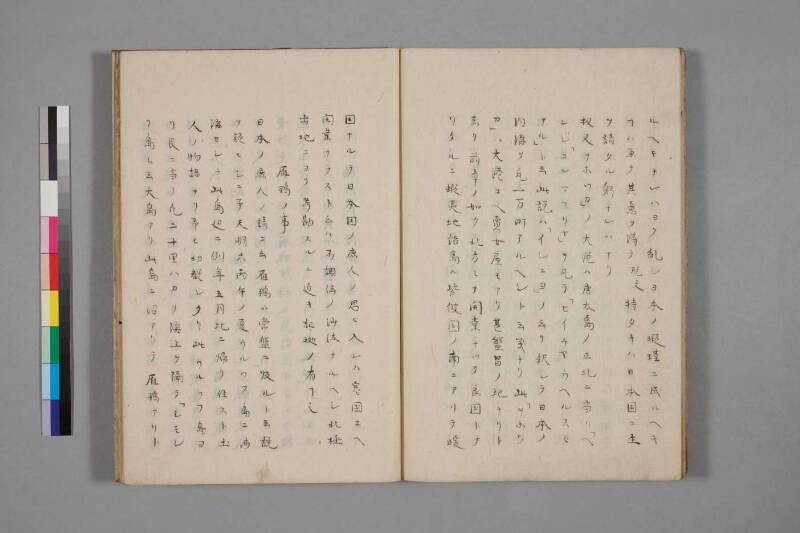
翻刻
【右丁】
ルヘキナレハヨク糺シ日本ノ瑕瑾ニ成ルヘキ
ヿハ兼テ其意ヲ得テ【脱文】持タキハ日本国ニ生
ヲ請タル身ナレハナリ
扨又ヲホツカ」ノ大港ハ唐太島ノ正北ニ当リ「ヘ
ンジ「ユンマフリヤ」ヲ凡テ「セイチヤウヘルスタ
アル」ト云此説ハ「インユヨ」ノ云リ釈シテ日本ノ
内海ヲ凡一万町アルヘシト云義ナリ此「ヲホツ
カ」ハ大港ユヘ売女屋モアリ甚繁昌ノ地ナリト
云リ前章ノ如ク北方ミナ開業ナツテ良国トナ
リタルニ蝦夷地諸島ハ皆彼国ノ南ニアリテ暖
【左丁】
国ナルヲ日本国ノ庶人ノ思ヒ入レハ寒国ユヘ
開業ナラスト云ハ不調法ノ沙汰ナルヘシ北極
出地ニヨリ考勘スルニ近キ証拠ノ有ヿ也
雁鴨ノ事
日本ノ庶人ノ諺ニ云雁鴨ハ常盤ニ帰ルト云説
ヲ疑ヒシニ予モ天明六丙午ノ夏ウルツフ島ニ渉
海セシニ此島辺ニ例年五月比ニ帰リ住スト土
人ノ物語ナリ予モ切観シタリ此ウルツフ島ヨ
リ艮ニ当リ凡二十里ハカリ海上ヲ隔テ「シモシ
リ島ト云大島アリ此島ニ沼アリテ雁鴨アリト
現代語訳
## (右丁・本文)
……るべきなれば、よく糺し、日本の瑕瑾(かきん)となるべきことは、かねてその意を得て【脱文】持ちたきは、日本国に生を受けた身であるからなり。
さて、またオホツカの大港は、唐太島(からふとしま)の正北に当たり、「ヘンジ」「ユンマフリヤ」を総じて「セイチャウヘルスタアル」と言う。この説は「インユヨ」の言を訳して、日本の内海をおおよそ一万町(ちょう)あるべしという意義なり。このオホツカは大港ゆえ、売女屋(うりめや)もあり、はなはだ繁昌の地なりと言えり。前章のごとく、北方みな開業になって良国となりたるに、蝦夷地諸島はみな彼の国の南にあって、暖
---
## (左丁・本文)
……国なるを、日本国の庶民の思い入れは「寒国ゆえ開業ならず」と言うは、不調法の沙汰(さた)なるべし。北極出地によって考え勘ずるに、近き証拠のあることなり。
---
### 雁鴨のこと
日本の庶民の諺に言う、「雁鴨は常盤(ときわ)に帰る」という説を疑っていたが、私も天明六年丙午(ひのえうま)の夏、ウルツフ島へ渡海したところ、この島辺りに、例年五月頃に(雁鴨が)帰り住むと土人(現地の人)の物語なり。私もつぶさに観察した。このウルツフ島より艮(うしとら/北東)の方角に当たり、およそ二十里ばかり海上を隔てて「シモシリ島」と言う大島あり。この島に沼(ぬま)があって、雁鴨がいると……
英語訳
## (Right folio — main text)
…therefore, one must inquire thoroughly, and as for matters that could become a blemish or disgrace (*kakkin*) to Japan, it is my wish to have already grasped their meaning beforehand — **[lacuna in text]** — for I am a person born into the land of Japan.
Now, the great port of Okhotsk (*Ōhotsuka*) lies directly to the north of Sakhalin Island (*Karafuto*). The terms "Henji" and "Yunmafuriya" are collectively referred to as "Seichauherustāru." This expression is a translation of words spoken by "In'yuyo," meaning that the inland sea of Japan is said to extend approximately ten thousand *chō* in distance. Because Okhotsk is such a great port, it even has establishments for prostitution, and it is said to be a place of considerable prosperity. As described in the preceding chapter, the northern regions have all been developed and have become prosperous lands; and yet the various islands of Ezo (*Ezochi*) all lie to the south of those lands and are warmer in climate —
---
## (Left folio — main text)
— and so for the common people of Japan to think that these islands cannot be developed because they are cold countries is quite a thoughtless thing to say. When one considers the matter by reference to the elevation of the North Pole (*hokkyoku shutchi* — i.e., latitude), there is indeed close evidence to support this view.
---
### On Wild Geese and Ducks
There is a common saying among the people of Japan: "Wild geese and ducks always return to their perennial grounds (*tokiwa*)." I had harbored doubts about this claim, but in the summer of the sixth year of Tenmei, the year of *Hinoe-Uma* (1786), when I crossed the sea to Uruppu Island (*Urtup*), the local people (*dojin*) told me that every year around the fifth month, the birds return and take up residence in the vicinity of this island. I observed this closely myself. To the northeast (*ushitora*) of Uruppu Island, approximately twenty *ri* across the sea, there lies a large island called "Shimoshiri Island" (*Simushir*). It is said that on this island there is a marsh (*numa*), and wild geese and ducks are found there…