翻刻
【右丁】
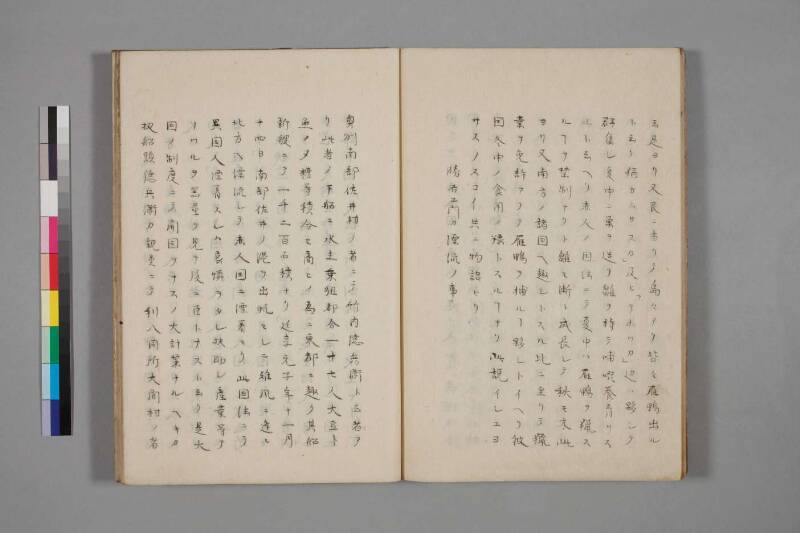
云是ヨリ又艮ニ当リテ島々アリ皆々雁鴨出ル
ト云リ猶カムサスカ」及ヒ「ヲホツカ」辺ハ夥シク
群集シ夏中ニ巣ヲ造リ雛ヲ持テ哺啜養育ヲス
ルト云ヘリ赤人ノ国法ニテ夏中ハ雁鴨ヲ猟ス
ルヿヲ禁制ナリト雛モ漸々成長シテ秋モ末此
ヨリ又南方ノ諸国ヘ趣ントスル比ニ至リテ猟
業ヲ免許アリテ雁鴨ヲ捕ルヿ夥シトイヘリ彼
国冬中ノ食用ノ糧トスルヿナリ此説インユヨ
サスノヌコイ共ニ物語セリ
勝右ヱ門カ漂流ノ事
【左丁】
奥州南部佐井村ノ者ニテ竹内徳兵衛ト云者ア
リ此者ノ下船ニ水主乗組都合一十七人大豆ト
魚ノ〆糟等積合ヒ商ヒノ為ニ東都ニ趣ク其船
新艘ニテ一千二百石積ナリ延享元子年十一月
十四日南部佐井ノ港ヲ出帆セシニ難風ニ逢ヒ
北方ヘ漂流シテ赤人国ニ漂着セリ此国法ニテ
異国人漂着スレハ哀憐ヲタレ扶助シ産業等ア
リツルヲ器量ヲ見テ後ニ臣トナスト云リ是大
国ノ制度ニテ開国ヲナスノ大計策ナルヘキカ
扨船頭徳兵衛カ親類ニテ利八同所大間村ノ者
現代語訳
## (右丁・本文)
……そこからまた艮(北東)の方角に当たって島々があり、みな雁鴨が出ると言えり。なおカムサスカ(カムチャツカ)および「オホツカ」(オホーツク)辺りは夥しく群集し、夏中(なつじゅう)に巣を造り、雛を持ちて哺啜(ほてつ)養育をすると言えり。赤人(ロシア人)の国法にて、夏中は雁鴨を猟することを禁制なり。雛も漸々(ぜんぜん)成長して、秋も末、ここからまた南方の諸国へ趣かんとする頃に至って、猟業を免許あって、雁鴨を捕ること夥しと言えり。彼の国の冬中の食用の糧(かて)とすることなり。この説、インユヨ・サスノヌコイ、ともに物語せり。
---
### 勝右衛門が漂流のこと
## (左丁・本文)
奥州南部(なんぶ)・佐井村(さいむら)の者にて、竹内徳兵衛と言う者あり。この者の持ち船に水主(かこ)乗り組み、都合十七人、大豆と魚の〆糟(しめかす)等を積み合わせ、商いのために東都(江戸)に趣く。その船は新艘(しんそう)にて、千二百石積みなり。延享元年子年(ねのとし)十一月十四日、南部佐井の港を出帆したところ、難風(なんぷう)に遭い、北方へ漂流して赤人国(ロシア)に漂着せり。この国法にて、異国人が漂着すれば哀憐(あいれん)を垂れて扶助し、産業等ありつるを器量を見て、後に臣(しん)となすと言えり。これ大国の制度にて、開国をなすの大計策(おおはかりごと)なるべきか。
さて、船頭徳兵衛の親類にて、利八(りはち)、同所大間村(おおまむら)の者……
英語訳
## (Right folio — main text)
…Beyond there, further still to the northeast, there are more islands, and it is said that wild geese and ducks appear on all of them. Moreover, in the vicinity of Kamchatka (*Kamusasuka*) and Okhotsk (*Ōhotsuka*), they gather in enormous numbers; it is said that during the summer they build nests, hatch chicks, and rear and feed their young. Under the laws of the *Akabito* (Russians), hunting wild geese and ducks is strictly prohibited during the summer months. As the chicks gradually grow, and toward the end of autumn, when the birds are about to set off again for the southern lands, hunting is then permitted, and it is said that great numbers of geese and ducks are caught at that time. These serve as provisions for the Russian people throughout the winter. Both Inyuyo and Susunonukoi told me this account.
---
### On the Drifting of Katsuemon
## (Left folio — main text)
In Sai Village (*Saimura*) in the Nanbu domain of Ōshū (*Mutsu Province*), there was a man named Takeuchi Tokubei. On his ship, a crew of seventeen men in total had come aboard; the vessel was loaded with soybeans, pressed fish cake (*shime-kasu*), and other cargo, bound for the Eastern Capital (Edo) for purposes of trade. It was a newly built ship with a capacity of 1,200 *koku*. On the fourteenth day of the eleventh month of the first year of Enkyō, the year of the Rat (1744), they set sail from the port of Nanbu-Sai, but were caught in a violent storm, drifted northward, and were cast ashore in the land of the *Akabito* (Russia). Under the laws of that country, when a person from a foreign land drifts ashore, they show compassion and offer assistance; and having observed the drifted person's skills and abilities (*kiryō*) in whatever trades or occupations they possessed, they are afterward made a subject (*shin*) of the state. This, one might say, is a system befitting a great nation — a grand strategy for developing and opening the land.
Now, a relation of the shipmaster Tokubei — a man named Rihachi, also from Ōma Village (*Ōmamura*) in the same area…