翻刻
【右丁】
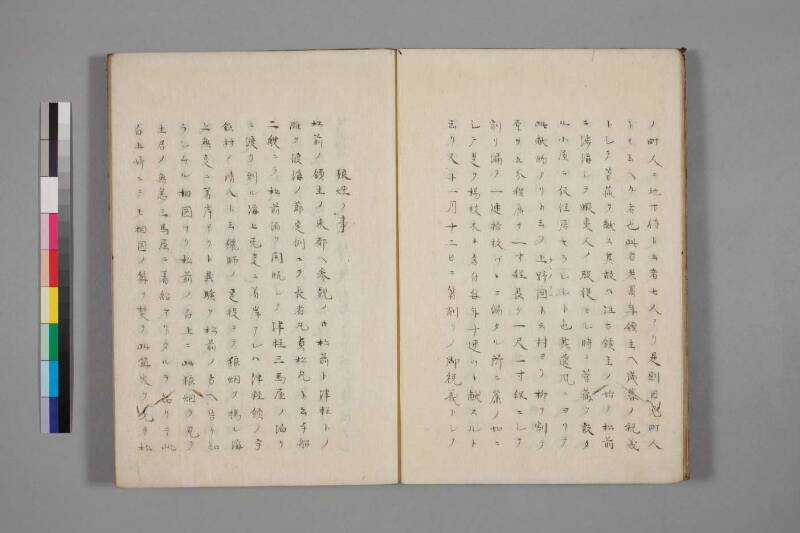
ノ町人ニ地下侍ト云者七人アリ是則目見町人
トモ云ヘル者也此者共累年領主ヘ歳暮ノ祝義
トシテ菅菰ヲ献ス其故ハ往古領主ノ始テ松前
ニ渉海シテ蝦夷人ノ服従セシ時ニ菅菰ヲ敷タ
ル小屋ニ仮住居セラレシト也其遺風ニヨリテ
此献物アリト云フ上野国(カミノクニ)ト云村ヨリ柳ヲ割テ
厚サ五分程広サ一寸程長ケ一尺二寸程ニシテ
削リ編テ一連拾枚ヅヽニ編タル所ニ簾ノ如ニ
シテ是ヲ楊枝木ト名付毎年十連ツヽ献スルト
云リ又十一月十二日ニ箸削リノ御祝義トシテ
【左丁】
狼煙ノ事
松前ノ領主ノ東都ヘ参覲ノトキ松前ト津軽トノ
灘ヲ渡海ノ節定例ニテ長者丸貞松丸ト云手船
二艘ニテ松前泊ヲ開帆シテ津軽三馬屋ノ泊リ
ニ渡リ到ル海上無事ニ着岸アレハ津軽領ノ宇
鉄村ノ清八ト云猟師ノ定役ニテ狼煙ヲ揚ル海
上無事ニ着岸アリト其験ヲ松前ノ方ヘ告ケ知
ラレムル相図ナリ松前ノ白上ニ此狼煙ヲ見テ
主君ノ無恙三馬屋に着船アリタルヲ知リテ此
白上崎ニテモ相図ノ篝ヲ焚テ此篝火ヲ見テ松
現代語訳
【右丁】
町人の中に地下侍と呼ばれる者が七人いる。これはすなわち目見町人とも呼ばれる者たちである。この者たちは毎年、領主へ歳暮の祝儀として菅薦を献上する。その理由は、往古、領主が初めて松前に渡海して蝦夷人を服従させた際に、菅薦を敷いた小屋に仮住まいをされたからであるという。その遺風によってこの献物があるといわれている。上ノ国という村から、柳を割って、厚さ五分ほど、幅一寸ほど、長さ一尺二寸ほどに削り編んで、一連十枚ずつ編んだもので、簾のようなかたちをしており、これを楊枝木と名付け、毎年十連ずつ献上するという。また十一月十二日には箸削りの御祝儀として……
【左丁】
狼煙のこと
松前の領主が江戸へ参勤交代のとき、松前と津軽との灘を渡海する際の定例として、長者丸・貞松丸という手船二艘で松前泊を出帆して、津軽三厩の泊りに渡り到着する。海上無事に着岸すれば、津軽領の宇鉄村の清八という猟師の定めの役として狼煙を上げる。海上無事に着岸したことをその証として松前の方へ告げ知らせるための合図である。松前の白上において、この狼煙を見て、主君が無事に三厩に着船したことを知り、この白上崎においても合図の篝火を焚いて、その篝火を見て松……
英語訳
[Right page]
Among the townspeople of [Matsumae's castle town], there are seven individuals called *jige-zamurai* (lower-ranking samurai of townsman status). These are also referred to as *memi-chōnin* (townspeople granted an audience with the lord). These individuals present *suge-gomo* (sedge rush mats) to the domain lord each year as a year-end gift. The reason for this is said to be that in ancient times, when the domain lord first crossed the sea to Matsumae and subdued the Ainu people, he temporarily resided in a hut with sedge rush mats spread on the floor. It is said that this offering persists as a remnant of that custom. From a village called Kaminokuni, willow wood is split and shaved into pieces approximately five *bu* (ca. 1.5 cm) thick, one *sun* (ca. 3 cm) wide, and one *shaku* two *sun* (ca. 36 cm) long, then woven together in sets of ten pieces per string, in a form resembling a bamboo blind (*sudare*). These are named *yōjiki* (toothpick wood), and ten strings are presented each year. Furthermore, on the twelfth day of the eleventh month, as a celebratory offering for the "chopstick-whittling" ceremony...
[Left page]
On the Subject of Signal Fires (*Noroshi*)
When the lord of Matsumae travels to Edo for his alternate-year attendance (*sankin-kōtai*), it is the established custom that, upon crossing the strait between Matsumae and Tsugaru, two vessels called the *Chōjamaru* and the *Sadamatsumaru* set sail from Matsumae harbor and cross to the anchorage at Tsugaru Mimaya (Samamya). Upon safe arrival on shore, it is the designated duty of a hunter named Seihachi from Utetsu Village in Tsugaru domain to light a signal fire (*noroshi*). This signal fire serves as a means of notification to Matsumae that the crossing has been completed safely. Upon seeing this signal fire from Shirakami [Point] in Matsumae, and knowing that the lord has arrived safely at Mimaya, they in turn light a beacon fire (*kagaribi*) at Cape Shirakami as a return signal, and upon seeing this beacon fire, [the text continues regarding] Matsu...