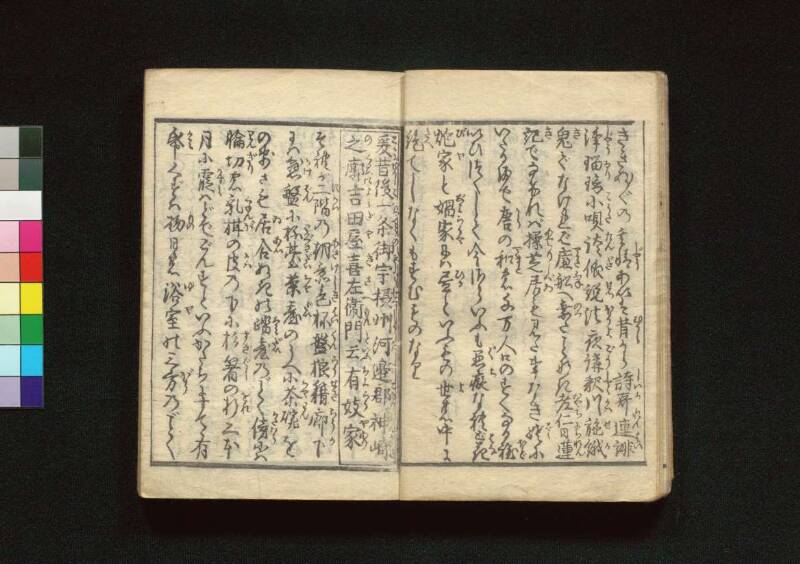
翻刻
ききぬ〴〵の其 情(じやう)あいは昔(むかし)から詩歌連誹(しいかれんはい)
浄瑠璃小唄談儀説法夜講釈川施餓(じやうるりこうたたんぎせつほうよごうしやくかはせか)
鬼(き)でなければ慮船(やかたふね)へ乗(のつ)たことなき老仁日蓮(おやちにちれん)
記(き)でなければ操芝居(あやつりしばゐ)も見た事なき姥(ばゝ)に
いたるまで唐(から)の和(やまと)の千万人口のすくなる程(ほど)
いひつくして今さらいふも愚痴(ぐち)なれど花(はな)
炮家(びや)と娼家(ぢよらうや)には昼(ひる)といふもの世(よ)の中に
絶(たへ)てしなくもすむものなり
爰昔後一条御宇摂州河辺郡神崎(こゝにむかしこいちてうのきようせつしうかはへこほりしんさき)
之廓吉田屋喜左衛門云有妓家(のくるはによしだやきさへもんといふちよらうやあり)
それが二階(にかい)の朝景色杯盤狼藉廊下(あさけしきはいはんらうせきらうか)
には懸盤(かけばん)に様台茶台(さかづきだいちやだい)のうへに茶碗(ちやわん)を
のせさも居合(ゐあい)ぬきの踏台(ふみだい)のごとく傍(かたはら)には
輪切(りんぎり)の乳柑(くねんぼ)の皮(かは)の下に杉箸(すぎばし)の折(をれ)二本
月に霞(かすみ)はどでごんすといふかたちにすてゝ有
紙(かみ)くずは物(もの)日の浴室(ゆや)の三 方(ぼう)のごとく
現代語訳
**(本文・続き)**
聞き慣れた、その情愛のありさまは、昔から詩歌・連俳・浄瑠璃・小唄・談義・説法・夜講釈・川施餓鬼でなければ屋形船に乗ったこともない老翁、日蓮記でなければ操り芝居も見たことのない老婆に至るまで、唐(から)の、大和の、数知れぬ人々の口がすり減るほどに言い尽くして、今さら言うのも愚痴というものだが――花火屋(遊び場)と女郎屋には、昼というものが世の中にまったく存在しなくてもやっていけるものなのだ。
---
さてここに、昔、後一条天皇の御代、摂州河辺郡神崎の廓(くるわ)に、吉田屋喜左衛門という女郎屋があった。
その二階の朝の景色といえば――杯盤(さかずきや皿)が乱雑に散らかった廊下には、掛け盤(折りたたみ式の台)に盃台・茶台の上に茶碗をのせて、いかにも居合い抜きの踏み台のような様子で、その傍らには輪切りにした久年母(くねんぼ・柑橘の一種)の皮の下に、杉箸の折れたのが二本、「月に霞はどうでございます」と言わんばかりの形(月と霞の取り合わせを模した風情)に捨ててある。紙くずは、物日(特別な日)の湯屋の三方(さんぽう)のように(あちこちに)……
英語訳
**(Main text, continued)**
This familiar, well-worn subject of amorous longing has, since ancient times, been sung of and spoken of — in verse, in linked haiku, in *jōruri* ballads, in popular songs, in sermons and religious lectures, in late-night storytelling sessions — until even the toothless old man who has never been on a pleasure boat except at a river memorial service, and the old granny who has never seen a puppet theater except at a *Nichiren-ki* performance, have all heard it told — the mouths of countless people, in China and in Japan alike, having worn themselves out saying it. To bring it up again now would itself be little more than idle complaint. And yet: a fireworks house and a brothel are places that could get on perfectly well if the word "daytime" ceased to exist in this world entirely.
---
Now then: long ago, in the reign of Emperor Go-Ichijō, in the licensed quarter of Shinsaki in Kawabe District, Settsu Province, there was a brothel by the name of Yoshidaya Kisaemon.
The morning scene on the second floor of that establishment — what a sight it was. Along the corridor, cups and dishes lay strewn about in wild disorder. On a folding serving-stand (*kakéban*), atop cup-stands and tea-stands, tea bowls had been balanced, looking for all the world like the stepping-block used in *iai* sword-drawing practice. Beside them, beneath the rind of a sliced *kunenbo* (a type of citrus), two broken chopsticks of cryptomeria wood had been abandoned — cast aside in the shape of "moon and mist," as if to say, "How do you like this arrangement?" The scraps of wastepaper lay about like the offering trays at a bathhouse on a festival day...