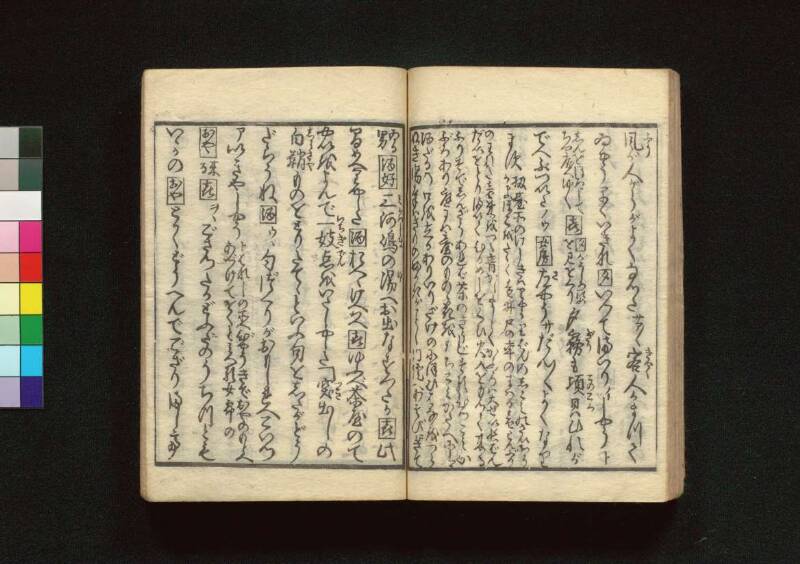
翻刻
風(ふう)が人がらがよくなつたサア〳〵客(きやく)人かまつて
ゐやう早くいきな《箱:夕》いつてまいりィしやうと《割書:ト| 》
《割書:しんを同道して|ちや屋へゆく》《箱:喜》《割書:《箱:夕》がうしろ姿|を見をくり》夕 霧(ぎり)も頃日(このころ)はひれが
でへぶついたノウ《箱:女房》左(さ)やうサだん〳〵よくなり
ます《割書:扨台所のけしきはりやうりばんのしこみのさいちう|かまほこをたゝく音井戸の車のまはる音とんぶり》
《割書:のわれた音米をつく音かしましくかふろは大せい長ばん|だいをとりまいてひるめしをくひ火入をもつて来る》
《割書:ふりそでしんざうあれば茶のきうじするひつこみか|ぶろあり庭には臺のものゝ花をもちこみかたへには》
《割書:酒だるの口を立るありいりざけのにほひはなをつら|ぬき湯気はきりのふかきがことし内証へあそびにきて》
《割書:ゐる|男》《箱:酒好》三河島(みかはしま)の湯(ゆ)へお出なすつたか《箱:喜》此
間めへりやした《箱:酒》おへゝけへはへ《箱:喜》ゆふべ茶屋のて
やいをよんで一妓点(いちぎでん)をいたしやした「突(つき)出しの
白鞘(しらさや)ものをとりたてゝといふ句をしたがどう
だらうね《箱:酒》ウヽ句づくりがおもしれへこいつ
とはなしの所へびやうきでおやのもとへ
ァいきやしやう《割書:トはなしの所へびやうきでおやのもとへ|あづけてをくとみへる女郎の》
おや 《割書:来|る》《箱:喜》ヲヽごさつたかどふだのうちつとも
いゝかの《箱:おや》おやとかくどうへんでござりまして
現代語訳
**(本文・続き)**
【喜左衛門〔きざえもん〕】「——風〔ふう〕が、人柄〔ひとがら〕がよくなったサア〳〵、客人〔きゃくびと〕が待っていようから、早く行きな。」
【夕霧〔ゆうぎり〕】「行ってまいりィしょう。」
(ト——)
(仲之〔しん〕を同道して茶屋へ行く。)
【喜左衛門〔きざえもん〕】(【夕霧〔ゆうぎり〕】の後ろ姿を見送り)「夕霧も、このごろはひれがだいぶついたノウ。」
【女房〔にょうぼう〕】「さようさ、だんだんよくなります。」
(さて、台所の景色〔けしき〕は、料理番〔りょうりばん〕の仕込みの最中〔さいちゅう〕、かまぼこを叩く音、井戸の車の回る音、とんぶりの割れた音、米を搗〔つ〕く音、かしましく。かぶろは大勢、長盆台〔ながぼんだい〕を取り巻いて昼飯〔ひるめし〕を食い、火入れを持って来る。振袖新造〔ふりそでしんぞう〕あれば茶の給仕〔きゅうじ〕するひっこみかぶろあり。庭には台の物〔だいのもの〕の花を持ち込み、かたわらには酒樽〔さかだる〕の口を立てるあり。入り酒〔いりざけ〕の匂〔におい〕は鼻を貫〔つらぬ〕き、湯気〔ゆげ〕は霧の深きがごとし。内証〔ないしょう〕へ遊びに来ている——)
【酒好〔さけずき〕】「三河島〔みかわしま〕の湯〔ゆ〕へお出なさったか。」
【喜左衛門〔きざえもん〕】「此間〔こないだ〕参〔まい〕りやした。」
【酒好〔さけずき〕】「おへへ、けえはへ。」
【喜左衛門〔きざえもん〕】「ゆうべ茶屋の亭主〔てやい〕を呼んで一妓点〔いちぎでん〕をいたしやした。『突き出しの白鞘〔しらさや〕ものを取り立てて』という句をしたが、どうだろうね。」
【酒好〔さけずき〕】「ウヽ、句づくりがおもしれえ。」
(こいつとはなしの所へ、病気で親のもとへ預けておくと見える女郎の——)
【おや〔親〕】(来る)
【喜左衛門〔きざえもん〕】「ヲヽ、ごさったか。どうだ、のう、ちっともよいか。」
【おや〔親〕】「親〔おや〕とかく、どうも変〔へん〕でございまして——」
英語訳
**(Main text, continued)**
**[Kizaemon / 喜左衛門]** "— the way she carries herself has really improved. Now, now, your guest will be waiting — off you go quickly."
**[Yūgiri / 夕霧]** "Off I go, then."
*(And with that —)*
*(She sets off to the teahouse [chaya], accompanied by her shinzō [attendant courtesan].)*
**[Kizaemon / 喜左衛門]** *(watching Yūgiri's retreating figure)* "Yūgiri has put on quite a bit of polish lately, hasn't she."
**[Proprietress / 女房]** "Indeed she has — she improves more and more each day."
*(Now, the scene in the kitchen: the cook is in the midst of preparations — the sound of chopping fish cake [kamaboko], the creak of the well-pulley turning, the crack of a burst tōnburi [a type of produce], the thud of rice being pounded — a cacophony of noise. A large crowd of kaburo [young attendant girls] surround the long serving-tray stand, eating their midday meal, then carry in the charcoal braziers [hi-ire]. A furisode-shinzō [young attendant in long-sleeved robes] serves tea; there are also hikkomikaburo [attendants staying within]. Into the garden, flower arrangements [dai-no-mono] are being brought in; nearby, someone is standing a sake barrel on its end. The smell of sake being warmed [iri-zake] pierces the nostrils, and the steam rises thick as deep fog. In the inner room [naishō], a man who has come to visit socially —)*
**[Sake-lover / 酒好]** "Did you go to the Mikawashima baths [yu]?"
**[Kizaemon / 喜左衛門]** "I went the other day."
**[Sake-lover / 酒好]** "Oh ho, is that right?"
**[Kizaemon / 喜左衛門]** "Last night I invited the teahouse master over and we held a little haiku gathering [ichigi-den]. I composed the verse: *'Highlighting the freshly-debuted beauty, still in her plain white scabbard'* — what do you make of it?"
**[Sake-lover / 酒好]** "Mm, that's an amusing piece of verse-making."
*(Just as the two are deep in conversation, the mother of a courtesan who appears to have been sent home to her parents' care due to illness —)*
**[Mother / おや]** *(arrives)*
**[Kizaemon / 喜左衛門]** "Oh, you've come. Well now, is she any better at all?"
**[Mother / おや]** "Well, the thing is, she's still not quite right, and —"