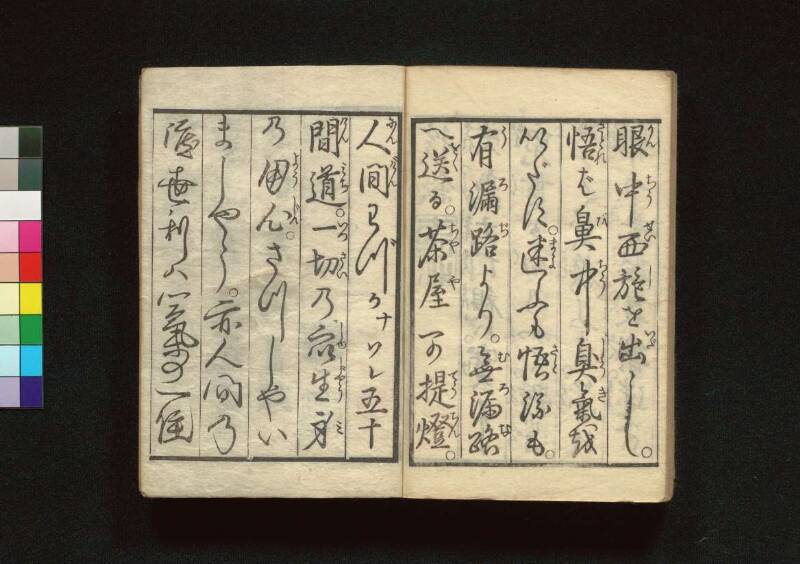
翻刻
眼中(かんちう)西施(せいし)を出(いだ)し。
悟(さとれ)ば鼻中(びちう)臭気(しうき)を
いだす。迷(まよ)ふも悟(さと)るも。
有漏路(うろぢ)より。無漏路(むろな)【むろぢ】
へ送(をく)る。茶屋(ちやや)か提灯(てうちん)。
人間(にんげん)わづか ̄ナ ソレ五十
間道(けんみち)。一切(いつさい)の衆生(しゆじやう)身(み)
の用心(ようじん)。さつしやい
ましやう。亦人間の
渡世利は気の一住
現代語訳
**後叙(続き)**
〔迷えば〕眼中に西施〔せいし〕を出だし、悟れば鼻中に臭気を出だす。迷うも悟るも、有漏路〔うろじ〕より無漏路〔むろじ〕へ送る、茶屋の提灯。人間〔じんかん〕わずか——それ、五十間道〔けんみち〕。一切の衆生、身の用心なさいましょう。また、人間の渡世は、気の一住〔ひとすまい〕——
英語訳
**Afterword (continued)**
If one is lost [in illusion], the eyes conjure forth a Xi Shi [a vision of supreme beauty]; if one is enlightened, the nose detects only the stench [of decay]. Whether lost in illusion or awakened to truth, [it is] the paper lantern of the teahouse that escorts [souls] from the path of defilement (*urodji*) to the path of purity (*murodji*). A human life is but a brief — merely fifty *ken* [approximately 90 metres] of road. Let all living beings take care of themselves. And furthermore, the passage through this mortal world is but a single, fleeting lodging of the spirit.