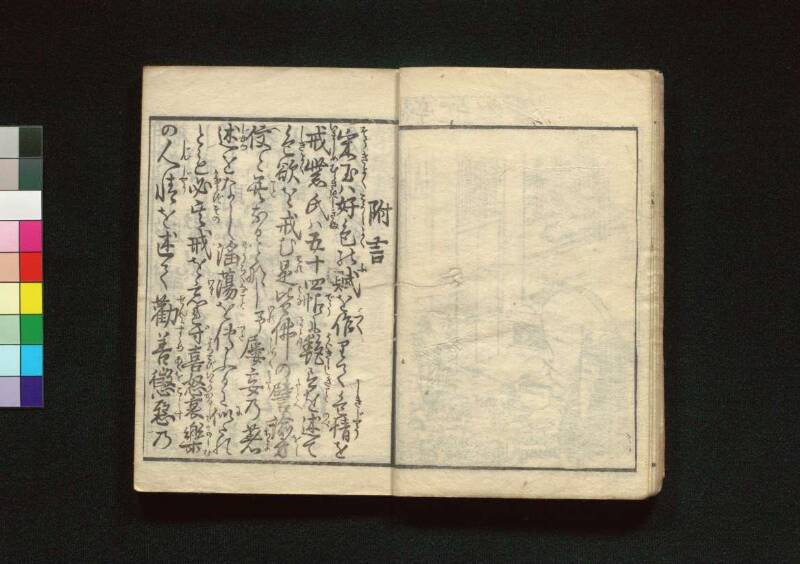
翻刻
附言
宋玉(そうきよく)は好色(こうしよく)の賦(ふ)を作(つく)りて色情(しきじやう)を
戒紫氏(いましめむらさきしきふ)は五十四 帖(でう)に艶言(うはきらしきこと)を述(のべ)て
色欲(しきよく)を戒む是皆仏(これみなほとけ)の譬諭(たとへ)方(をし)
便(へ)と異(こと)なることなし予(われ)屢(しば〳〵)妄(みたり)の著(ちよ)
述(じゆつ)をなし淫蕩(どうらくなこと)を伝(つた)ふるに似(に)たれ
とも必其(かならずその)戒を忘(わす)れず喜怒哀楽(よろこびいかりかなしみたのしむ)
の人情(じんじやう)を述て勧善懲悪(せんにすゝめあくをこらす)の
現代語訳
**附言(あとがき)**
宋玉は好色の賦を作って色情を戒め、紫式部は五十四帖にわたって艶めかしいことを述べて色欲を戒めた。これはみな、仏の譬喩による教え導き方と異なることはない。私はたびたび軽率な著述をなし、淫蕩なことを伝えているように見えるかもしれないが、必ずその戒めを忘れず、喜怒哀楽という人の情を述べて、善を勧め悪を懲らしめる……
英語訳
**Postscript**
Song Yu composed his "Rhapsody on Sensuality" to caution against carnal desires, and Murasaki Shikibu described amorous affairs across fifty-four chapters to warn against lustful indulgence. These are no different from the Buddha's use of parables as a means of moral instruction. Though I have frequently produced reckless writings that may appear to transmit tales of debauchery, I never forget their underlying admonishment; by depicting the full range of human emotions — joy, anger, sorrow, and pleasure — I aim to encourage virtue and chastise vice...