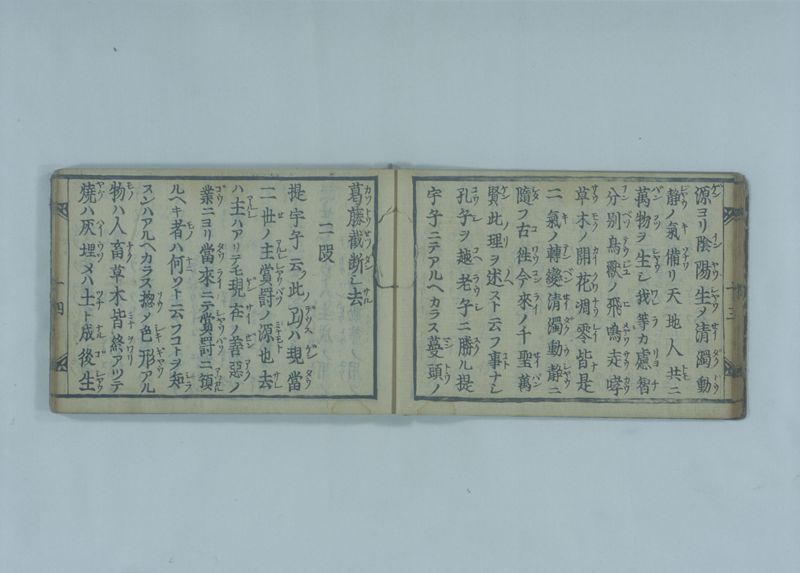
翻刻
【右丁】
源(ゲン)ヨリ陰陽(インヨウ)生(シヤウ)シテ清濁(セイダク)動(ドウ)
静(ジヤウ)ノ気(キ)備(ソナワ)リ天地人 共(トモ)ニ
万物(バンフツ)ヲ生(シヤウ)シ我等(ワレラ)カ慮智(リヨチ)
分別(フンベツ)鳥獣(テウジユ)ノ飛鳴走哮(ヒメヤウサウカウ)
草木(さうもく)の開花(カイクワ)凋零(チウレイ)皆 ̄ナ是
二気( キ)ノ転変(テンベン)清濁(セイダク)動静(ドウシヤウ)ニ
《振り仮名:随|シタ#1》フ古往(コワウ)今来(コンライ)ノ千聖( セイ)万(バン)
賢(ケン)此 ̄ノ理(リ)ヲ述(ノヘ)スト云フ事(コト)ナシ
孔子(コウシ)ヲ越(コヘ)老子(ラウシ)ニ勝(スク)ル提
宇子ニテアルヘカラス蔓頭(マントウ)ノ
【左丁】
葛藤(カツトウ)截断(セツダン)シ去(サル)
二段
提宇子云 ̄ク此 ̄ノDs(デウス)ハ現当(ゲンタウ)
二世( セ)ノ主(アルシ)賞罰(シヤウバツ)ノ源(ミナモト)也 去(サレ)
ハ主(アルシ)ハアリテモ現在(ゲンサイ)ノ善悪(ゼンアク)ノ
業(ゴウ)ニヨリ当来(タウライ)ニテ賞罰(シヤウバツ)ニ預(アツカル)
ルヘキ者(モノ)ハ何(ナニ)ソト云フコトヲ知(シラ)
スンハアルヘカラス総(ソウ)シテ色形(シキギヤウ)アル
物(モノ)ハ人畜( チク)草木 皆(ミナ)終(ヲワリ)アツテ
焼(ヤケ)は灰(ハイ)埋(ウツ)メハ土(ツチ)ト成(ナル)後生(ゴシヤウ)
現代語訳
【右丁】
源より陰陽が生じて清濁・動静の気が備わり、天地人が共に万物を生じ、我等の慮智・分別、鳥獣の飛鳴走哮、草木の開花凋零、皆これ二気の転変・清濁動静に随う。古往今来の千聖万賢、この理を述べると言うことなし。孔子を越え老子に勝る提宇子であるべからず。蔓頭の
【左丁】
葛藤を截断し去る。
第二段
提宇子言く。「このデウスは現当二世の主、賞罰の源である。されば主はありても、現在の善悪の業により当来にて賞罰に預かるべき者は何ぞ」ということを知らずんばあるべからず。総じて色形ある物は、人畜・草木、皆終わりがあって、焼けば灰、埋めば土となる。後生
英語訳
【Right page】
From the source, yin-yang arise and the qi of pure-turbid and movement-stillness are equipped. Heaven, earth, and humanity together give birth to all things. Our contemplative wisdom and discrimination, the flying, crying, running, and roaring of birds and beasts, the blooming and withering of plants and trees - all of these follow the transformation of the two qi and the pure-turbid, movement-stillness. Throughout past and present, thousands of sages and ten thousand worthies have never expounded this principle. The Christian should not be one who surpasses Confucius and exceeds Laozi. The entangled
【Left page】
vines are cut away and discarded.
Second Section
The Christian says: "This Deus is the lord of the present and future worlds, the source of reward and punishment. Therefore, even if there is a lord, one must know what it is that should receive reward and punishment in the future life based on the good and evil karma of the present." In general, things that have form and shape - humans, animals, plants and trees - all have an end: when burned they become ash, when buried they become earth. The afterlife