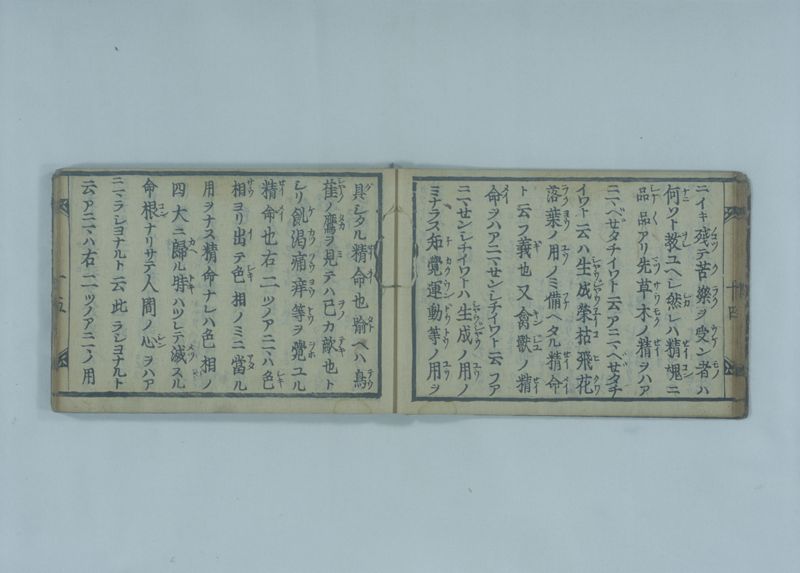
翻刻
【右丁】
ニイキ残(ノコツ)テ苦楽(クラク)ヲ受(ウケ)ン者(モノ)ハ
何(ナニ)ソト教(ヲシ)ユヘシ然(シカ)レハ精魂(セイコン)ニ
品品(シナ〳〵 )アリ先(マツ)草木(サウモク)ノ精(セイ)ヲハア
ニマベゼタチイワト云アニマベゼタチ
イワト云ハ生成(シヤウジヤウ)栄枯(ヱイコ)飛花(ヒクワ)
落葉(ラクヨウ)ノ《振り仮名:用|ユウ#1》ノミ《振り仮名:備|フナ#2》ヘタル精命(セイメイ)
ト云フ義(ギ)也又 禽獣(キンジユ)ノ精(セイ)
命(メイ)ヲハアニマセンシチイワト云フア
ニマセンシチイワトハ生成(シヤウジヤウ)ノ用(ユウ)ノ
ミナラス知覚(チカク)運動(ウンドウ)等(トウ)ノ用(ユウ)ヲ
【左丁】
具(グ)シタル精命(セイメイ)也 喩(タト)ヘハ鳥(テウ)
雀(シヤク)ノ鷹(タカ)ヲ見(ミ)テハ己(ヲノ)カ敵(テキ)也ト
シリ飢渇(ケカツ)痛痒(ツウヨウ)等(トウ)ヲ覚(ヲホ)ユル
精命(セイメイ)也右二ツノアニマハ色(シキ)
相(サウ)ヨリ出(イ)テ色相(シキ )ノミニ当(アタ)ル
用ヲナス精命ナレハ色相ノ
四大ニ帰(カヘ)ル時(トキ)ハツレテ滅(メツ)スル
命根( コン)ナリサテ人間ノ心(シン)ヲハア
ニマラシヨナルト云此ラシヨナルト
云アニマハ右二ツノアニマノ用
現代語訳
【右丁】
に生き残って苦楽を受ける者は何かと教えるべきである。そうであれば、精魂には種類がある。まず草木の精をアニマ・ベジェタティーバと言う。アニマ・ベジェタティーバと言うのは、生成・栄枯・飛花・落葉の働きのみを備えた精命という意味である。また禽獣の精命をアニマ・センシティーバと言う。アニマ・センシティーバとは、生成の働きのみならず、知覚・運動等の働きを
【左丁】
具えた精命である。例えば鳥雀が鷹を見ては自分の敵であると知り、飢渇・痛痒等を覚える精命である。右二つのアニマは色相より出て、色相のみに当たる働きをなす精命であれば、色相の四大に帰る時は連れて滅する命根である。さて人間の心をアニマ・ラシオナルと言う。このラシオナルと言うアニマは右二つのアニマの働き
英語訳
【Right page】
What is it that survives to receive suffering and pleasure? This should be taught. If so, there are various types of souls. First, the essence of plants and trees is called "anima vegetativa." Anima vegetativa means a vital essence that possesses only the functions of growth, flourishing and withering, blooming and falling of leaves. Also, the vital essence of birds and beasts is called "anima sensitiva." Anima sensitiva is a vital essence that possesses not only the function of growth, but also functions such as perception and movement.
【Left page】
It is a vital essence equipped [with these functions]. For example, it is the vital essence by which sparrows, seeing a hawk, know it to be their enemy, and feel hunger, thirst, pain, itching, and so forth. These two types of anima emerge from material form and are vital essences that function only in relation to material form, so when material form returns to the four great elements, they are carried along and perish - they are perishable life-roots. Now, the human mind is called "anima rationalis." This anima called rationalis has the functions of the aforementioned two anima