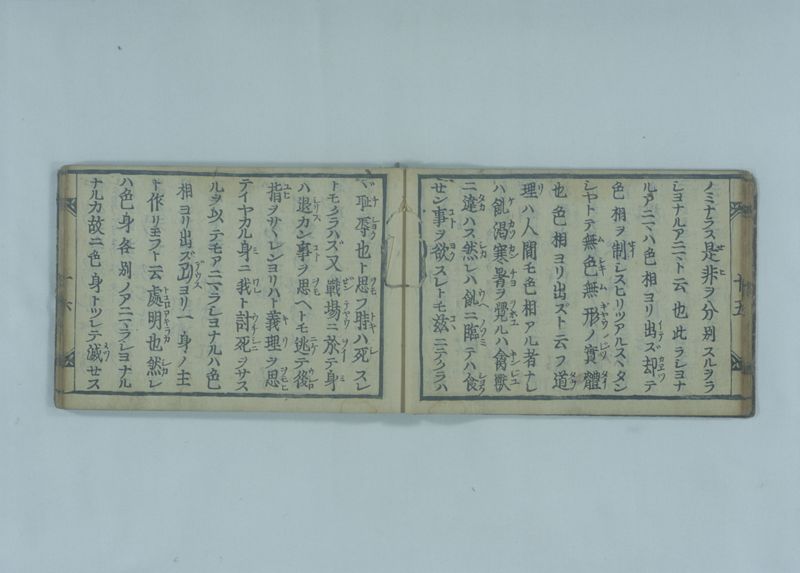
翻刻
【右丁】
ノミナラス是非(セヒ)ヲ分別スルヲラ
シヨナルアニマト云也此ラシヨナ
ルアニマハ色相ヨリ出(イテ)ズ却(カヱツ)テ
色相ヲ制(セイ)シスヒリツアルスヽタン
シヤトテ無色(ムシキ)無形(ムギヤウ)ノ実体(ジツタイ)
也色相ヨリ出ズト云フ道(タウ)
理(リ)ハ人間モ色相アル者ナレ
ハ飢渇(ケカツ)寒暑(カンチヨ)ヲ覚(ヲホユ)ルハ禽獣(キンジユ)
ニ違(タカ)ハス然(シカ)レハ飢(ウヘ)ニ臨(ノソミ)テハ食(シヨク)
セン事(コト)ヲ欲(ヨク)スレトモ茲(コヽ)ニテクラハ
【左丁】
ヾ恥辱(チシヨク)也ト思(ヲモ)フ時(トキ)ハ死(シ)スレ
トモクラハズ又 戦場(ゼンテヤウ)ニ於(ヲイ)テ身(ミ)
ハ退(シリス)カン事(コト)ヲ思(ヲモ)へトモ 逃(ニケ)テ後(ウシロ)
指(ユヒ)ヲサヽレンヨリハト義理(キリ)ヲ思(ヲモヒ)
テイヤカル身(ミ)ニ我(ワレ)ト討死(ウチシニ)ヲサス
ルヲ以テモアニマラシヨナルハ色
相ヨリ出ズDs(デウス)ヨリ一身ノ主
ト作リ玉フト云 処(コトロ)明(アキラカ)也 然(シカ)レ
ハ色身各別ノアニマラシヨナル
ナルカ故ニ色身トツレテ滅(メツ)セス
現代語訳
【右丁】
のみならず是非を分別する[精命]を「ラシオナル・アニマ」と言うのである。この「ラシオナル・アニマ」は色相(物質的形態)より出でず、かえって色相を制御するスピリトゥス・スブスタンシア(霊的実体)として、無色・無形の実体である。色相より出でずという道理は、人間も色相ある者なれば、飢渇・寒暑を覚えるのは禽獣に違わない。しかれば飢えに臨んでは食せんことを欲すれども、ここにて食らえば
【左丁】
恥辱であると思う時は、死すれども食らわず、また戦場において身は退こうことを思えども、逃げて後ろ指をさされんよりはと義理を思って、嫌がる身に我と討死をさするを以てしても、アニマ・ラシオナルは色相より出でず、デウス(神)より一身の主と作り給うという処が明らかである。しかれば色身各別のアニマ・ラシオナルなるが故に、色身と連れて滅せず
英語訳
【Right page】
but also distinguishes right from wrong - this is called "anima rationalis." This "anima rationalis" does not emerge from material form, but rather controls material form as a "spiritus substantia" (spiritual substance), being a colorless and formless substance. The principle that it does not emerge from material form is this: humans too are beings with material form, so their feeling of hunger, thirst, cold, and heat is no different from birds and beasts. Therefore, when faced with hunger, one desires to eat, but when one thinks that eating here would be
【Left page】
shameful, one would rather die than eat. Also, on the battlefield, though the body thinks of retreating, one thinks of duty - "rather than flee and be pointed at with scorn" - and forces oneself to die in battle against the body's reluctance. From this too it is clear that the anima rationalis does not emerge from material form, but is created by Deus (God) as the master of each individual body. Therefore, since the anima rationalis is distinct from the material body, it does not perish together with the material body.