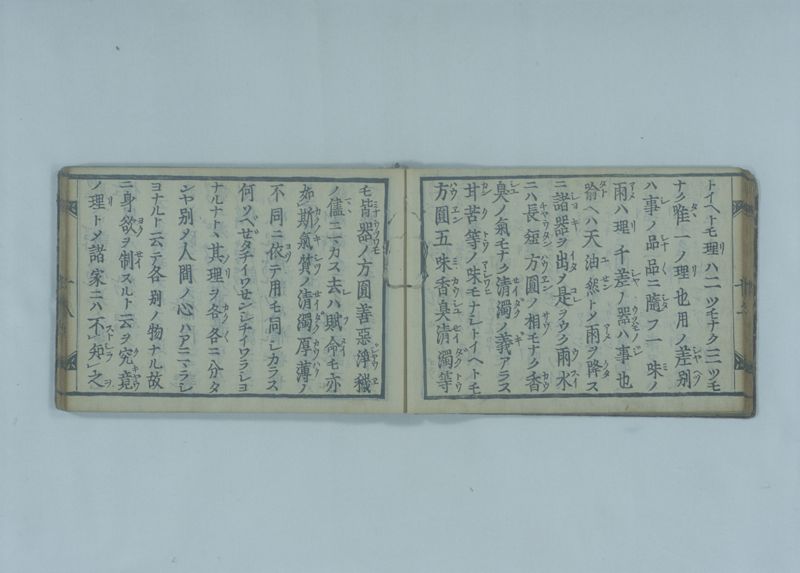
翻刻
【右丁】
トイヘトモ理(リ)ハ二ツモナク三ツモ
ナク唯(タヽ)一ノ理(リ)也用ノ差別(シヤヘツ)
ハ事(シ)ノ品品(シナ〳〵 )ニ随(シタ)フ一味( ミ)ノ
雨(アメ)ハ理(リ)千差( シヤ)ノ器(ウツハモノ)ハ事(ジ)也
喩(タト)ヘハ天 油然(ユセン)トシテ雨(アメ)ヲ降(クタ)ス
ニ諸器(シヨキ)ヲ出(イタ)シテ是(コレ)ヲウク雨水(ウスイ)
ニハ長短(チヤウタン)方円(ハウエン)ノ相(サウ)モナク香(カウ)
臭(シユ)ノ気モナク清濁(セイダク)ノ義(ギ)アラス
甘苦(カンク)等(トウ)ノ味(アシワヒ)モナシトイヘトモ
方円(ハウエン)五味( ミ)香臭(カウシユ) 清濁(セイダク)等(トウ)
【左丁】
モ皆(ミナ)器(ウツワモ)ノ方円善悪 浄穢(ジヤウヱ)
ノ儘(マヽ)ニマカス去 ̄レ ハ賦命(フメイ)モ亦
如_レ斯(カクノ)気質(キシツ)ノ清濁(セイダク)厚薄(カウハク)ノ
不同ニ依(ヨツ)テ用モ同シカラス
何ソベゼタチイワセンシチイワラシヨ
ナルナトヽ其 ̄ノ理(リ)ヲ各各(カク〳〵 )ニ分タ
ンヤ別シテ人間ノ心ハアニマラシ
ヨナルト云テ各別ノ物ナル故
ニ身 欲(ヨク)ヲ制(セイ)スルト云ヲ究竟(クキヤウ)
ノ理(リ)トシテ諸家ニハ不 ̄スト_レ知(シラ)_レ之 ̄ヲ
現代語訳
【右丁】
といえども理は二つもなく三つもなく、ただ一つの理である。用の差別は事の品々に従う。一味の雨は理、千差の器は事である。たとえば天が油然として雨を降らすに、諸器を出してこれを受ける。雨水には長短方円の相もなく香臭の気もなく清濁の義もなく甘苦等の味もない。といえども方円五味香臭清濁等
【左丁】
もみな器の方円善悪浄穢のままに任せる。されば賦命もまたかくの如く、気質の清濁厚薄の不同によって用も同じからず。なぜベジェタティーワ、センシティーワ、ラシオナルなどとその理を各々に分たんや。別して人間の心はアニマ・ラシオナルと言って各別の物なる故に、身欲を制することを究竟の理として諸家には知られていない。
英語訳
【Right page】
However, there are not two or three principles, but only one principle. The differences in function follow the various categories of phenomena. The uniform rain represents principle, while the myriad different vessels represent phenomena. For example, when heaven naturally sends down rain, various vessels are brought out to receive it. The rainwater has no characteristics of long or short, square or round, no fragrant or foul odors, no distinction of pure or turbid, and no tastes such as sweet or bitter. Yet the square, round, five flavors, fragrances, foul odors, pure and turbid, etc.
【Left page】
all follow the square, round, good, evil, pure, and defiled nature of the vessels themselves. Thus, the endowed nature (fumei) is also like this - due to differences in the purity, turbidity, thickness, and thinness of temperament, their functions are not the same. Why would one divide this principle separately into "vegetative," "sensitive," "rational," and so forth? Particularly, since the human mind is called "anima rationalis" (rational soul) and is considered a separate entity, the various schools do not understand that controlling bodily desires is the ultimate principle.