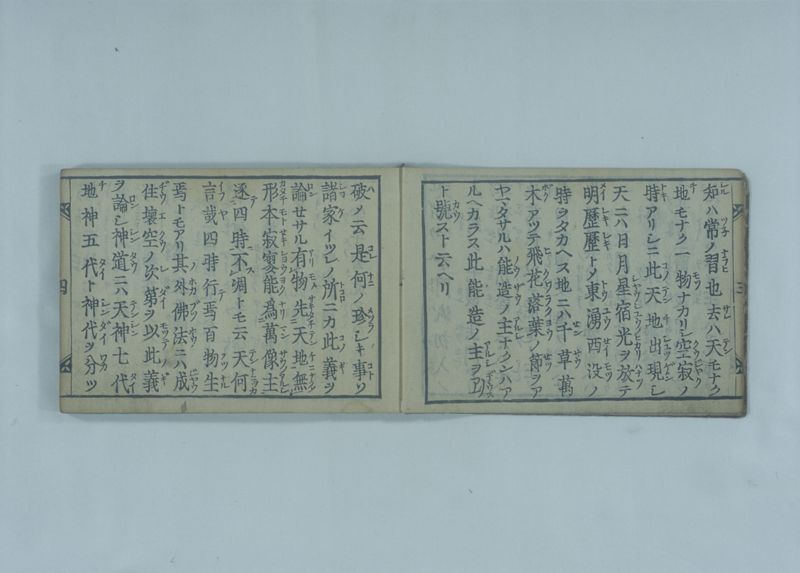
翻刻
【右丁】
知(シル)ハ常(ツネ)ノ習(ナラヒ)也 去(サレ)ハ天(テン)モナク
地(チ)モナク一物( モツ)ナカリシ空寂(クウジヤク)ノ
時(トキ)アリシニ此(コノ)天地(テンチ)出現(シユツゲン)シ
天ニハ日月 星宿光(シヤウシユウノヒカリ)ヲ放(ハナツ)テ
明歴歴(メイレキレキ)トシテ東湧西没(トウユウセイモツ)ノ
時ヲタカヘス地ニハ千草(センサウ)万
木(ボク)アツテ飛花落葉(ヒクワラクヨウ)の節(セツ)ヲア
ヤマタサルハ能造(ノウザウ)ノ主(アルシ)ナクンハア
ルヘカラス此能造ノ主(アルシ)ヲDs(デウス)
ト号(カウ)スト云ヘリ
【左丁】
破(ハ)シテ云 是(コレ)何(ナニ)ノ珍(メツラ)シキ事(コト)ソ
諸家(シヨケ)イツレノ所(トコロ)ニカ此義(コノギ)ヲ
論(ロン)セサル有(アリ)_レ物(モノ)先(サキタチ)_二 天地(テンチニ)_一無(ナクシテ)_レ
形(カタチ)本(モト)寂寥(セキレヨウ)能(ヨク)為(ナリ)_二万像主(マンサウノアルシ)_一
逐 ̄テ_二 四時 ̄ニ_一不 ̄ス_レ凋トモ云 天(テン)何(ナニヲカ)
言哉(イフヤ)四時行 ̄テ焉 百物( フツ)生(ナル)
焉トモアリ其 ̄ノ外(ホカ)仏法(ブツホウ)ニハ成(ジヤウ)
住(ヂウ)壊空(エクウ)ノ次第(シダイ)ヲ以(モツテ)此 ̄ノ義(ギ)
ヲ論(ロン)シ神道(シンタウ)ニハ天神(テンシン)七代( タイ)
地神(チ )五代( タイ)ト神代(シンダイ)ヲ分(ワカ)ツ
現代語訳
【右丁】
知るのは常の習いである。さて、天もなく地もなく一物もなかった空寂の時があったが、この天地が出現し、天には日月星宿の光を放って明らかに照らし、東から昇り西に没する時を違えず、地には千草万木があって花が咲き葉が落ちる節を誤らないのは、能造の主(造物主)なくしてはありえない。この能造の主をデウス(神)と号すると言っている。
【左丁】
破して言う。これは何の珍しいことか。諸家のいずれの所でもこの義を論じないことがあろうか。「物が天地に先立ってあり、形なくして本より寂寥たり、よく万象の主となる」とも言い、「四時に逐いて凋まず」とも言う。天何をか言わん、「四時行いて、百物生ず」ともある。その外、仏法には成住壊空の次第をもってこの義を論じ、神道には天神七代地神五代と神代を分かつ。
英語訳
【Right Page】
This knowing is the ordinary way of things. Now, there was a time of void silence when there was no heaven, no earth, and not a single thing existed. But when this heaven and earth appeared, with the sun, moon, and stars in heaven releasing their light, shining clearly and never failing in their times of rising in the east and setting in the west, and with thousands of grasses and myriad trees on earth that never err in their seasons of blooming flowers and falling leaves—this could not exist without a Creator. This Creator is called Deus (God), they say.
【Left Page】
Breaking this down, I say: What rare thing is this? In which of the various schools is this principle not discussed? "There is that which precedes heaven and earth, formless and originally silent, capable of being the master of all phenomena," it is also said, and "Following the four seasons, it does not wither." What does Heaven say? "The four seasons proceed, and the hundred things are born"—this too exists. Besides this, in Buddhism this principle is discussed through the sequence of formation, duration, destruction, and emptiness; in Shinto, the divine ages are divided into seven generations of heavenly deities and five generations of earthly deities.