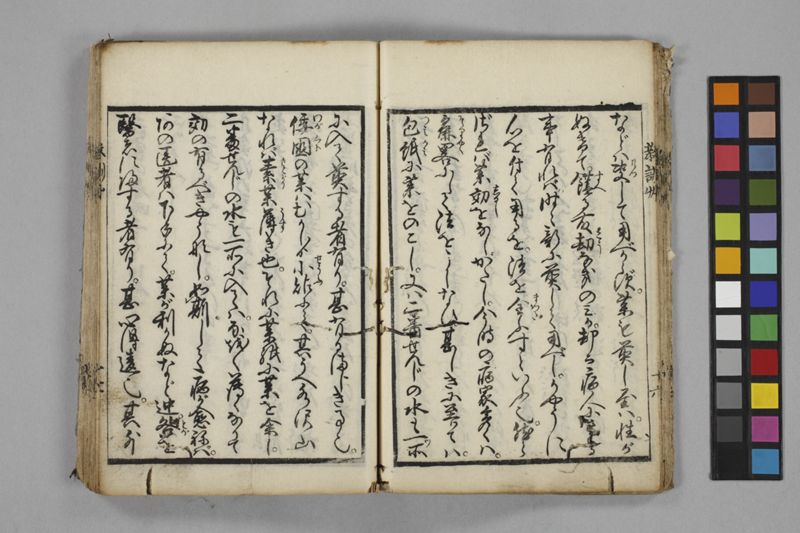
翻刻
【右頁】
などは決(けつ)して用べからず。薬も煎し置は。性が
ぬけて。饐(すへ)る故/劫(こう)なきのみか。却而病人にさわる
事有れば時々新に煎して用べし。かやうに
心を付て用るを。法を全(まつた)ふすといふなり。然ら
ざれば薬/効(しるし)をなしがたし。今時の病家多くは。
麁略(そりやく)にして法をうしなひ。甚しきに至りては。
包紙(つゝみかみ)に薬をのこし。又は弐番館せんじの水も一 ̄ツ所
【左頁】
に入て煎する者有り。甚有るまじき事也。
倭国(わがくに)の薬はむかしゟ小貼にて。其うへ水沢山
なれば素(もとより)薬/薄(うす)き也。それに薬紙に薬を余し。
二番せんじの水も一所に入ては。なを〳〵薄くなりて
効の有るべきやうなし。如_レ斯して病が愈ねば。
あの医者は下手にて。薬が利かぬなど迚。咎(とが)を
醫者に帰する者有り。甚心得違也。其外
現代語訳
【右頁】
などは決して用いてはならない。薬も煎じて置いたものは、薬効が抜けて、腐敗するため効果がないだけでなく、かえって病人に害を与えることがあるので、その都度新しく煎じて用いるべきである。このように心を配って用いることを、法を全うするというのである。そうでなければ薬は効果を現しにくい。今時の病家の多くは、粗略にして法を失い、甚だしい場合には、包み紙に薬を残し、または二番煎じの水も一箇所
【左頁】
に入れて煎じる者がいる。非常によくないことである。
我が国の薬は昔から小包であり、その上水をたくさん使うので、もともと薬が薄いのである。それに薬紙に薬を余らせ、二番煎じの水も一緒に入れては、なおさら薄くなって効果があるはずがない。このようにして病気が治らなければ、あの医者は下手で、薬が効かないなどと言って、咎を医者に帰する者がいる。非常に心得違いである。その他
英語訳
【Right page】
should absolutely not be used. Medicine that has been decocted and left standing loses its medicinal properties and spoils, so not only is it ineffective, but it may actually harm the patient. Therefore, one should decoct fresh medicine each time. Using medicine with such care is called fulfilling the proper method. Otherwise, the medicine will hardly show any effect. Most households with sick people nowadays are careless and lose sight of proper methods, and in extreme cases, they leave medicine in the wrapping paper, or put the water from the second decoction in one place
【Left page】
and decoct it together. This is extremely improper.
The medicines of our country have traditionally been in small packages, and since they use a lot of water on top of that, the medicine is naturally weak. If one leaves medicine in the medicine paper and also puts the water from the second decoction together, it becomes even more diluted and cannot possibly be effective. When the illness does not heal in this manner, there are people who blame the doctor, saying that doctor is incompetent and the medicine doesn't work. This is a great misunderstanding. Besides this