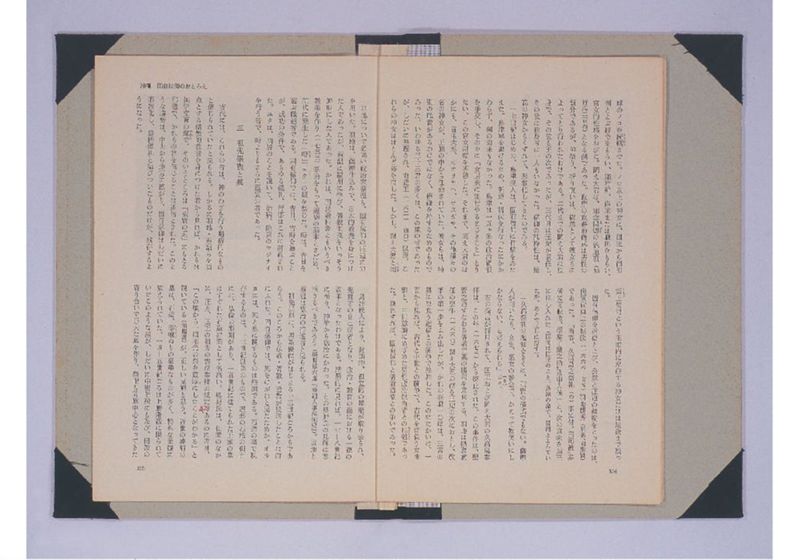
翻刻
154
【右頁上段】
球のノロを統轄(とうかつ)させた。ノロ以上の神女は、国王から御印
判とよぶ辞令をもらい、知行所、俸米または嶽田をもらい、
官女的性格をおびた。聞え大君は、知念/間切(まぎり)の総地頭(知
行高二百石)となる例であった。政庁の政務的□□は男性の
領分であるが、神祭り、祈り祓いは、依然として彼女らに
よってとり行われたわけである。二代までの聞え大君は独
身で、その位も王の次であったが、三代目は王妃が兼任し、
その後は独身者は一人もいなかった。信仰の純粋性は、最
高の神女からくずれて、形骸化してきたのである。
一七世紀はじめの、島津侵入は、固有信仰に打撃をあた
えた。島津軍を退けるため、祈祷・調伏を行なったにかか
わらず、何の効果もなかった。島津は一五ヵ条の政治□領
を手交し、その中に「女房衆に知行やるまじきこと」とう
たい、この官女制度を否認した。それまで、聞え大君のほ
かにも、首里大君、オオリヤヘ、サスガサ、その他種々の
名の神女が、王族の中から任命されていた。彼女らは、特
別の□責があるわけではなく、俸禄を□するためのもので
あった。いわゆる三十三君の多くは、この□の者であった
が、しだいに整理され、尚豊王(一六二一―四〇)以後、こ
れらの神女はほとんど姿を消した。しかし、聞え大君と司(つかさ)
【右頁下段】
雲上(くもい)按司という王□内に常住する神女だけは最後まで残っ
た。
固有信仰を迷信とよび、公然と圧迫の態度をとったのは、
尚質尚貞王の摂政(一六六六―七五)羽地朝秀(唐名、向象賢)
であった。「当春、久高島之祭礼(の)事に付、国司被_レ参
筈に而候故、愚意了簡之所_レ及申入候」と、次の意味を国王
に申し入れた(国司は国王のこと。島津の命で、国司とよんでい
たが、あとで王号に覆す)。
「久高祭礼の趣旨をきくに、聖賢の儀式でもない。薩摩
人が聞いたら、女性、巫女の参会で、かえって物笑いにし
かならない、と考えられる」云々。【(5)】
右の提言が採用されて、国王および聞え大君の久高島参
拝は、この年(一六七三)から廃止された。この事件は、聖
賢之道すなわち儒教主義の勝利を意味する。羽地は摂政就
任の翌年(一六六七)聞え大君の位を王妃の次におとし、改
革の第一歩をふみ出したが、かれの在職一〇年は、王宮の
奥に巣食う迷信との闘争で終始した。このたたかいは、一
面から見れば、古代と中世との闘争で、古代を背負う女性
群と、中世意識にめざめた男性政治担当者との□□であっ
た。換言すれば、固有信仰と儒教道徳との争いであった。
【左頁上段】
羽地についで名高い政治家蔡温も、固有信仰の圧迫に力
を用いた。羽地は、薩摩仕込みで、日本的教養を身につけ
た人であったが、蔡温は福州に学び、儒教主義をいっそう
□明にした人であった。かれは、国民教科書ともいうべき
教条を作り(一七三三)孝道をもって道徳の基本をさだめ、
前代に発生した「時(とき)」「ユタ」の類を禁じた。時は、吉日を
選ぶ職能者である。固有信仰では、吉日は、吉時を選ぶこと
が、成功の条件で、あらゆる儀礼、行事はこれに□約され
た。ユタは、幽界のことを説いて、治病、除災のマジナイ
を行う者で、時よりもさらに悪質の者であった。
三 祖先崇敬と墓
古代には、これらの者は、神のわざを行う超俗的なもの
と信じられていたと見られる。しかるに羽地・蔡温らを頂
点とする儒教的教養を身につけた者から見れば、かれらは
無学文盲の輩(やから)で、そのいうところは「聖賢の道」にもとる
邪道で、かれらの言を信じることは迷信とされた。このよ
うな趨勢は、中央から地方に拡がり、固有信仰はしだいに
形骸化し、農耕儀礼と結びついたものだけが、残存するよ
うになった。
【左頁下段】
島津侵入により、封鎖的、孤立的の障壁が取り去られ、
先覚者の自己反省となり、政治・教育の面における一連の
改革となったわけである。結果的に見れば、一七―八世紀
に至り、神治から徳治にかわった、との奥野氏の見解は尊
重さるべきであろう(奥野彦六郎『沖縄人事法制史』)。羽地と
蔡温は徳治の推進者と見られる。
祖先崇拝は、男系優位がはじまる一三世紀ごろからであ
ろう。このころから仏教・儒教・□教が浸透したことは前
にふれた。固有信仰では、死をけがれと見たためか、オモ
ロには、死と墓に関するものは絶無である。石造の墓で現
存するものは、一三世紀以降のもので、□形の石棺の側面
には、仏像の彫刻があり、一五世紀に建てられた王家の墓
はすぐれた石造建築として名高い。奥野氏は、仕置のなか
に、正月、国王の祖先の□□参拝の規定があるのに着目、
「この頃から一国祖先の祭を重厚にしたことがわかる」と
説いている(前掲書)が、正しい見解と思う。近世の沖縄の
墓は、石造、漆喰(しっくい)ぬりの豪華なものが多く、特殊な景観に
数えられていた。一四―五世紀ごろは上層階級に限られて
いたこのような墓が、しだいに中□階級にも及び、同族の
寄り合いで巨大な墓を作り、祭祀も同族中心となってきた
沖縄 固有信仰のおとろえ
155
現代語訳
154
【右頁上段】
球のノロを統括させた。ノロ以上の神女は、国王から御印判と呼ぶ辞令をもらい、知行所、俸米または嶽田をもらい、官女的性格を帯びた。聞え大君は、知念間切(まぎり)の総地頭(知行高二百石)となる例であった。政庁の政務的○○は男性の領分であるが、神祭り、祈り祓いは、依然として彼女らによって執り行われたわけである。二代までの聞え大君は独身で、その位も王の次であったが、三代目は王妃が兼任し、その後は独身者は一人もいなかった。信仰の純粋性は、最高の神女から崩れて、形骸化してきたのである。
17世紀初めの、島津侵入は、固有信仰に打撃を与えた。島津軍を退けるため、祈祷・調伏を行なったにも関わらず、何の効果もなかった。島津は15か条の政治○令を手交し、その中に「女房衆に知行やるまじきこと」と謳い、この官女制度を否認した。それまで、聞え大君のほかにも、首里大君、オオリヤヘ、サスガサ、その他種々の名の神女が、王族の中から任命されていた。彼女らは、特別の○責があるわけではなく、俸禄を○するためのものであった。いわゆる三十三君の多くは、この○の者であったが、しだいに整理され、尚豊王(1621―40)以後、これらの神女はほとんど姿を消した。しかし、聞え大君と司
【右頁下段】
雲上(くもい)按司という王○内に常住する神女だけは最後まで残った。
固有信仰を迷信と呼び、公然と圧迫の態度をとったのは、尚質・尚貞王の摂政(1666―75)羽地朝秀(唐名、向象賢)であった。「当春、久高島之祭礼の事に付、国司被参筈に而候故、愚意了簡之所及申入候」と、次の意味を国王に申し入れた(国司は国王のこと。島津の命で、国司と呼んでいたが、後で王号に復す)。
「久高祭礼の趣旨を聞くに、聖賢の儀式でもない。薩摩人が聞いたら、女性、巫女の参会で、かえって物笑いにしかならない、と考えられる」云々。【(5)】
右の提言が採用されて、国王および聞え大君の久高島参拝は、この年(1673)から廃止された。この事件は、聖賢之道すなわち儒教主義の勝利を意味する。羽地は摂政就任の翌年(1667)聞え大君の位を王妃の次に落とし、改革の第一歩を踏み出したが、彼の在職10年は、王宮の奥に巣食う迷信との闘争で終始した。この戦いは、一面から見れば、古代と中世との闘争で、古代を背負う女性群と、中世意識に目覚めた男性政治担当者との○○であった。換言すれば、固有信仰と儒教道徳との争いであった。
【左頁上段】
羽地に続いて名高い政治家蔡温も、固有信仰の圧迫に力を用いた。羽地は、薩摩仕込みで、日本的教養を身に付けた人であったが、蔡温は福州に学び、儒教主義をいっそう○明にした人であった。彼は、国民教科書とも言うべき教条を作り(1733)孝道をもって道徳の基本を定め、前代に発生した「時(とき)」「ユタ」の類を禁じた。時は、吉日を選ぶ職能者である。固有信仰では、吉日は、吉時を選ぶことが、成功の条件で、あらゆる儀礼、行事はこれに○約された。ユタは、幽界のことを説いて、治病、除災のマジナイを行う者で、時よりもさらに悪質の者であった。
三 祖先崇敬と墓
古代には、これらの者は、神の業を行う超俗的なものと信じられていたと見られる。しかるに羽地・蔡温らを頂点とする儒教的教養を身に付けた者から見れば、彼らは無学文盲の輩(やから)で、そのいう所は「聖賢の道」にもとる邪道で、彼らの言を信じることは迷信とされた。このような趨勢は、中央から地方に広がり、固有信仰はしだいに形骸化し、農耕儀礼と結びついたものだけが、残存するようになった。
【左頁下段】
島津侵入により、封鎖的、孤立的の障壁が取り去られ、先覚者の自己反省となり、政治・教育の面における一連の改革となったわけである。結果的に見れば、17―18世紀に至り、神治から徳治に変わった、との奥野氏の見解は尊重されるべきであろう(奥野彦六郎『沖縄人事法制史』)。羽地と蔡温は徳治の推進者と見られる。
祖先崇拝は、男系優位が始まる13世紀頃からであろう。この頃から仏教・儒教・○教が浸透したことは前に触れた。固有信仰では、死を穢れと見たためか、オモロには、死と墓に関するものは皆無である。石造の墓で現存するものは、13世紀以降のもので、○形の石棺の側面には、仏像の彫刻があり、15世紀に建てられた王家の墓は優れた石造建築として名高い。奥野氏は、仕置の中に、正月、国王の祖先の○○参拝の規定があるのに着目、「この頃から一国祖先の祭を重厚にしたことがわかる」と説いている(前掲書)が、正しい見解と思う。近世の沖縄の墓は、石造、漆喰(しっくい)塗りの豪華なものが多く、特殊な景観に数えられていた。14―5世紀頃は上層階級に限られていたこのような墓が、しだいに中○階級にも及び、同族の寄り合いで巨大な墓を作り、祭祀も同族中心となってきた
沖縄 固有信仰の衰退
155
英語訳
154
【Right Page Upper Section】
They supervised the noro throughout the Ryukyu islands. Priestesses of noro rank and above received appointment letters called goin-han from the king, and received fiefs, stipend rice or utaki fields, taking on the character of court ladies. The Kikoe-ogimi typically became the head administrator of Chinen magiri (with a fief worth 200 koku). While political and administrative ○○ of the government office remained the domain of men, divine festivals and purification rituals were still conducted by these women. The first two generations of Kikoe-ogimi were unmarried, and their rank was second only to the king, but from the third generation the queen consort held the position concurrently, and thereafter there were no unmarried holders. The purity of faith began to crumble from the highest priestess and became formalized.
The Shimazu invasion of the early 17th century dealt a blow to indigenous faith. Despite conducting prayers and exorcisms to repel the Shimazu forces, they had no effect. The Shimazu handed over 15 articles of political ○ orders, which included "women shall not be granted fiefs," thus denying this court lady system. Until then, besides the Kikoe-ogimi, various other priestesses with names like Shuri-ogimi, Ooriyahe, Sasugasa had been appointed from among the royal family. They had no special ○ responsibilities and existed merely to ○ stipends. Many of the so-called Thirty-Three Lords were of this ○ type, but they were gradually eliminated, and after King Sho Ho (1621-40), these priestesses almost completely disappeared. However, only the priestesses who permanently resided in the royal ○, namely the Kikoe-ogimi and Tsukasa
【Right Page Lower Section】
Kumoi Aji, remained until the end.
The person who called indigenous faith superstition and openly took an oppressive stance was Haneji Choshu (Chinese name: Sho Shoken), regent under Kings Sho Shitsu and Sho Tei (1666-75). He submitted the following petition to the king: "Regarding this spring's Kudaka Island festival, since the national ruler is scheduled to participate, I humbly submit my thoughts" (The national ruler refers to the king. By Shimazu's order, he was called national ruler, but later reverted to the royal title).
"Hearing about the purpose of the Kudaka festival, it is not a ritual of sages. If the Satsuma people heard of it, with women and shrine maidens participating, it would only become a laughing matter," and so forth.【(5)】
This proposal was adopted, and the king's and Kikoe-ogimi's pilgrimage to Kudaka Island was abolished from this year (1673). This incident signifies the victory of the Way of Sages, namely Confucianism. The year after Haneji became regent (1667), he demoted the Kikoe-ogimi's rank to below the queen consort, taking the first step of reform, but his ten years in office were spent entirely fighting against superstitions entrenched in the inner palace. This battle was, from one perspective, a struggle between antiquity and the medieval period, a ○○ between the women who bore the ancient ways and male political leaders who had awakened to medieval consciousness. In other words, it was a conflict between indigenous faith and Confucian morality.
【Left Page Upper Section】
Sai On, the famous politician who followed Haneji, also devoted efforts to oppressing indigenous faith. While Haneji was trained in Satsuma and acquired Japanese cultural education, Sai On studied in Fuzhou and made Confucianism even more ○ clear. He created precepts that could be called a national textbook (1733), established filial piety as the foundation of morality, and prohibited the "toki" and "yuta" types that had emerged in the previous era. Toki were specialists in selecting auspicious days. In indigenous faith, selecting auspicious days and times was a condition for success, and all rituals and events were ○ strained by this. Yuta were those who spoke of the spiritual world and performed magical healing and disaster prevention, and were considered even more malicious than toki.
III Ancestor Veneration and Tombs
In ancient times, these people appear to have been believed to be transcendent beings who performed divine works. However, from the perspective of those with Confucian education, epitomized by Haneji and Sai On, they were ignorant and illiterate groups, and what they preached was heretical doctrine contrary to the "Way of Sages," and believing their words was considered superstition. This trend spread from the center to the regions, and indigenous faith gradually became formalized, with only those elements connected to agricultural rituals surviving.
【Left Page Lower Section】
The Shimazu invasion removed the barriers of isolation and seclusion, leading to self-reflection by enlightened individuals and a series of reforms in politics and education. Looking at the results, Mr. Okuno's view that the transition from divine rule to virtuous rule occurred in the 17th-18th centuries should be respected (Okuno Hikoroku, "History of Okinawan Personnel and Legal Systems"). Haneji and Sai On can be seen as promoters of virtuous rule.
Ancestor worship probably began around the 13th century when male lineage dominance started. As mentioned earlier, Buddhism, Confucianism, and ○ teachings penetrated from this time. In indigenous faith, perhaps because death was seen as pollution, there are absolutely no references to death and tombs in the Omoro. Existing stone tombs date from the 13th century onward, with Buddhist statue carvings on the sides of ○-shaped stone coffins, and royal tombs built in the 15th century are famous as excellent stone architecture. Mr. Okuno noted that the regulations include provisions for the king's ancestral ○○ worship at New Year, explaining that "from this time the nation made ancestral rituals more solemn" (ibid.), which I believe is a correct view. Modern Okinawan tombs were often luxurious stone constructions with stucco coating, counted among unique landscapes. Such tombs, which were limited to the upper classes in the 14th-15th centuries, gradually extended to the middle ○ classes, with clan groups building massive tombs and rituals becoming clan-centered.
Okinawa The Decline of Indigenous Faith
155