翻刻
156
【右頁上段・写真の説明】
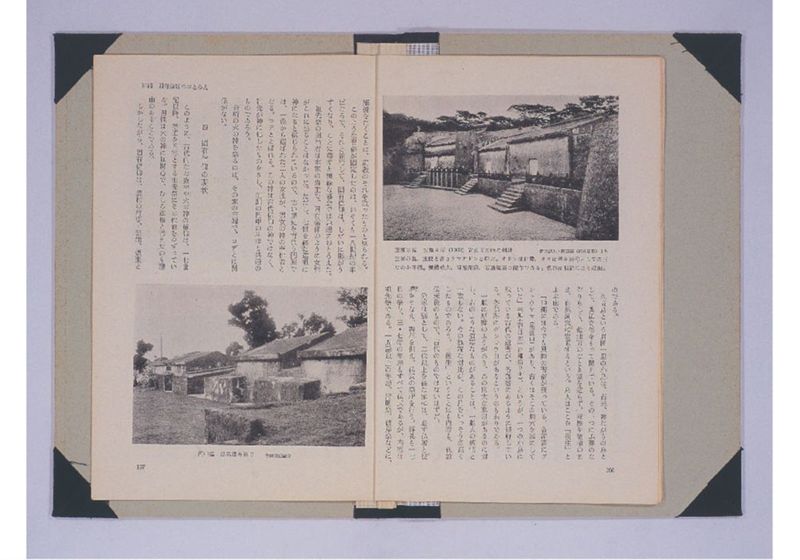
王族の墓 文亀2年(1502)尚真王の時に創建 □□□□・□□□(□□□□)より
王家の墓。玉陵と書きタマオドンと呼ぶ。オドンはお殿、タマは霊か□□としての玉
なのか不明。規模絶大、□厳閑寂。石造建築の傑作である。現在は戦禍により破損。
【右頁下段】
のである。
久高島という周囲一里の小島は、古来、神ながらの島と
して、異風奇俗をもって聞えている。その一つに風葬のな
ごりらしく、他地方のごとき墓を造らず、死骸を□□のま
ま、自然洞穴に安置するという。島人はここを「後生」と
よぶ由である。
「沖縄には今でも風葬の習俗が残っている。各部落にグ
ショウヤマ(後生山)があり、古くはそこの洞穴を墓にして
いた」(『風土記日本』沖縄篇P□□□)、というが、一つの小島に
残っている古代の遺習が、各部落にあるように誤解してい
る。各部落にグショウ山があるというのも誤りである。
一般に厚葬のふうがあり、あの巨大な墓□があるのに対
し、右のような質□なものがあることは、一般人の感□と
一致しない。その極端な対比が、この島をいっそう名高く
したものであろう。「後生」ということばも内容も、仏教
伝来後のもので、古代ものもではないはずだ。
分家は別として、二代以上を経た家には、必ず仏壇と位(い)
牌(はい)をそなえ、香花を供え、仏式の祭祀を行う。葬礼も一七
日の祭り、三・七年の年忌もすべて仏式であるが、内容は
祖先祭である。一周忌以上の年忌、清明祭、彼岸祭などに、
【左頁上段】
紙銭をたくことは、道教のそれを取ったものと見られる。
このような習俗が固定したのは、おそくも一八世紀の半
ばごろで、それと並行して、固有信仰は、しだいに影がう
すくなり、ことに農業と無縁な都会では急速におとろえた。
祖先祭の担当者は本家の当主で、固有信仰のように女性
がこれに当ることはなかった。ただし、七世を経た遠祖は
神になると信じられているので、古い歴史を背負う門族で
は、一族から選ばれた二人の女性が、男女の神の奉仕者と
なる。コデとよばれる。この神は古代信仰の神ではなく、
祖先が神に化したものをさし、前記の門中の□拝と共通の
ものであろう。
台所の火の神を祭るのは、その家の主婦で、コデとは関
係がない。
四 固有信仰の現状
このように、古代的なお嶽神や火の神の信仰は、一七世
紀以降、孝道を□□とする祖先祭にその位置をゆずってい
る。男性は火の神に無関心で、むしろ迷信と考えたのも理
由のあることである。
しかしながら、固有信仰は、農村の行事、芸能、娯楽と
【左頁下段・写真の説明】
門中墓 島尻郡糸満町 安田□□撮影
沖縄 固有信仰のおとろえ
157
現代語訳
156
【右頁上段・写真の説明】
王族の墓 文亀2年(1502)尚真王の時に創建 ○○○○・○○○(○○○○)より
王家の墓。玉陵と書きタマオドンと呼ぶ。オドンはお殿、タマは霊か○○としての玉なのか不明。規模絶大、○厳閑寂。石造建築の傑作である。現在は戦禍により破損。
【右頁下段】
のである。
久高島という周囲1里の小島は、古来、神ながらの島として、異風奇俗をもって聞こえている。その一つに風葬の名残らしく、他地方のような墓を造らず、死骸を○○のまま、自然洞窟に安置するという。島人はここを「後生」と呼ぶとのことである。
「沖縄には今でも風葬の習俗が残っている。各部落にグショウヤマ(後生山)があり、古くはそこの洞窟を墓にしていた」(『風土記日本』沖縄篇P○○○)、というが、一つの小島に残っている古代の遺習が、各部落にあるように誤解している。各部落にグショウ山があるというのも誤りである。
一般に厚葬の風があり、あの巨大な墓○があるのに対し、右のような質○なものがあることは、一般人の感○と一致しない。その極端な対比が、この島をいっそう名高くしたものであろう。「後生」ということばも内容も、仏教伝来後のもので、古代のものではないはずだ。
分家は別として、2代以上を経た家には、必ず仏壇と位牌を備え、香花を供え、仏式の祭祀を行う。葬礼も17日の祭り、3・7年の年忌もすべて仏式であるが、内容は祖先祭である。1周忌以上の年忌、清明祭、彼岸祭などに、
【左頁上段】
紙銭を焚くことは、道教のそれを取ったものと見られる。
このような習俗が固定したのは、遅くも18世紀の半ばころで、それと並行して、固有信仰は、しだいに影が薄くなり、ことに農業と無縁な都会では急速に衰えた。
祖先祭の担当者は本家の当主で、固有信仰のように女性がこれに当たることはなかった。ただし、7世を経た遠祖は神になると信じられているので、古い歴史を背負う門族では、一族から選ばれた2人の女性が、男女の神の奉仕者となる。コデと呼ばれる。この神は古代信仰の神ではなく、祖先が神に化したものを指し、前記の門中の○拝と共通のものであろう。
台所の火の神を祭るのは、その家の主婦で、コデとは関係がない。
四 固有信仰の現状
このように、古代的なお嶽神や火の神の信仰は、17世紀以降、孝道を○○とする祖先祭にその位置を譲っている。男性は火の神に無関心で、むしろ迷信と考えたのも理由のあることである。
しかしながら、固有信仰は、農村の行事、芸能、娯楽と
【左頁下段・写真の説明】
門中墓 島尻郡糸満町 安田○○撮影
沖縄 固有信仰の衰退
157
英語訳
156
【Right Page Upper Section・Photo Caption】
Royal Tomb - Built in Bunki 2 (1502) during the reign of King Sho Shin From ○○○○・○○○(○○○○)
Royal family tomb. Written as 玉陵 and called Tamaudun. Udun means "palace," but it is unclear whether Tama refers to spirit or ○○ as jewel. Enormous in scale, ○ solemn and tranquil. A masterpiece of stone architecture. Currently damaged due to war.
【Right Page Lower Section】
of such nature.
Kudaka Island, a small island with a circumference of about one ri, has been known since ancient times as a divine island with strange customs and peculiar practices. One of these appears to be a remnant of wind burial - unlike other regions, they do not build tombs but place corpses ○○ directly in natural caves. The islanders call this place "gusho" (afterlife).
"Wind burial customs still remain in Okinawa. Each village has a Gushoyama (afterlife mountain), and in ancient times they used caves there as tombs" (Fudoki Japan, Okinawa volume P○○○), but this misunderstands that ancient practices remaining on one small island exist in every village. The claim that every village has a Gusho mountain is also incorrect.
The extreme contrast between the general practice of elaborate burials with those massive tomb ○ and such simple ○ practices does not align with general public sentiment ○. This extreme contrast probably made the island even more famous. The word "gusho" and its content are post-Buddhist transmission developments, not ancient ones.
Aside from branch families, houses that have existed for more than two generations invariably have Buddhist altars and mortuary tablets, offer incense and flowers, and conduct Buddhist rituals. Funeral rites, 17-day ceremonies, and 3rd and 7th year memorial services are all Buddhist in form, but the content is ancestor worship. For first anniversary and longer memorial services, Qingming festivals, equinox festivals, etc.,
【Left Page Upper Section】
burning paper money appears to be adopted from Taoism.
Such customs became fixed by the mid-18th century at the latest, and parallel to this, indigenous faith gradually faded, especially rapidly declining in urban areas unconnected to agriculture.
The person in charge of ancestral rituals was the head of the main family, and unlike in indigenous faith, women did not take charge of this. However, since distant ancestors after seven generations are believed to become gods, in old clans with long histories, two women selected from the clan become servants of male and female deities. They are called kude. These gods are not deities of ancient faith but refer to ancestors who have transformed into gods, probably sharing commonality with the aforementioned clan ○ worship.
The housewife of each home worships the kitchen fire god, which has no relation to kude.
IV Current State of Indigenous Faith
Thus, ancient faith in utaki gods and fire gods has yielded its position since the 17th century to ancestor worship with filial piety as its ○○ foundation. That men were indifferent to fire gods and rather considered them superstition was reasonable.
However, indigenous faith, along with rural events, performing arts, and entertainment
【Left Page Lower Section・Photo Caption】
Clan Tomb Shimajiri District, Itoman Town Photographed by Yasuda ○○
Okinawa The Decline of Indigenous Faith
157