翻刻
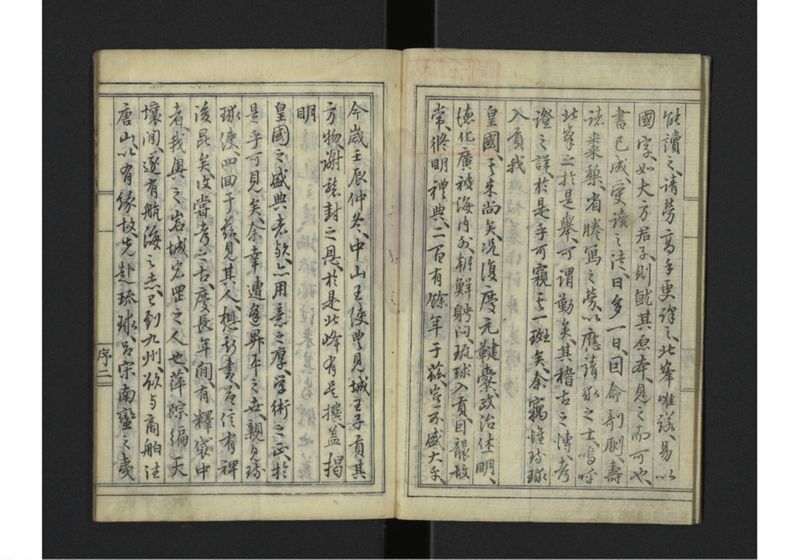
能読之、請労高手更訳之、北峰唯諾、易以
国字、如大方君子、則就其原本、見之而可也、
書已成、受読之徒、日多一日、因命 剞劂、寿
諸■【棗ヵ】梨、省謄写之労、以応請求之士、嗚呼
北峰之於是挙、可謂勤矣、其稽古之博、考
証之詳、於是乎可窺其一斑矣、余竊雖琉球
入貢我
皇国、其来尚矣、況復慶元鞬囊、政治烋明、
徳化広被海内外、朝鮮聘問、琉球入貢、因襲故
常、修明礼典、二百有余年于茲、豈不盛大乎、
今歳壬辰仲冬、中山王使豊見城王子貢其
方物、謝襲封之恩、於是北峰有是撰、蓋掲
明
皇国之盛典者歟、亦用意之厚、学術之正、於
是乎可見矣、余幸遭逢昇平之世、親見琉
球使、四回于茲、見其人、想斯書、益信有裨
後昆矣、改嘗考之古、慶長年間、有釈袋中
者、我奥之岩城岩罡之人也、萍踪徧天
壌間、遂有航海之志、已到九州、欲与商舶注
唐山、以有縁故、先赴琉球、呂宋南蛮之夷
【棗(なつめ)ヵ、さらに梨棗の誤記ヵ】
【甞は嘗の異字体】
現代語訳
読むことができない。どうか優秀な人に改めて翻訳してもらいたい」と。北峰は承諾し、国字に改めた。もし学識ある立派な君子であれば、その原本に就いて、これを見れば良いのである。
書がすでに完成すると、これを読む人々が日に日に多くなったため、印刷を命じ、板木に彫って永く保存し、写本の労を省いて、求める学者たちの要請に応えることとした。ああ、この事業における北峰の努力は、実に勤勉であったと言えよう。その古典研究の博識さ、考証の詳細さは、ここにその一端を窺うことができるのである。
私がひそかに思うに、琉球が我が皇国に入貢することは、その来歴は古い。ましてや慶元(慶長・元和)以来、政治は明らかに輝き、徳による教化は国内外に広く及び、朝鮮の聘問、琉球の入貢は、古くからの慣例に従い、礼典を修め明らかにして、二百有余年に至る。なんと盛大なことではないか。
今年壬辰(文化九年、1812年)の仲冬、中山王は豊見城王子を使者として遣わし、その方物を貢ぎ、襲封の恩に謝した。ここにおいて北峰がこの著作をなしたのは、けだし我が皇国の盛典を明らかに示すものであろうか。また用意の厚さ、学術の正しさも、ここに見ることができる。
私は幸いにして昇平の世に遭遇し、親しく琉球使を見ること四回に至る。その人を見、この書を想うに、益々後世の人々に裨益するものと信ずる。改めて昔を考えてみると、慶長年間に袋中という僧があった。我が奥州の岩城岩館の人である。萍のような足跡を天地の間に遍くし、ついに航海の志を持った。すでに九州に到り、商船と共に唐山(中国)に赴こうと欲したが、縁故があったため、まず琉球に赴き、呂宋や南蛮の異国
英語訳
be able to read it. Please have a skilled person retranslate it." Hokuhō agreed and converted it to vernacular script. If there are learned gentlemen of great learning, they may refer to the original text and read it as is.
Once the book was completed, those who read it increased day by day, so he ordered it to be printed and carved into woodblocks for permanent preservation, saving the labor of copying by hand to meet the requests of scholars who sought it. Ah, Hokuhō's efforts in this endeavor can truly be called diligent! His extensive knowledge in classical studies and the detail of his textual research - one can glimpse but a fraction of this here.
I privately believe that Ryukyu's tribute missions to our Imperial nation have ancient origins. Moreover, since the Keicho-Genna era, politics have shone brightly, moral transformation has spread widely both within and beyond our borders, Korean diplomatic missions and Ryukyu tribute missions have followed ancient customs, cultivating and clarifying ritual protocols for over two hundred years now. How magnificent this is!
This year, Mizunoe-Tatsu (9th year of Bunka, 1812), in mid-winter, the King of Chuzan sent Prince Tomigusuku as an envoy to present tribute goods and express gratitude for the grace of investiture. Here Hokuhō produced this work, perhaps to clearly demonstrate the grand ceremonies of our Imperial nation. His thoughtful intention and proper scholarship can also be seen in this.
I have been fortunate to encounter this era of peace and have personally witnessed Ryukyu envoys four times now. Seeing these people and contemplating this book, I increasingly believe it will benefit future generations. Looking back to examine the past, during the Keicho period there was a monk named Taichū. He was from Iwaki Iwatate in our Ōshū region. His wandering footsteps like duckweed spread throughout heaven and earth, and he eventually harbored ambitions for overseas travel. Having already reached Kyushu, he wished to go to Tang-shan (China) with merchant vessels, but having connections, he first went to Ryukyu, and then to Luzon and other southern barbarian lands