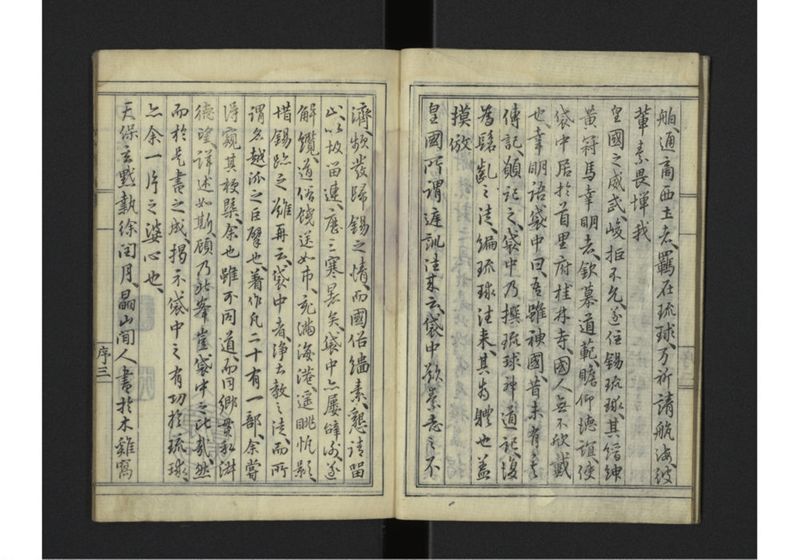
翻刻
舶、通商西土者、羈在琉球、万祈請航海、彼
輩素畏憚我、
皇国之威武、峻拒不先、遂住錫琉球、其縉紳
黄冠馬幸明者、欽幕道範、䂁仰徳諠、使
袋中居於首里府桂林寺、国人無不欣戴
也、幸明語袋中曰、吾雖神国、昔未有其
伝記、䫟記之、袋中乃撰琉球神道記、復
為騞乱之徒、編琉球往来、其為体也蓋
模倣
皇国所謂逓訓往来云、袋中欲素志之不
済、頻発帰錫之情、而国俗繬素、懇請留
止、以故留連、応三寒暑矣、袋中亦屢辝浅、遂
解鑬、道俗餞送如市、充満海港、遥眺帆影、
惜錫跡之雖再云、袋中者、浄土教之徒、而所
謂名越派之臣擘也、着作凡二十有一部、余嘗
得窺其梗概、余也雖不同道、而同郷貫私汫
徳望、詳述如斯、碩乃北峰豈袋中之比哉、然
而於是書之成、掲示袋之有功於琉球、
亦余一片之婆心也、
天保玄黙執徐閏月、晶山間人書於木雞窩
現代語訳
船で西土(中国)と通商していた者たちは、琉球に滞在していたが、袋中が航海を懇願しても、彼らは元来我が皇国の威武を畏れ憚っており、厳しく拒絶して許可しなかった。そこで袋中は琉球に住錫することとなった。その地の学者で道士の馬幸明という者が、袋中の道徳的模範を欽慕し、その徳の高さを仰ぎ見て、袋中を首里府の桂林寺に住まわせた。国人で喜び戴かない者はいなかった。
幸明は袋中に語って言った。「我が国は神国であるが、昔からその伝記がない。これを記録してほしい」と。袋中はそこで『琉球神道記』を撰述した。また騞乱の徒(民衆)のために『琉球往来』を編んだ。その体裁は、我が皇国のいわゆる「庭訓往来」を模倣したものである。
袋中は本来の志が達成されないことを憂い、頻繁に帰国の情を発したが、国俗(琉球の人々)は純朴で、懇ろに留止を請うたため、そのために留連すること三寒暑に及んだ。袋中もまた度々辞去しようとしたが、ついに出帆することとなり、僧俗が市のように餞送し、海港に充満した。遥かに帆影を眺め、錫跡(高僧の足跡)の再び得難いことを惜しんだという。
袋中は浄土教の僧徒で、いわゆる名越派の重鎮であった。著作は凡そ二十一部に及ぶ。私はかつてその概要を窺うことを得た。私は同じ宗派ではないが、同郷の人として私的にその徳望を慕い、このように詳しく述べるのである。まして北峰が袋中と比肩できようか。しかしながら、この書の完成において、袋中の琉球に対する功績を示すことも、私の一片の老婆心なのである。
天保玄黙(天保四年、1833年)執徐(癸巳)閏月、晶山間人、木雞窩に書す
英語訳
The merchants who were trading with the Western lands (China) by ship were staying in Ryukyu. Though Taichū earnestly requested passage for overseas travel, these people had always feared and been wary of our Imperial nation's military might, so they sternly refused and would not permit it. Thus Taichū came to reside in Ryukyu. A local scholar and Taoist named Ba Kōmei (Ma Xingming) admired Taichū's moral example and looked up to his virtue, arranging for Taichū to stay at Keilin-ji Temple in Shuri Castle. There was no one among the people who did not rejoice and revere him.
Kōmei spoke to Taichū saying: "Although our country is a divine land, it has no historical records from ancient times. Please record these." Taichū then composed the "Ryukyu Shinto Record." He also compiled "Ryukyu Correspondence" for the common people. Its format was modeled after what is called "Teikin往来" (Household Instructions) in our Imperial nation.
Taichū lamented that his original aspirations remained unfulfilled and frequently expressed his desire to return home. However, the local customs were pure and simple, and the people earnestly requested that he remain. For this reason, he stayed on for three years. Though Taichū repeatedly attempted to take his leave, he finally set sail. Monks and laypeople saw him off like a marketplace crowd, filling the harbor. They gazed distantly at his sail and regretted that such traces of this eminent monk would be difficult to encounter again.
Taichū was a follower of Pure Land Buddhism and a leading figure of the so-called Nagoe school. His works totaled approximately twenty-one volumes. I once had the opportunity to examine their general contents. Though I do not follow the same religious path, as a fellow countryman I privately admire his virtue and reputation, and thus describe this in such detail. How could Hokuhō possibly compare to Taichū? Nevertheless, in the completion of this book, demonstrating Taichū's contributions to Ryukyu is also part of my sincere elderly concern.
Tenpō Genmei (Tenpō 4, 1833), Shitsujo (Mizunoto-Mi), intercalary month, written by Shōzan Kanjin at Mokukei-ka