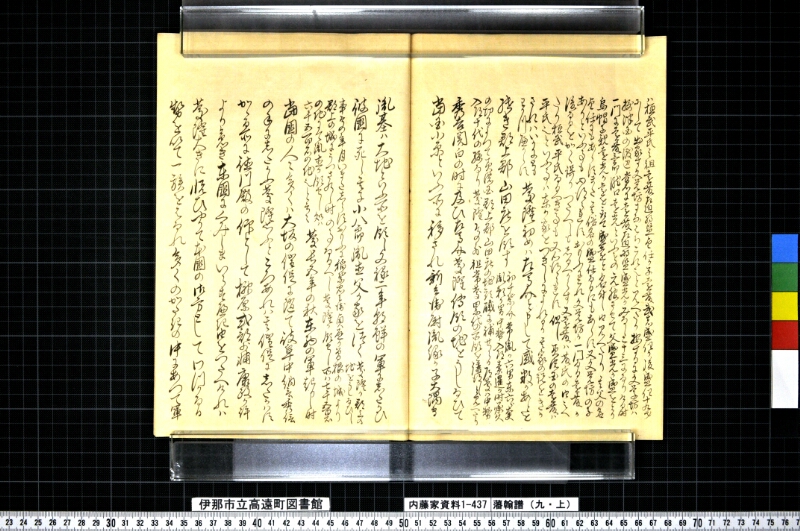
翻刻
【右丁】
《割書:は桓武平氏之祖遠藤左近将監望任か子遠藤武者盛任か後盛任十九才|にして出家す文覚坊すなはちこれ也と見へたり按するに文学【ママ】坊は》
《割書:摂津国の渡辺党に遠藤左近将監盛光かみなしこ十三になりける時|一門に遠藤三郎滝口遠光といふもの元服させて父盛光か盛をとり》
《割書:烏帽子親遠光か遠を取て盛遠と名付し由見へたり 其父の名|望任にもあらすまた其俗名の盛任なるにもあらす又文覚坊の子》
《割書:ありといふ事も心得られすおもふにこれ文覚坊か一門なる遠藤か|後なるをかく誤りつたへしもしるへからす又遠藤は藤氏の由みへ》
《割書:たり桓武平氏なるへき事も又心得られす但し美濃国の遠藤は|平氏也といふ事は東か家をつきしによれるか其家の説をきか》
《割書:されはいかにとも|わかつへからす》慶隆初めは左馬介と申して盛数かあとを
継き郡上郡山田庄を領す《割書:初千葉介常胤か六男東六郎大夫|胤頼か男中務入道素暹か時承久》
《割書:の功によつて美濃国郡上郡山田庄の地頭職に補せらる道慶は中務|入道十代の孫なり慶隆その外祖常慶累代の所領を譲得しと見へたり》
秀吉関白の時に及ひ左馬介慶隆伝領の地をうしなひて
当国小原といふ所に移され新兵衛尉胤縁か子大隅守
【左丁】
胤基は大地といふ所を領し文禄二年朝鮮の軍にしたかひ
彼国に死し其子小八郎胤直父か家をつく《割書:慶隆か郡上の|地をうしなひし》
《割書:事その年月いまたしらすおもふに稲葉忠兵衛貞通か曾根の城より|郡上の城にうつされし時の事なるへし慶隆か領せし所は七千五百石》
《割書:の地にて胤直か領せし処は|六千五百石の地也と云々》慶長五年の秋東西の軍起りし時
当国の人々多くは大坂の催促に随て岐阜中納言秀信
の手にしたかふ慶隆思ふところあれは其催促にしたかはす
かゝる所に徳川殿の仰として榊原式部少輔康政か許
より急き東国にくみしまいらすへき由をつたへけれは
慶隆大きに悦ひやかて本国の御方としてわつかなる
勢を以て一族をはなれ多くのかたきの中にあつて軍
現代語訳
【右丁】
《割書:は桓武平氏の祖である遠藤左近将監望任の子、遠藤武者盛任の後裔で、盛任は十九歳で出家し、文覚坊すなわちこれであるとみえる。しかし考察するに、文覚坊は摂津国の渡辺党に遠藤左近将監盛光の末子が十三歳になった時、一門に遠藤三郎滝口遠光という者が元服させて、父盛光の「盛」を取り、烏帽子親遠光の「遠」を取って盛遠と名付けたとみえる。その父の名は望任でもなく、また俗名の盛任でもない。また文覚坊に子があるということも理解できない。思うにこれは文覚坊の一門である遠藤の後裔であるのを、このように誤り伝えたものであろう。また遠藤は藤原氏の出であるとみえ、桓武平氏であるべきことも理解できない。ただし美濃国の遠藤は平氏であるということは、東氏の家を継いだことによるもので、その家の説を聞かなければ、どうとも判断できない。》慶隆は初めは左馬介と申して、盛数の跡を継ぎ、郡上郡山田庄を領した。《割書:初め千葉介常胤の六男東六郎大夫胤頼の子、中務入道素暹の時、承久の功によって美濃国郡上郡山田庄の地頭職に補任された。道慶は中務入道十代の孫である。慶隆はその外祖常慶累代の所領を譲り受けたとみえる。》
秀吉関白の時に及び、左馬介慶隆は伝来の領地を失って当国小原という所に移され、新兵衛尉胤縁の子大隅守
【左丁】
胤基は大地という所を領し、文禄二年朝鮮出兵に従軍して彼の国で戦死し、その子小八郎胤直が父の家を継いだ。《割書:慶隆が郡上の地を失ったことについて、その年月はまだ分からない。思うに稲葉忠兵衛貞通が曾根の城より郡上の城に移された時のことであろう。慶隆が領していた所は七千五百石の地で、胤直が領していた処は六千五百石の地であるという。》慶長五年の秋、東西の軍が起こった時、当国の人々の多くは大坂の催促に従って岐阜中納言秀信の手に従った。慶隆は思うところがあってその催促に従わず、そうしているところに徳川殿の仰せとして榊原式部少輔康政の許より、急ぎ東国に与すべき由を伝えてきたので、慶隆は大いに喜び、やがて本国の味方として僅かな勢力をもって一族を離れ、多くの敵の中にあって軍事
英語訳
【Right page】
《marginal note: are descendants of Endō Sakon-no-shōgen Mochitō, ancestor of the Kanmu Heishi, and his son Endō Musha Moritō. Moritō became a monk at age nineteen and became Mongaku-bō. However, upon examination, Mongaku-bō was a youngest son of Endō Sakon-no-shōgen Morimitus of the Watanabe faction in Settsu Province who, when he turned thirteen, was given his coming-of-age ceremony by a clansman named Endō Saburō Takiguchi Tōmitsu, taking the character "Mori" from his father Morimitus and "Tō" from his eboshi-oya (ceremonial parent) Tōmitsu to be named Moritō. His father's name was neither Mochitō nor was his secular name Moritō. It is also incomprehensible that Mongaku-bō had children. I believe this is a mistaken transmission of what was actually a descendant of an Endō from Mongaku-bō's clan. Also, the Endō appear to be of Fujiwara lineage, so it is incomprehensible that they should be of Kanmu Heishi lineage. However, the claim that the Endō of Mino Province are of Heishi lineage may be due to their succeeding the Azuma house, but without hearing that family's account, no judgment can be made either way.》Yoshitaka initially held the title Sama-no-suke and succeeded Morikazu, governing the Yamada-no-shō in Gujō District.《marginal note: Initially, when Azuma Rokurō-dayū Taneyori, sixth son of Chiba-no-suke Tsunetane, and his son Nakatsukasa-nyūdō Sosen performed meritorious service during the Jōkyū era, they were appointed to the position of jitō (land steward) of Yamada-no-shō in Gujō District, Mino Province. Dōkei was a tenth-generation descendant of Nakatsukasa-nyūdō. Yoshitaka appears to have inherited the hereditary domain of his maternal grandfather Tsuneyoshi.》
During the time of Regent Hideyoshi, Sama-no-suke Yoshitaka lost his hereditary domain and was moved to a place called Obara in this province. Ōsumi-no-kami, son of Shinbei-no-jō Taneaki,
【Left page】
Tanemoto governed a place called Ōchi and followed the Korean campaign in Bunroku 2 (1593), dying in that country. His son Kohachirō Tanenao succeeded his father's house.《marginal note: Regarding Yoshitaka's loss of the Gujō domain, the exact year and month are still unknown. I believe it occurred when Inaba Chūbei Sadamichi was transferred from Sone Castle to Gujō Castle. The territory that Yoshitaka governed was land worth 7,500 koku, while the territory that Tanenao governed was land worth 6,500 koku.》In the autumn of Keichō 5 (1600), when the eastern and western armies arose, most of the people of this province followed Osaka's summons and served under Gifu Chūnagon Hidenobu. Yoshitaka had his own thoughts and did not follow that summons. While in this situation, word came from Sakakibara Shikibu-shōyū Yasumasa by order of Lord Tokugawa that he should quickly join the eastern forces. Yoshitaka was greatly pleased and, as an ally of the main country, with only a small force, separated from his clan and engaged in military