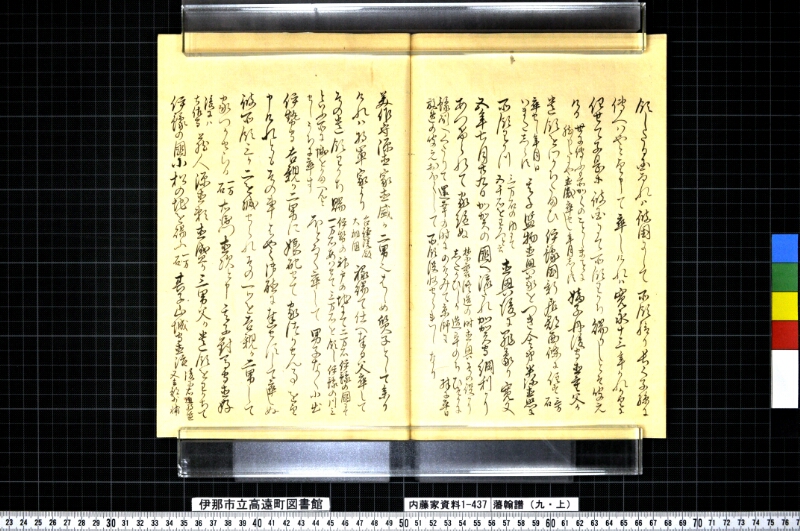
翻刻
【右丁】
領したる国なれは彼国にして所領給り長く子孫に
伝へはやと望申て卒しけれは寛永十三年かれか望に
任せて子息等彼国にて所領わかち賜りしとそ聞え
ける《割書:世に伝ふる所かくのことしまことに|然りしにや直盛卒せし年月しらす》嫡子丹後守直重父か
遺領をわかちたまひ伊予国新居郡西条に住す《割書:三万|石》
《割書:卒せし年月日|いまたしらす》其子監物直興家をつき舎弟半弥直照に
所領わかつ《割書:三万石の内にて|五千石をわかつと云》直興後に罪蒙り寛文
五年七月廿九日加賀の国へ流され加賀守綱利に
あつけられて家絶ぬ《割書:禁裏修造の時直興その役に|したかひしか造畢のちひそかに》
《割書:予州へくたりて還幸の時にのそみて京師に 殊に平日|放逸の聞えおほくして所領没収せられしなり》
【左丁】
美作守源直家直盛か二男也はしめ質子として参り
けれは将軍家より《割書:台徳院殿|大相国》禄賜て仕へ奉る父卒して
その遺領わかち賜《割書:伊勢の神戸の地にて二万石伊予の国にて|一万石あはせて三万石を領し伊予の川上》
《割書:といふ所に城をかまへんと|せしうちに卒す》ほとなく卒して男子なく小出
伊勢守吉親か二男に娘配せて家つかせん事を望
申けれともその事はやく御聴に達せすして卒しぬ
彼所領三か二を減せられその一ツを吉親か二男して
家つかせらる《割書:一万|石》右衛門直次と申其子対馬守直好
《割書:後には|土佐守》蔵人源直頼直盛か三男父か遺領をわかちて
伊予の国小松の地を賜ふ《割書:一万|石》其子山城守直治《割書:後に右近将監|又兵部少輔》
現代語訳
【右丁】
領有していた国であるので、その国において所領を給わり、長く子孫に伝えたいと願い申して死去したので、寛永十三年、彼の望み通りに子息たちがその国において所領を分け与えられたと伝えられている。《割書:世に伝わる所はこのようなことである。本当にそうであったのか、直盛が死去した年月は分からない》嫡子丹後守直重は父の遺領を分け与えられ、伊予国新居郡西条に住んだ。《割書:三万石》
《割書:死去した年月日は今だ分からない》その子監物直興が家督を継ぎ、舎弟半弥直照に所領を分与した。《割書:三万石の内から五千石を分与したという》直興は後に罪を負い、寛文五年七月二十九日加賀国へ流され、加賀守綱利に預けられて家は断絶した。《割書:禁裏修造の時、直興はその役に従事していたが、造営完了の後、ひそかに》
《割書:伊予国へ下って還幸の時に上奏して京師に 殊に平日放逸の噂が多くて所領没収されたのである》
【左丁】
美作守源直家は直盛の二男である。はじめ人質として参ったので、将軍家より《割書:台徳院殿大相国》禄を賜って仕え奉った。父が死去してその遺領を分け与えられた。《割書:伊勢の神戸の地にて二万石、伊予国にて一万石、合わせて三万石を領し、伊予の川上》
《割書:という所に城を構えようとしているうちに死去した》程なく死去して男子がなく、小出伊勢守吉親の二男に娘を嫁がせて家督を継がせることを望み申したが、その事が早く御聴に達せずに死去した。
その所領の三分の二を減らされ、その三分の一を吉親の二男に家督を継がせた。《割書:一万石》右衛門直次と申す。その子は対馬守直好《割書:後には土佐守》
蔵人源直頼は直盛の三男で、父の遺領を分けて伊予国小松の地を賜った。《割書:一万石》その子は山城守直治《割書:後に右近将監、また兵部少輔》
英語訳
【Right page】
Since it was a province that [their ancestors] had ruled, he wished to receive territory in that province and pass it on to his descendants for a long time. When he died making this request, in Kan'ei 13, in accordance with his wishes, his sons were granted divided territories in that province. 《marginal note: This is what is commonly transmitted. Whether this was really so, the year and month of Naomori's death are unknown》His eldest son Tango-no-kami Naoshige was granted a portion of his father's hereditary domain and resided in Saijō in Nii District, Iyo Province. 《marginal note: 30,000 koku》
《marginal note: The year, month, and day of his death are still unknown》His son Kenbutsu Naooki succeeded to the family headship and granted territory to his younger brother Han'ya Naoaki. 《marginal note: It is said that 5,000 koku were divided from the 30,000 koku》Naooki later incurred guilt and was exiled to Kaga Province on the twenty-ninth day of the seventh month of Kanbun 5, entrusted to Kaga-no-kami Tsunatoshi, and his family line was extinguished. 《marginal note: When the Imperial Palace was being rebuilt, Naooki served in that role, but after the construction was completed, he secretly》
《marginal note: went down to Iyo Province and petitioned during the imperial return to Kyōto especially since there were many rumors of his usual dissipation, his domain was confiscated》
【Left page】
Mimasaku-no-kami Minamoto Naoya was Naomori's second son. Since he initially came as a hostage, he was granted a stipend by the Shogun's family 《marginal note: Taitekuin-dono Daijō-kokō》and served them. When his father died, he was granted a portion of the hereditary domain. 《marginal note: 20,000 koku at Kanbe in Ise, 10,000 koku in Iyo Province, ruling 30,000 koku in total, and he was planning to build a castle at a place called Kawakami in Iyo》
《marginal note: but died while planning this》He died before long without male heirs, and wished to have his daughter marry the second son of Koide Ise-no-kami Yoshichika and have him succeed to the family headship, but this matter did not reach official attention in time before he died.
Two-thirds of his domain was reduced, and one-third was given to Yoshichika's second son to succeed the family. 《marginal note: 10,000 koku》He was called Uemon Naotsugu. His son was Tsushima-no-kami Naoyoshi 《marginal note: later Tosa-no-kami》
Kurōdo Minamoto Naoyori was Naomori's third son who received a portion of his father's hereditary domain and was granted the Komatsu area in Iyo Province. 《marginal note: 10,000 koku》His son was Yamashiro-no-kami Naoharu 《marginal note: later Ukon-shōgen, also Hyōbu-shōyū》